

Nucleophilic Carbenes as Organocatalysts
171
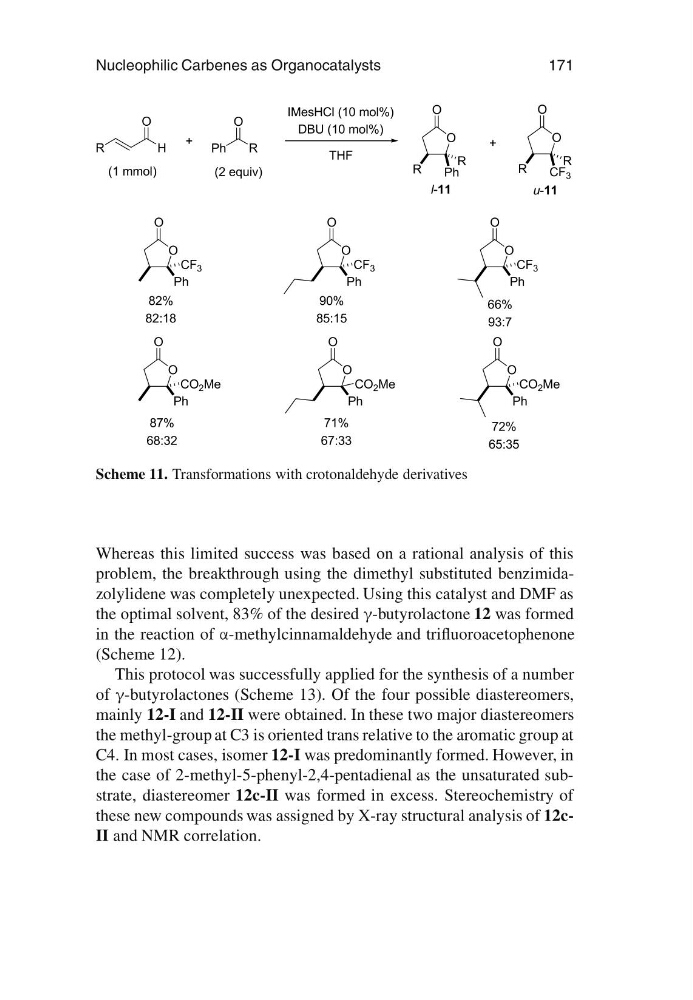
Scheme 11. Transformations with crotonaldehyde derivatives
Whereas this limited success was based on a rational analysis of this
problem, the breakthrough using the dimethyl substituted benzimidazolylidene was completely unexpected. Using this catalyst and DMF as
the optimal solvent, 83% of the desired γ-butyrolactone 12 was formed
in the reaction of α-methylcinnamaldehyde and trifluoroacetophenone
(Scheme 12).
This protocol was successfully applied for the synthesis of a number
of γ-butyrolactones (Scheme 13). Of the four possible diastereomers,
mainly 12-I and 12-II were obtained. In these two major diastereomers
the methyl-group at C3 is oriented trans relative to the aromatic group at
C4. In most cases, isomer 12-I was predominantly formed. However, in
the case of 2-methyl-5-phenyl-2,4-pentadienal as the unsaturated substrate, diastereomer 12c-II was formed in excess. Stereochemistry of
these new compounds was assigned by X-ray structural analysis of 12cII and NMR correlation.