

134
M. Christmann
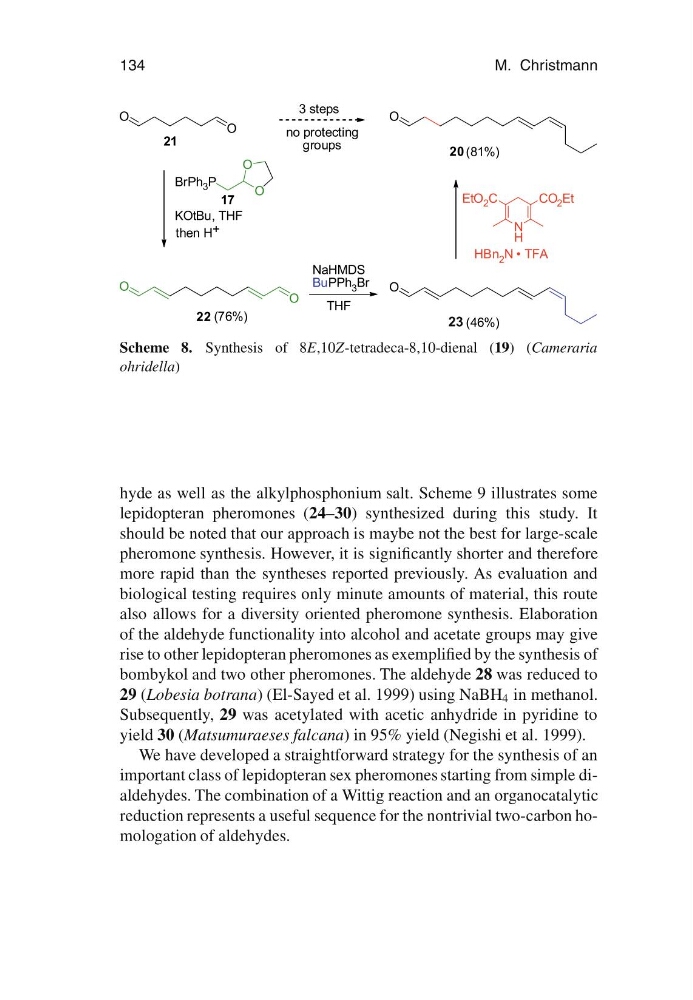
Scheme 8. Synthesis of 8E,10Z-tetradeca-8,10-dienal (19) (Cameraria
ohridella)
hyde as well as the alkylphosphonium salt. Scheme 9 illustrates some
lepidopteran pheromones (24–30) synthesized during this study. It
should be noted that our approach is maybe not the best for large-scale
pheromone synthesis. However, it is significantly shorter and therefore
more rapid than the syntheses reported previously. As evaluation and
biological testing requires only minute amounts of material, this route
also allows for a diversity oriented pheromone synthesis. Elaboration
of the aldehyde functionality into alcohol and acetate groups may give
rise to other lepidopteran pheromones as exemplified by the synthesis of
bombykol and two other pheromones. The aldehyde 28 was reduced to
29 (Lobesia botrana) (El-Sayed et al. 1999) using NaBH 4 in methanol.
Subsequently, 29 was acetylated with acetic anhydride in pyridine to
yield 30 (Matsumuraeses falcana) in 95% yield (Negishi et al. 1999).
We have developed a straightforward strategy for the synthesis of an
important class of lepidopteran sex pheromones starting from simple dialdehydes. The combination of a Wittig reaction and an organocatalytic
reduction represents a useful sequence for the nontrivial two-carbon homologation of aldehydes.