

Organocatalytic Syntheses of Bioactive Natural Products
127
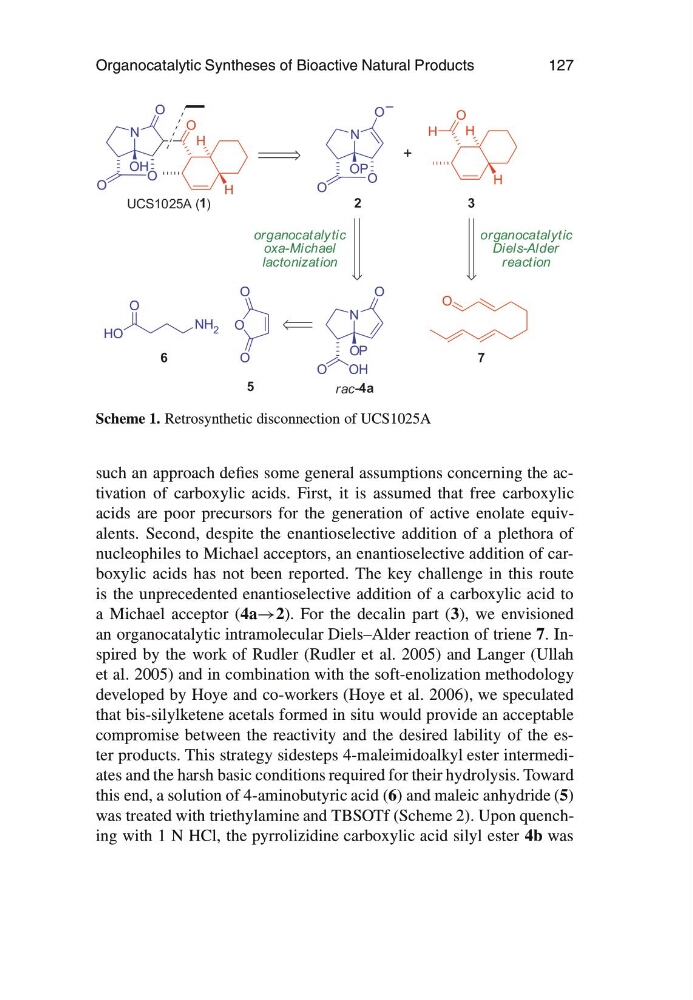
Scheme 1. Retrosynthetic disconnection of UCS1025A
such an approach defies some general assumptions concerning the activation of carboxylic acids. First, it is assumed that free carboxylic
acids are poor precursors for the generation of active enolate equivalents. Second, despite the enantioselective addition of a plethora of
nucleophiles to Michael acceptors, an enantioselective addition of carboxylic acids has not been reported. The key challenge in this route
is the unprecedented enantioselective addition of a carboxylic acid to
a Michael acceptor (4a→2). For the decalin part (3), we envisioned
an organocatalytic intramolecular Diels–Alder reaction of triene 7. Inspired by the work of Rudler (Rudler et al. 2005) and Langer (Ullah
et al. 2005) and in combination with the soft-enolization methodology
developed by Hoye and co-workers (Hoye et al. 2006), we speculated
that bis-silylketene acetals formed in situ would provide an acceptable
compromise between the reactivity and the desired lability of the ester products. This strategy sidesteps 4-maleimidoalkyl ester intermediates and the harsh basic conditions required for their hydrolysis. Toward
this end, a solution of 4-aminobutyric acid (6) and maleic anhydride (5)
was treated with triethylamine and TBSOTf (Scheme 2). Upon quenching with 1 N HCl, the pyrrolizidine carboxylic acid silyl ester 4b was