

Biomimetic Organocatalytic C–C-Bond Formations
61
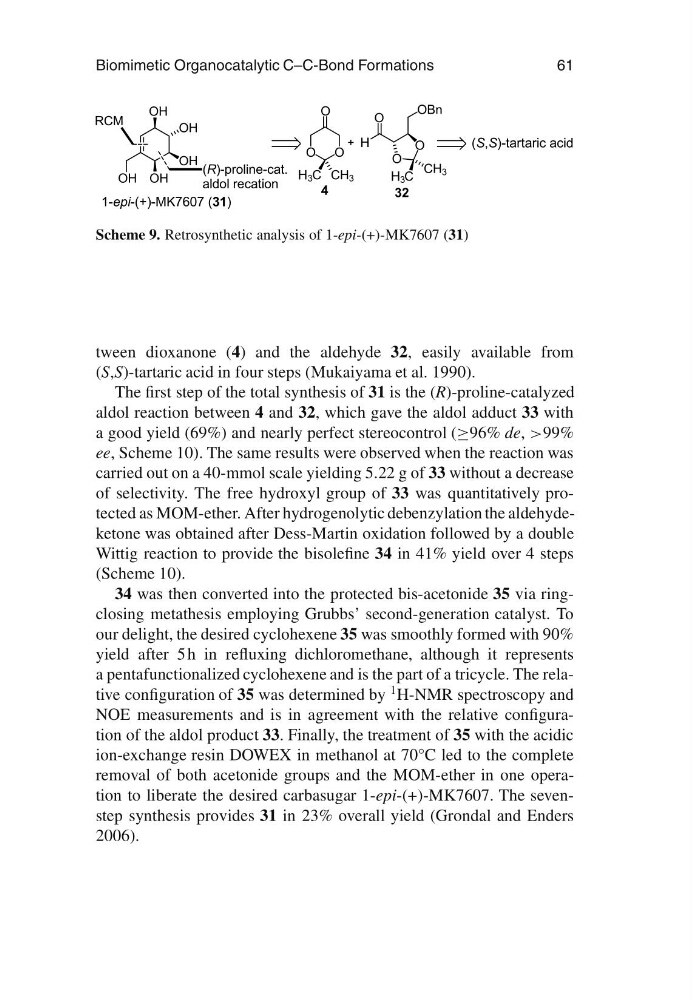
Scheme 9. Retrosynthetic analysis of 1-epi-(+)-MK7607 (31)
tween dioxanone (4) and the aldehyde 32, easily available from
(S,S)-tartaric acid in four steps (Mukaiyama et al. 1990).
The first step of the total synthesis of 31 is the (R)-proline-catalyzed
aldol reaction between 4 and 32, which gave the aldol adduct 33 with
a good yield (69%) and nearly perfect stereocontrol (≥96% de, >99%
ee, Scheme 10). The same results were observed when the reaction was
carried out on a 40-mmol scale yielding 5.22 g of 33 without a decrease
of selectivity. The free hydroxyl group of 33 was quantitatively protected as MOM-ether. After hydrogenolytic debenzylation the aldehydeketone was obtained after Dess-Martin oxidation followed by a double
Wittig reaction to provide the bisolefine 34 in 41% yield over 4 steps
(Scheme 10).
34 was then converted into the protected bis-acetonide 35 via ringclosing metathesis employing Grubbs’ second-generation catalyst. To
our delight, the desired cyclohexene 35 was smoothly formed with 90%
yield after 5 h in refluxing dichloromethane, although it represents
a pentafunctionalized cyclohexene and is the part of a tricycle. The relative configuration of 35 was determined by
1 H-NMR spectroscopy and
NOE measurements and is in agreement with the relative configuration of the aldol product 33. Finally, the treatment of 35 with the acidic
ion-exchange resin DOWEX in methanol at 70°C led to the complete
removal of both acetonide groups and the MOM-ether in one operation to liberate the desired carbasugar 1-epi-(+)-MK7607. The sevenstep synthesis provides 31 in 23% overall yield (Grondal and Enders
2006).
61
Scheme 9. Retrosynthetic analysis of 1-epi-(+)-MK7607 (31)
tween dioxanone (4) and the aldehyde 32, easily available from
(S,S)-tartaric acid in four steps (Mukaiyama et al. 1990).
The first step of the total synthesis of 31 is the (R)-proline-catalyzed
aldol reaction between 4 and 32, which gave the aldol adduct 33 with
a good yield (69%) and nearly perfect stereocontrol (≥96% de, >99%
ee, Scheme 10). The same results were observed when the reaction was
carried out on a 40-mmol scale yielding 5.22 g of 33 without a decrease
of selectivity. The free hydroxyl group of 33 was quantitatively protected as MOM-ether. After hydrogenolytic debenzylation the aldehydeketone was obtained after Dess-Martin oxidation followed by a double
Wittig reaction to provide the bisolefine 34 in 41% yield over 4 steps
(Scheme 10).
34 was then converted into the protected bis-acetonide 35 via ringclosing metathesis employing Grubbs’ second-generation catalyst. To
our delight, the desired cyclohexene 35 was smoothly formed with 90%
yield after 5 h in refluxing dichloromethane, although it represents
a pentafunctionalized cyclohexene and is the part of a tricycle. The relative configuration of 35 was determined by
1 H-NMR spectroscopy and
NOE measurements and is in agreement with the relative configuration of the aldol product 33. Finally, the treatment of 35 with the acidic
ion-exchange resin DOWEX in methanol at 70°C led to the complete
removal of both acetonide groups and the MOM-ether in one operation to liberate the desired carbasugar 1-epi-(+)-MK7607. The sevenstep synthesis provides 31 in 23% overall yield (Grondal and Enders
2006).