

New Concepts for Organocatalysis
25
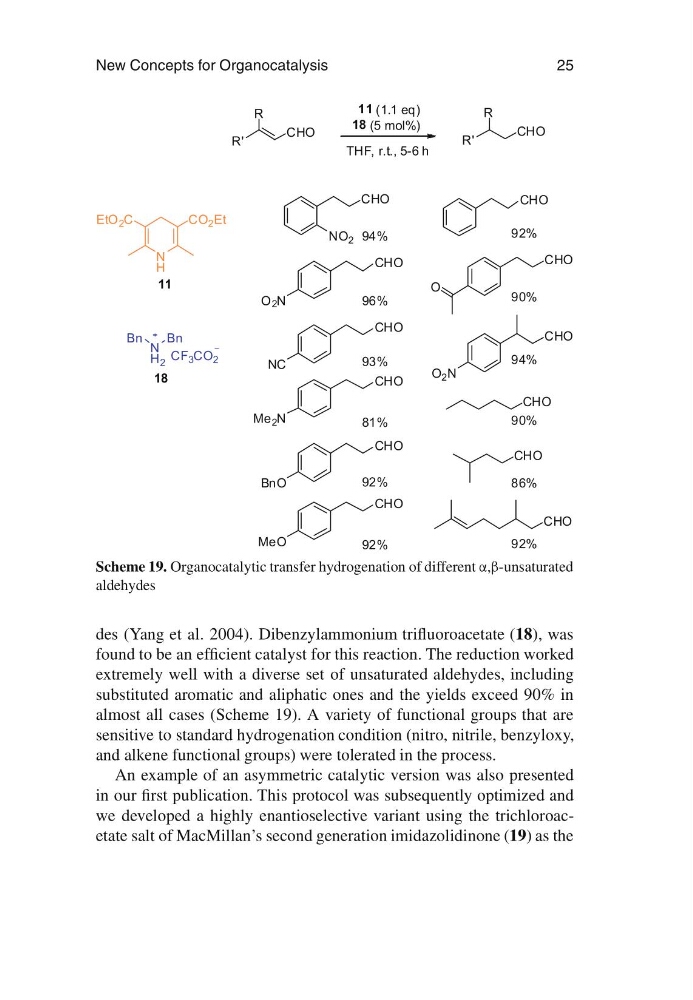
Scheme 19. Organocatalytic transfer hydrogenation of different α,β-unsaturated
aldehydes
des (Yang et al. 2004). Dibenzylammonium trifluoroacetate (18), was
found to be an efficient catalyst for this reaction. The reduction worked
extremely well with a diverse set of unsaturated aldehydes, including
substituted aromatic and aliphatic ones and the yields exceed 90% in
almost all cases (Scheme 19). A variety of functional groups that are
sensitive to standard hydrogenation condition (nitro, nitrile, benzyloxy,
and alkene functional groups) were tolerated in the process.
An example of an asymmetric catalytic version was also presented
in our first publication. This protocol was subsequently optimized and
we developed a highly enantioselective variant using the trichloroacetate salt of MacMillan’s second generation imidazolidinone (19) as the
25
Scheme 19. Organocatalytic transfer hydrogenation of different α,β-unsaturated
aldehydes
des (Yang et al. 2004). Dibenzylammonium trifluoroacetate (18), was
found to be an efficient catalyst for this reaction. The reduction worked
extremely well with a diverse set of unsaturated aldehydes, including
substituted aromatic and aliphatic ones and the yields exceed 90% in
almost all cases (Scheme 19). A variety of functional groups that are
sensitive to standard hydrogenation condition (nitro, nitrile, benzyloxy,
and alkene functional groups) were tolerated in the process.
An example of an asymmetric catalytic version was also presented
in our first publication. This protocol was subsequently optimized and
we developed a highly enantioselective variant using the trichloroacetate salt of MacMillan’s second generation imidazolidinone (19) as the