

New Concepts for Organocatalysis
21
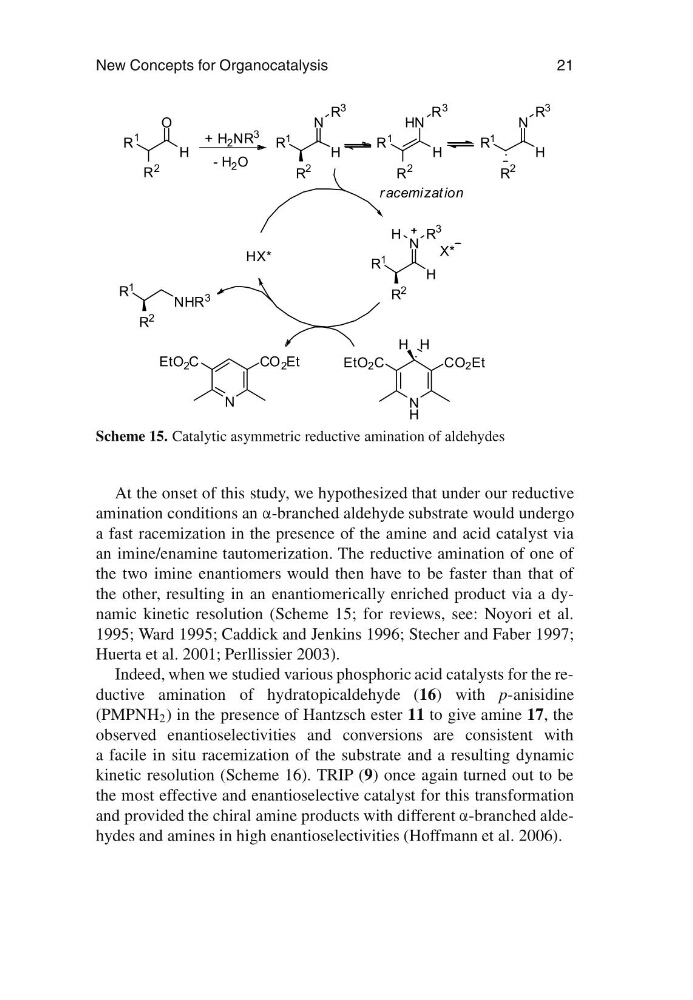
Scheme 15. Catalytic asymmetric reductive amination of aldehydes
At the onset of this study, we hypothesized that under our reductive
amination conditions an α-branched aldehyde substrate would undergo
a fast racemization in the presence of the amine and acid catalyst via
an imine/enamine tautomerization. The reductive amination of one of
the two imine enantiomers would then have to be faster than that of
the other, resulting in an enantiomerically enriched product via a dynamic kinetic resolution (Scheme 15; for reviews, see: Noyori et al.
1995; Ward 1995; Caddick and Jenkins 1996; Stecher and Faber 1997;
Huerta et al. 2001; Perllissier 2003).
Indeed, when we studied various phosphoric acid catalysts for the reductive amination of hydratopicaldehyde (16) with p-anisidine
(PMPNH 2 ) in the presence of Hantzsch ester 11 to give amine 17, the
observed enantioselectivities and conversions are consistent with
a facile in situ racemization of the substrate and a resulting dynamic
kinetic resolution (Scheme 16). TRIP (9) once again turned out to be
the most effective and enantioselective catalyst for this transformation
and provided the chiral amine products with different α-branched aldehydes and amines in high enantioselectivities (Hoffmann et al. 2006).
21
Scheme 15. Catalytic asymmetric reductive amination of aldehydes
At the onset of this study, we hypothesized that under our reductive
amination conditions an α-branched aldehyde substrate would undergo
a fast racemization in the presence of the amine and acid catalyst via
an imine/enamine tautomerization. The reductive amination of one of
the two imine enantiomers would then have to be faster than that of
the other, resulting in an enantiomerically enriched product via a dynamic kinetic resolution (Scheme 15; for reviews, see: Noyori et al.
1995; Ward 1995; Caddick and Jenkins 1996; Stecher and Faber 1997;
Huerta et al. 2001; Perllissier 2003).
Indeed, when we studied various phosphoric acid catalysts for the reductive amination of hydratopicaldehyde (16) with p-anisidine
(PMPNH 2 ) in the presence of Hantzsch ester 11 to give amine 17, the
observed enantioselectivities and conversions are consistent with
a facile in situ racemization of the substrate and a resulting dynamic
kinetic resolution (Scheme 16). TRIP (9) once again turned out to be
the most effective and enantioselective catalyst for this transformation
and provided the chiral amine products with different α-branched aldehydes and amines in high enantioselectivities (Hoffmann et al. 2006).