

390
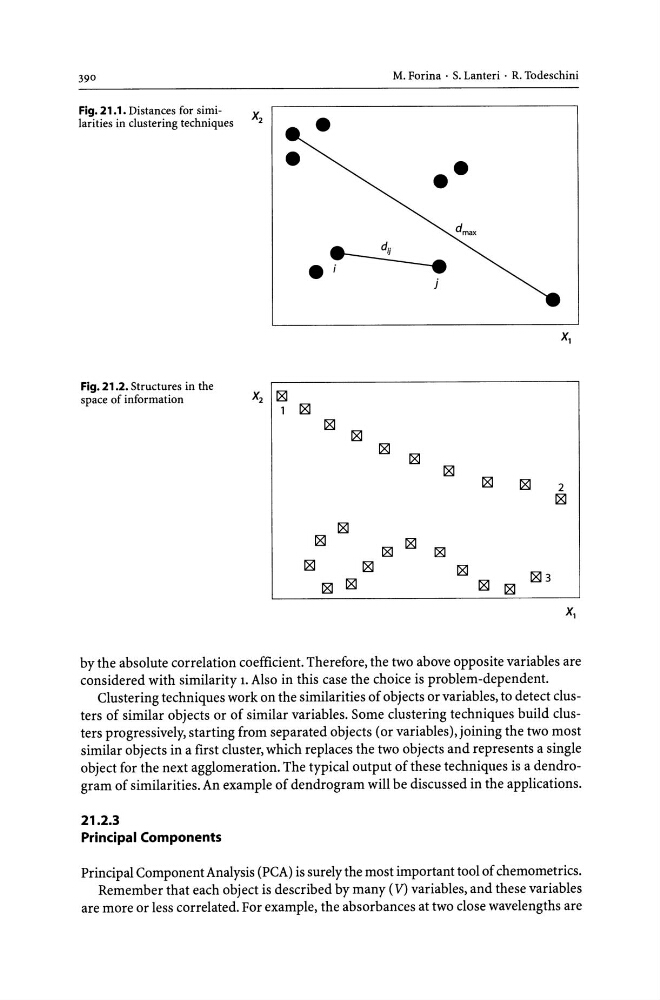
Fig. 21.1. Distances for similarities in clustering techniques
Fig. 21.2. Structures in the
space of information
X 2 181
M. Forina . S. Lanteri . R. Todeschini
••
~
.; ----.
j
181
181 181 181 181
181
181
181
2
181
181
181
[8J 181 [8J
181
[8J
181
181
181
1813
181
181
X,
by the absolute correlation coefficient. Therefore, the two above opposite variables are
considered with similarity 1. Also in this case the choice is problem-dependent.
Clustering techniques work on the similarities of objects or variables, to detect clusters of similar objects or of similar variables. Some clustering techniques build clusters progressively, starting from separated objects (or variables), joining the two most
similar objects in a first cluster, which replaces the two objects and represents a single
object for the next agglomeration. The typical output of these techniques is a dendrogram of similarities. An example of dendrogram will be discussed in the applications.
21.2.3
Principal Components
Principal Component Analysis (PCA) is surely the most important tool of chemometries.
Remember that each object is described by many (V) variables, and these variables
are more or less correlated. For example, the absorbances at two close wavelengths are
Fig. 21.1. Distances for similarities in clustering techniques
Fig. 21.2. Structures in the
space of information
X 2 181
M. Forina . S. Lanteri . R. Todeschini
••
~
.; ----.
j
181
181 181 181 181
181
181
181
2
181
181
181
[8J 181 [8J
181
[8J
181
181
181
1813
181
181
X,
by the absolute correlation coefficient. Therefore, the two above opposite variables are
considered with similarity 1. Also in this case the choice is problem-dependent.
Clustering techniques work on the similarities of objects or variables, to detect clusters of similar objects or of similar variables. Some clustering techniques build clusters progressively, starting from separated objects (or variables), joining the two most
similar objects in a first cluster, which replaces the two objects and represents a single
object for the next agglomeration. The typical output of these techniques is a dendrogram of similarities. An example of dendrogram will be discussed in the applications.
21.2.3
Principal Components
Principal Component Analysis (PCA) is surely the most important tool of chemometries.
Remember that each object is described by many (V) variables, and these variables
are more or less correlated. For example, the absorbances at two close wavelengths are