

HgO
Soil
20x 1()-6 9 kg-I
M.E. Farago
T
H92+ ~ Rain
~ 2 xl G-9gl-1
Hg2+
HgO ... - - - Hg2+
ot~ o
HgS
Troposphere
2 x 10- 12 9 I-I
Ocean
2x 10⁻⁹ g I-I
Sediment
20 x 1()-6 9 kg-I
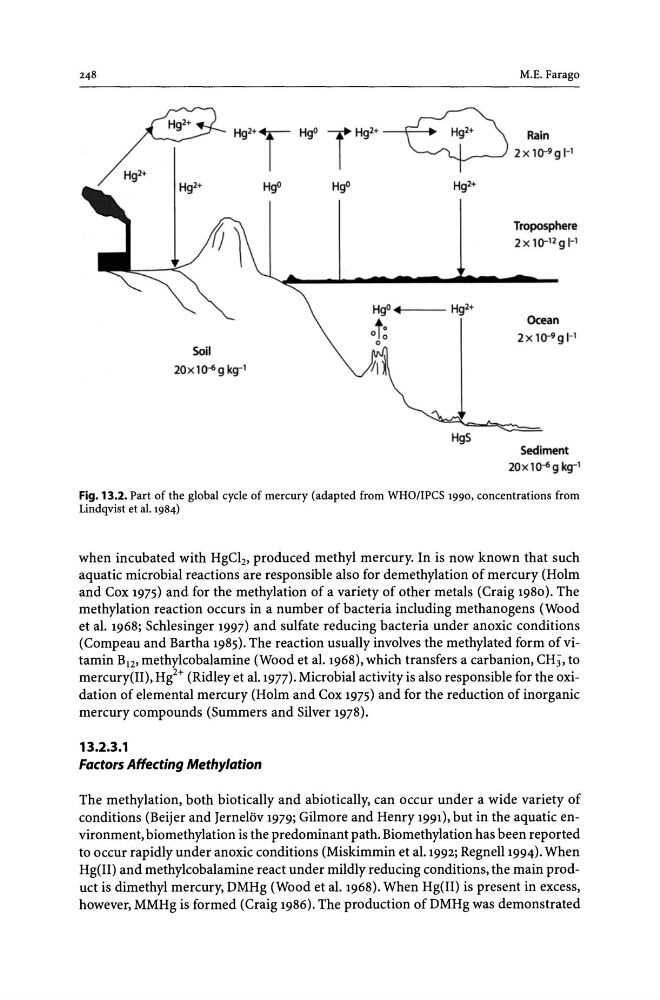
Fig. 13.2. Part of the global cycle of mercury (adapted from WHO/IPCS 1990, concentrations from
Lindqvist et al. 1984)
when incubated with HgCl 2 , produced methyl mercury. In is now known that such
aquatic microbial reactions are responsible also for demethylation of mercury (Holm
and Cox 1975) and for the methylation of a variety of other metals (Craig 1980). The
methylation reaction occurs in a number of bacteria including methanogens (Wood
et al. 1968; Schlesinger 1997) and sulfate reducing bacteria under anoxic conditions
(Compeau and Bartha 1985). The reaction usually involves the methylated form of vitamin BJ2> methylcobalamine (Wood et al. 1968), which transfers a carbanion, CH3, to
mercury(II), Hg2+ (Ridley et al.1977). Microbial activity is also responsible for the oxidation of elemental mercury (Holm and Cox 1975) and for the reduction of inorganic
mercury compounds (Summers and Silver 1978).
13.2.3.1
Factors Affecting Methylation
The methylation, both biotically and abiotic ally, can occur under a wide variety of
conditions (Beijer and Jernel6v 1979; Gilmore and Henry 1991), but in the aquatic environment, biomethylation is the predominant path. Biomethylation has been reported
to occur rapidly under anoxic conditions (Miskimmin et al. 1992; Regnell1994). When
Hg(II) and methylcobalamine react under mildly reducing conditions, the main product is dimethyl mercury, DMHg (Wood et al. 1968). When Hg(II) is present in excess,
however, MMHg is formed (Craig 1986). The production of DMHg was demonstrated
Soil
20x 1()-6 9 kg-I
M.E. Farago
T
H92+ ~ Rain
~ 2 xl G-9gl-1
Hg2+
HgO ... - - - Hg2+
ot~ o
HgS
Troposphere
2 x 10- 12 9 I-I
Ocean
2x 10⁻⁹ g I-I
Sediment
20 x 1()-6 9 kg-I
Fig. 13.2. Part of the global cycle of mercury (adapted from WHO/IPCS 1990, concentrations from
Lindqvist et al. 1984)
when incubated with HgCl 2 , produced methyl mercury. In is now known that such
aquatic microbial reactions are responsible also for demethylation of mercury (Holm
and Cox 1975) and for the methylation of a variety of other metals (Craig 1980). The
methylation reaction occurs in a number of bacteria including methanogens (Wood
et al. 1968; Schlesinger 1997) and sulfate reducing bacteria under anoxic conditions
(Compeau and Bartha 1985). The reaction usually involves the methylated form of vitamin BJ2> methylcobalamine (Wood et al. 1968), which transfers a carbanion, CH3, to
mercury(II), Hg2+ (Ridley et al.1977). Microbial activity is also responsible for the oxidation of elemental mercury (Holm and Cox 1975) and for the reduction of inorganic
mercury compounds (Summers and Silver 1978).
13.2.3.1
Factors Affecting Methylation
The methylation, both biotically and abiotic ally, can occur under a wide variety of
conditions (Beijer and Jernel6v 1979; Gilmore and Henry 1991), but in the aquatic environment, biomethylation is the predominant path. Biomethylation has been reported
to occur rapidly under anoxic conditions (Miskimmin et al. 1992; Regnell1994). When
Hg(II) and methylcobalamine react under mildly reducing conditions, the main product is dimethyl mercury, DMHg (Wood et al. 1968). When Hg(II) is present in excess,
however, MMHg is formed (Craig 1986). The production of DMHg was demonstrated