

Terrestrial
Wetland
Hydrologic regime
dry
intermittently
to permanently
flooded
Biogeochemical role
source
source. sink and
transformer
Elemental concentrations
low to high
generally high
M.E. Farago
Aquatic
fluctuating
water level
permanently
flooded
sink
generally low
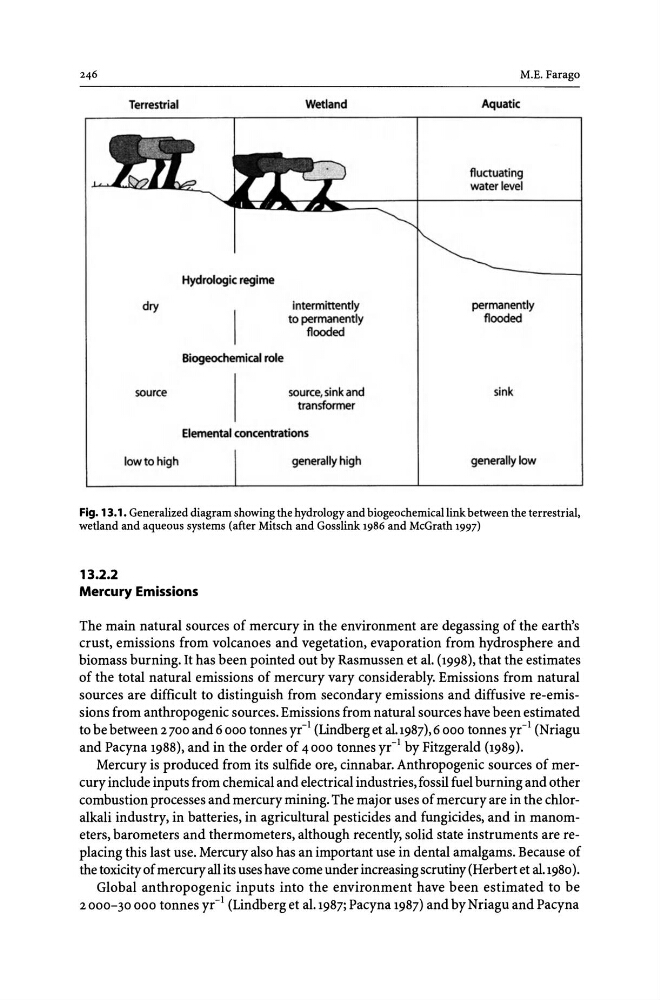
Fig. 13.1. Generalized diagram showing the hydrology and biogeochemical link between the terrestrial,
wetland and aqueous systems (after Mitsch and Gosslink 1986 and McGrath 1997)
13.2.2
Mercury Emissions
The main natural sources of mercury in the environment are degassing of the earth's
crust, emissions from volcanoes and vegetation, evaporation from hydrosphere and
biomass burning. It has been pointed out by Rasmussen et al. (1998), that the estimates
of the total natural emissions of mercury vary considerably. Emissions from natural
sources are difficult to distinguish from secondary emissions and diffusive re-emissions from anthropogenic sources. Emissions from natural sources have been estimated
to be between 2700and6 000 tonnes yr- 1 (Lindberget al.1987),6 000 tonnes yr- 1 (Nriagu
and Pacyna 1988), and in the order of 4000 tonnes yr- 1 by Fitzgerald (1989).
Mercury is produced from its sulfide ore, cinnabar. Anthropogenic sources of mercury include inputs from chemical and electrical industries, fossil fuel burning and other
combustion processes and mercury mining. The major uses of mercury are in the chloralkali industry, in batteries, in agricultural pesticides and fungicides, and in manometers, barometers and thermometers, although recently, solid state instruments are replacing this last use. Mercury also has an important use in dental amalgams. Because of
the toxicity of mercury all its uses have come under increasing scrutiny (Herbert et al.1980 ).
Global anthropogenic inputs into the environment have been estimated to be
2000-30000 tonnes yr- 1 (Lindberg et al.1987; Pacyna 1987) and by Nriagu and Pacyna
Wetland
Hydrologic regime
dry
intermittently
to permanently
flooded
Biogeochemical role
source
source. sink and
transformer
Elemental concentrations
low to high
generally high
M.E. Farago
Aquatic
fluctuating
water level
permanently
flooded
sink
generally low
Fig. 13.1. Generalized diagram showing the hydrology and biogeochemical link between the terrestrial,
wetland and aqueous systems (after Mitsch and Gosslink 1986 and McGrath 1997)
13.2.2
Mercury Emissions
The main natural sources of mercury in the environment are degassing of the earth's
crust, emissions from volcanoes and vegetation, evaporation from hydrosphere and
biomass burning. It has been pointed out by Rasmussen et al. (1998), that the estimates
of the total natural emissions of mercury vary considerably. Emissions from natural
sources are difficult to distinguish from secondary emissions and diffusive re-emissions from anthropogenic sources. Emissions from natural sources have been estimated
to be between 2700and6 000 tonnes yr- 1 (Lindberget al.1987),6 000 tonnes yr- 1 (Nriagu
and Pacyna 1988), and in the order of 4000 tonnes yr- 1 by Fitzgerald (1989).
Mercury is produced from its sulfide ore, cinnabar. Anthropogenic sources of mercury include inputs from chemical and electrical industries, fossil fuel burning and other
combustion processes and mercury mining. The major uses of mercury are in the chloralkali industry, in batteries, in agricultural pesticides and fungicides, and in manometers, barometers and thermometers, although recently, solid state instruments are replacing this last use. Mercury also has an important use in dental amalgams. Because of
the toxicity of mercury all its uses have come under increasing scrutiny (Herbert et al.1980 ).
Global anthropogenic inputs into the environment have been estimated to be
2000-30000 tonnes yr- 1 (Lindberg et al.1987; Pacyna 1987) and by Nriagu and Pacyna