

190 Aquaculture Microbiology and Biotechnology
of culturable heterotrophic bacteria associated with the marine ark shell
Anadara broughtoni inhabiting the Sea of Japan led to isolates having
potent antimicrobial activities. Several bacterial strains isolated from
green and brown marine algae, displayed antibiotic activity. Antibacterial
spectra of all the strains include activity against Staphylococcus, Alcaligenes,
Pseudomonas, Vibrio, Pasteurella, and Achromobacter spp. (Lemos, 1985).
Salinosporamide A is a potent anticancer agent that recently entered phase
I human clinical trial for the treatment of multiple myeloma. The novel
natural product is produced by the recently described obligate marine
bacterium, Salinispora tropica, which is found in ocean sediment (Feling et
al., 2003).
A few marine microorganisms have been observed to produce
polyunsaturated fatty acids (PUFA). Microbial production of PUFA has
been essentially attributed to fi ve well known genera, namely, Shewanella,
Colwella, Photobacterium, Psychromonas and Moritella (Berge and Barnathan,
2005). The chief advantages of biotechnological production of PUFA from
microorganisms are that these organisms produce essentially a single
type of PUFA, rather than a complex of diverse PUFA types, synthesized
by fi sh or algae, therefore providing better consistency and purity of the
fatty acid. Shewanella putrefaciens strain ACAM 342 was found to produce
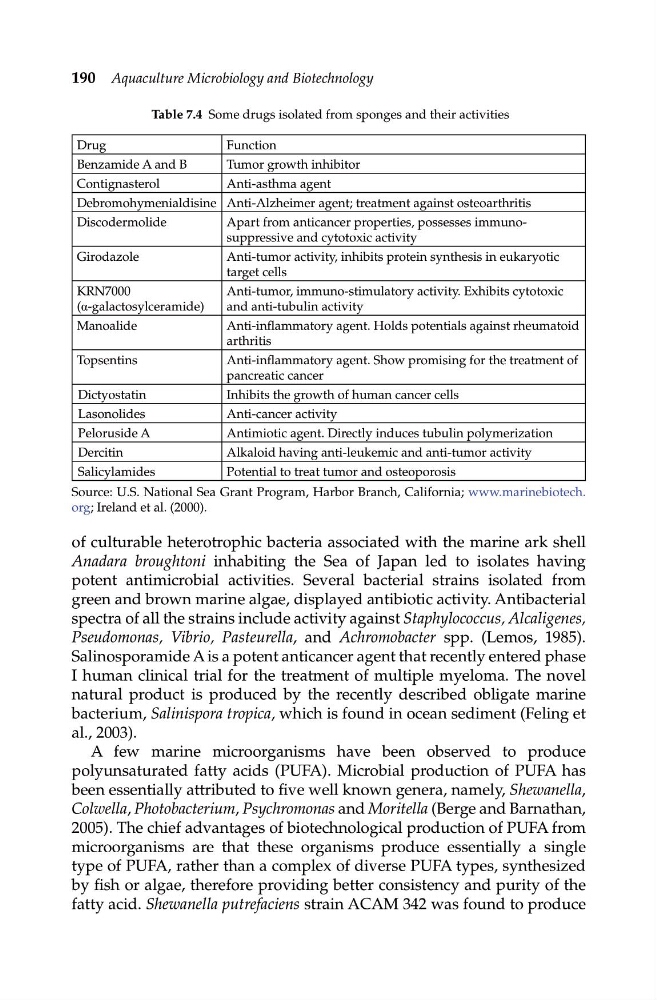
Table 7.4 Some drugs isolated from sponges and their activities
Drug
Function
Benzamide A and B
Tumor growth inhibitor
Contignasterol
Anti-asthma agent
Debromohymenialdisine Anti-Alzheimer agent; treatment against osteoarthritis
Discodermolide
Apart from anticancer properties, possesses immunosuppressive and cytotoxic activity
Girodazole
Anti-tumor activity, inhibits protein synthesis in eukaryotic
target cells
KRN7000
(α-galactosylceramide)
Anti-tumor, immuno-stimulatory activity. Exhibits cytotoxic
and anti-tubulin activity
Manoalide
Anti-infl ammatory agent. Holds potentials against rheumatoid
arthritis
Topsentins
Anti-infl ammatory agent. Show promising for the treatment of
pancreatic cancer
Dictyostatin
Inhibits the growth of human cancer cells
Lasonolides
Anti-cancer activity
Peloruside A
Antimiotic agent. Directly induces tubulin polymerization
Dercitin
Alkaloid having anti-leukemic and anti-tumor activity
Salicylamides
Potential to treat tumor and osteoporosis
Source: U.S. National Sea Grant Program, Harbor Branch, California; www.marinebiotech.
org; Ireland et al. (2000).
of culturable heterotrophic bacteria associated with the marine ark shell
Anadara broughtoni inhabiting the Sea of Japan led to isolates having
potent antimicrobial activities. Several bacterial strains isolated from
green and brown marine algae, displayed antibiotic activity. Antibacterial
spectra of all the strains include activity against Staphylococcus, Alcaligenes,
Pseudomonas, Vibrio, Pasteurella, and Achromobacter spp. (Lemos, 1985).
Salinosporamide A is a potent anticancer agent that recently entered phase
I human clinical trial for the treatment of multiple myeloma. The novel
natural product is produced by the recently described obligate marine
bacterium, Salinispora tropica, which is found in ocean sediment (Feling et
al., 2003).
A few marine microorganisms have been observed to produce
polyunsaturated fatty acids (PUFA). Microbial production of PUFA has
been essentially attributed to fi ve well known genera, namely, Shewanella,
Colwella, Photobacterium, Psychromonas and Moritella (Berge and Barnathan,
2005). The chief advantages of biotechnological production of PUFA from
microorganisms are that these organisms produce essentially a single
type of PUFA, rather than a complex of diverse PUFA types, synthesized
by fi sh or algae, therefore providing better consistency and purity of the
fatty acid. Shewanella putrefaciens strain ACAM 342 was found to produce
Table 7.4 Some drugs isolated from sponges and their activities
Drug
Function
Benzamide A and B
Tumor growth inhibitor
Contignasterol
Anti-asthma agent
Debromohymenialdisine Anti-Alzheimer agent; treatment against osteoarthritis
Discodermolide
Apart from anticancer properties, possesses immunosuppressive and cytotoxic activity
Girodazole
Anti-tumor activity, inhibits protein synthesis in eukaryotic
target cells
KRN7000
(α-galactosylceramide)
Anti-tumor, immuno-stimulatory activity. Exhibits cytotoxic
and anti-tubulin activity
Manoalide
Anti-infl ammatory agent. Holds potentials against rheumatoid
arthritis
Topsentins
Anti-infl ammatory agent. Show promising for the treatment of
pancreatic cancer
Dictyostatin
Inhibits the growth of human cancer cells
Lasonolides
Anti-cancer activity
Peloruside A
Antimiotic agent. Directly induces tubulin polymerization
Dercitin
Alkaloid having anti-leukemic and anti-tumor activity
Salicylamides
Potential to treat tumor and osteoporosis
Source: U.S. National Sea Grant Program, Harbor Branch, California; www.marinebiotech.
org; Ireland et al. (2000).