

Contents
IX
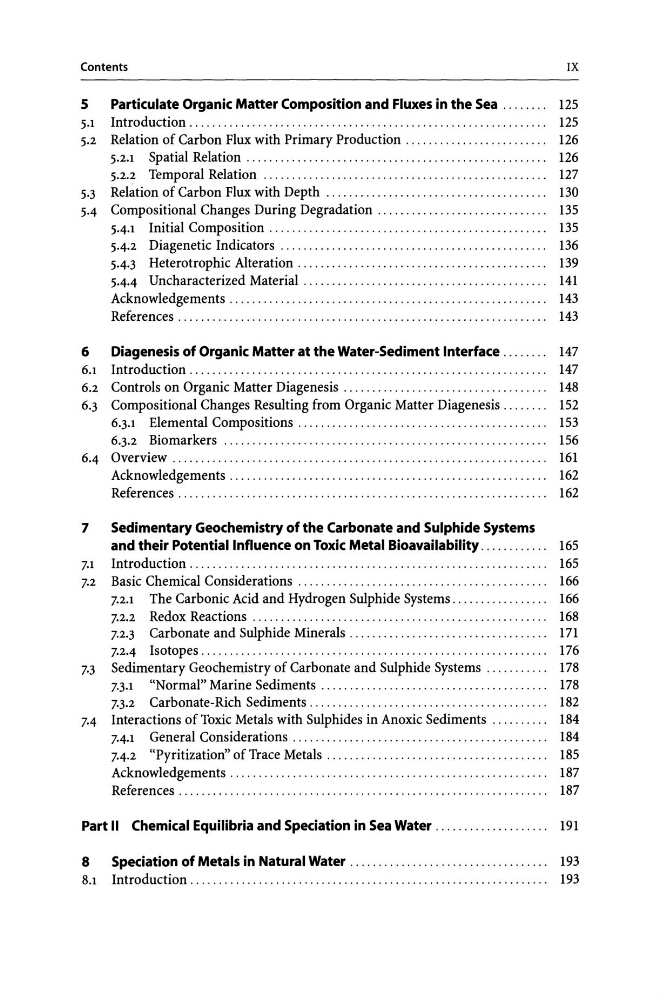
5
Particulate Organic Matter Composition and Fluxes in the Sea. . . . . . .. 125
5.1 Introduction. . . . . . . . . . . . . . . . . . . . . . . . . . . . . . . . . . . . . . . . . . . . . . . . . . . . . . . . . . . . . . . 125
5.2 Relation of Carbon Flux with Primary Production. . . . . . . . . . . . . . . . . . . . . . . .. 126
5.2.1 Spatial Relation. . . . . . . . . . . . . . . . . . . . . . . . . . . . . . . . . . . . . . . . . . . . . . . . . . . . . 126
5.2.2 Temporal Relation .................................................. 127
5.3 Relation of Carbon Flux with Depth ....................................... 130
5.4 Compositional Changes During Degradation . . . . . . . . . . . . . . . . . . . . . . . . . . . . .. 135
541 Initial Composition . . . . . . . . . . . . . . . . . . . . . . . . . . . . . . . . . . . . . . . . . . . . . . . .. 135
5.4.2 Diagenetic Indicators ............................................... 136
5.4.3 Heterotrophic Alteration. . . . . .. . . . . .. . . . .. . . . . . .. . . . . . . .. . . . . . . . . . .. 139
544 Uncharacterized Material. . . . . ... . . . .. . . . ... . . . . .. . . . . . . ... . . . .. . . .. 141
Acknowledgements. . . . . . . . . . . . . . .. . . .. .. . . . . .. . . . .. . . . . .. . . . . . . . .. . . . .. . .. 143
References. . . . . . . . . . . . . . . . . . . . . . . .. . . . . . . . . . . .. . . . .. . . . . . . .... . . . ... . . .. . .. 143
6
Diagenesis of Organic Matter at the Water-Sediment Interface........ 147
6.1 Introduction.. .. . . . . ... . . . . . . . . . ... . . . . ... . . . .. . . . .. . . . . . . ... . . . . .. . . . .. . .. 147
6.2 Controls on Organic Matter Diagenesis.................................... 148
6.3 Compositional Changes Resulting from Organic Matter Diagenesis. . . . . . .. 152
6.3.1 Elemental Compositions. . . . . .. . . . . . . . . . .. . . . . . . . . . . . . . .. . . . .. . . . ... 153
6.3.2 Biomarkers......................................................... 156
6.4 Overview.................................................................. 161
Acknowledgements........................................................ 162
References . . . . . . . . .. . . . . . . . . . . .. . . . . . .. . . . . . . . . . .. . . . . . .. . . . . . . .. . . . .. . . ... 162
7
Sedimentary Geochemistry of the Carbonate and Sulphide Systems
and their Potential Influence on Toxic Metal Bioavailability............ 165
7.1 Introduction. . . . . . . . . . . . . . . . . . . . . . . . . . . . . . . . . . . . . . . . . . . . . . . . . . . . . . . . . . . . . . . 165
7.2 Basic Chemical Considerations............................................ 166
7.2.1 The Carbonic Acid and Hydrogen Sulphide Systems. . . . . . . . . . . . . . . .. 166
7.2.2 Redox Reactions .................................................... 168
7.2.3 Carbonate and Sulphide Minerals.................. ................. 171
7.2.4 Isotopes............................................................. 176
7.3 Sedimentary Geochemistry of Carbonate and Sulphide Systems ........... 178
7.3.1 "Normal" Marine Sediments........................................ 178
7.3.2 Carbonate-Rich Sediments.......................................... 182
7.4 Interactions of Toxic Metals with Sulphides in Anoxic Sediments .......... 184
7.4.1 General Considerations. . . . . .. . . . . .. . . . . .. . . . . . .. . . . . . .. . . . . .. . . . . .. 184
7.4.2 "Pyritization" of Trace Metals. . . . . . . . . . . . . . . . . . . . . . . . . . . . . . . . . . . . . .. 185
Acknowledgements. . . . . . . . . . . . . . . . . . . . . . . . . . . . . . . . . . . . . . . . . . . . . . . . . . . . . . .. 187
References. . . . . . . . . . . . . . . . . . . . . . . . . . . . . . . . . . . . . . . . . . . . . . . . . . . . . . . . . . . . . . . .. 187
Part II Chemical Equilibria and Speciation in Sea Water.................... 191
8
Speciation of Metals in Natural Water................................... 193
8.1 Introduction............................................................... 193
IX
5
Particulate Organic Matter Composition and Fluxes in the Sea. . . . . . .. 125
5.1 Introduction. . . . . . . . . . . . . . . . . . . . . . . . . . . . . . . . . . . . . . . . . . . . . . . . . . . . . . . . . . . . . . . 125
5.2 Relation of Carbon Flux with Primary Production. . . . . . . . . . . . . . . . . . . . . . . .. 126
5.2.1 Spatial Relation. . . . . . . . . . . . . . . . . . . . . . . . . . . . . . . . . . . . . . . . . . . . . . . . . . . . . 126
5.2.2 Temporal Relation .................................................. 127
5.3 Relation of Carbon Flux with Depth ....................................... 130
5.4 Compositional Changes During Degradation . . . . . . . . . . . . . . . . . . . . . . . . . . . . .. 135
541 Initial Composition . . . . . . . . . . . . . . . . . . . . . . . . . . . . . . . . . . . . . . . . . . . . . . . .. 135
5.4.2 Diagenetic Indicators ............................................... 136
5.4.3 Heterotrophic Alteration. . . . . .. . . . . .. . . . .. . . . . . .. . . . . . . .. . . . . . . . . . .. 139
544 Uncharacterized Material. . . . . ... . . . .. . . . ... . . . . .. . . . . . . ... . . . .. . . .. 141
Acknowledgements. . . . . . . . . . . . . . .. . . .. .. . . . . .. . . . .. . . . . .. . . . . . . . .. . . . .. . .. 143
References. . . . . . . . . . . . . . . . . . . . . . . .. . . . . . . . . . . .. . . . .. . . . . . . .... . . . ... . . .. . .. 143
6
Diagenesis of Organic Matter at the Water-Sediment Interface........ 147
6.1 Introduction.. .. . . . . ... . . . . . . . . . ... . . . . ... . . . .. . . . .. . . . . . . ... . . . . .. . . . .. . .. 147
6.2 Controls on Organic Matter Diagenesis.................................... 148
6.3 Compositional Changes Resulting from Organic Matter Diagenesis. . . . . . .. 152
6.3.1 Elemental Compositions. . . . . .. . . . . . . . . . .. . . . . . . . . . . . . . .. . . . .. . . . ... 153
6.3.2 Biomarkers......................................................... 156
6.4 Overview.................................................................. 161
Acknowledgements........................................................ 162
References . . . . . . . . .. . . . . . . . . . . .. . . . . . .. . . . . . . . . . .. . . . . . .. . . . . . . .. . . . .. . . ... 162
7
Sedimentary Geochemistry of the Carbonate and Sulphide Systems
and their Potential Influence on Toxic Metal Bioavailability............ 165
7.1 Introduction. . . . . . . . . . . . . . . . . . . . . . . . . . . . . . . . . . . . . . . . . . . . . . . . . . . . . . . . . . . . . . . 165
7.2 Basic Chemical Considerations............................................ 166
7.2.1 The Carbonic Acid and Hydrogen Sulphide Systems. . . . . . . . . . . . . . . .. 166
7.2.2 Redox Reactions .................................................... 168
7.2.3 Carbonate and Sulphide Minerals.................. ................. 171
7.2.4 Isotopes............................................................. 176
7.3 Sedimentary Geochemistry of Carbonate and Sulphide Systems ........... 178
7.3.1 "Normal" Marine Sediments........................................ 178
7.3.2 Carbonate-Rich Sediments.......................................... 182
7.4 Interactions of Toxic Metals with Sulphides in Anoxic Sediments .......... 184
7.4.1 General Considerations. . . . . .. . . . . .. . . . . .. . . . . . .. . . . . . .. . . . . .. . . . . .. 184
7.4.2 "Pyritization" of Trace Metals. . . . . . . . . . . . . . . . . . . . . . . . . . . . . . . . . . . . . .. 185
Acknowledgements. . . . . . . . . . . . . . . . . . . . . . . . . . . . . . . . . . . . . . . . . . . . . . . . . . . . . . .. 187
References. . . . . . . . . . . . . . . . . . . . . . . . . . . . . . . . . . . . . . . . . . . . . . . . . . . . . . . . . . . . . . . .. 187
Part II Chemical Equilibria and Speciation in Sea Water.................... 191
8
Speciation of Metals in Natural Water................................... 193
8.1 Introduction............................................................... 193