

Contents
XIII
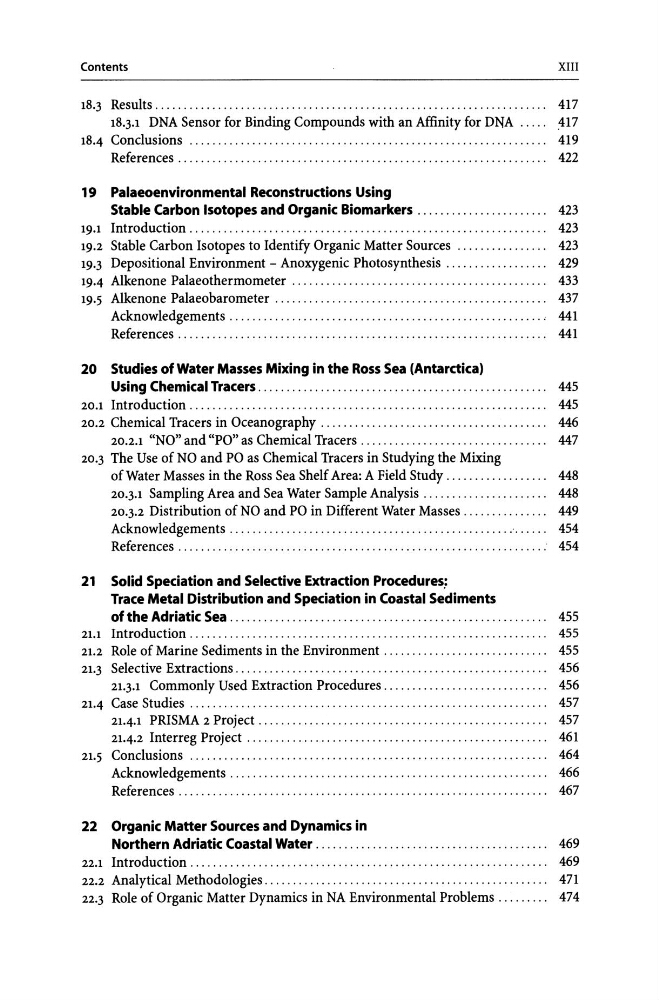
18.3 Results..................................................................... 417
18.3.1 DNA Sensor for Binding Compounds with an Affinity for DNA..... 417
18.4 Conclusions ............................................................... 419
References. . . . . . . . . . . . . . . . . . . . . . . . . . . . . . . . . . . . . . . . . . . . . . . . . . . . . . . . . . . . . . . .. 422
19 Palaeoenvironmental Reconstructions Using
Stable Carbon Isotopes and Organic Biomarkers . . . . . . . . . . . . . . . . . . . . . .. 423
19.1 Introduction............................................................... 423
19.2 Stable Carbon Isotopes to Identify Organic Matter Sources ................ 423
19.3 Depositional Environment - Anoxygenic Photosynthesis .................. 429
19.4 Alkenone Palaeothermometer ............................................. 433
19.5 Alkenone Palaeobarometer ................................................ 437
Acknowledgements........................................................ 441
References. . . . . . . . . . . . . . . . . . . . . . . . . . . . . . . . . . . . . . . . . . . . . . . . . . . . . . . . . . . . . . . .. 441
20 Studies of Water Masses Mixing in the Ross Sea (Antarctica)
Using Chemical Tracers. . . . . . . . . . . . . . . . . . . . . . . . . . . . . . . . . . . . . . . . . . . . . . . . . .. 445
20.1 Introduction............................................................... 445
20.2 Chemical Tracers in Oceanography. . . . . . . . . . . . . . . . . . . . . . . . . . . . . . . . . . . . . . .. 446
20.2.1 "NO" and "PO" as Chemical Tracers. . . . . . . . . . . . . . . . . . . . . . . . . . . . . . . .. 447
20.3 The Use of NO and PO as Chemical Tracers in Studying the Mixing
of Water Masses in the Ross Sea Shelf Area: A Field Study.................. 448
20.3.1 Sampling Area and Sea Water Sample Analysis . . . . . . . . . . . . . . . . . . . . .. 448
20.3.2 Distribution of NO and PO in Different Water Masses. . . . . . . . . . . . . .. 449
Acknowledgements. . . . . . . . . . . . . . . . . . . . . . . . . . . . . . . . . . . . . . . . . . . . . . . . . .. . . . .. 454
References . . . . . . . . . . . . . . . . . . . . . . . . . . . . . . . . . . . . . . . . . . . . . . . . . . . . . . . . . . . . . . . .. 454
21 Solid Speciation and Selective Extraction Procedures~
Trace Metal Distribution and Speciation in Coastal Sediments
of the Adriatic Sea. . . . . . . . . . . . . . . . . . . . . . . . . . . . . . . . . . . . . . . . . . . . . . . . . . . . . . .. 455
21.1 Introduction............................................................... 455
21.2 Role of Marine Sediments in the Environment. . . . . . . . . . . . . . . . . . . . . . . . . . . .. 455
21.3 Selective Extractions. . . . . . . . . . . . . . . . . . . . . . . . . . . . . . . . . . . . . . . . . . . . . . . . . . . . . .. 456
21.3.1 Commonly Used Extraction Procedures. . . . . . . . . . . . . . . . . . . . . . . . . . . .. 456
21.4 Case Studies ............................................................... 457
21.4.1 PRISMA 2 Project. . . . . . . . . . . . . . . . . . . . . . . . . . . . . . . . . . . . . . . . . . . . . . . . . .. 457
21.4.2 Interreg Project. . . . . . . . . . . . . . . . . . . . . . . . . . . . . . . . . . . . . . . . . . . . . . . . . . . .. 461
21.5 Conclusions ............................................................... 464
Acknowledgements. . . . . . . . . . . . . . . . . . . . . . . . . . . . . . . . . . . . . . . . . . . . . . . . . . . . . . .. 466
References. . . . . . . . . . . . . . . . . . . . . . . . . . . . . . . . . . . . . . . . . . . . . . . . . . . . . . . . . . . . . . . .. 467
22 Organic Matter Sources and Dynamics in
Northern Adriatic Coastal Water. . . . . . . . . . . . . . . . . . . . . . . . . . . . . . . . . . . . . . . .. 469
22.1 Introduction............................................................... 469
22.2 Analytical Methodologies. . . . . . . . . . . . . . . . . . . . . . . . . . . . . . . . . . . . . . . . . . . . . . . . .. 47l
22.3 Role of Organic Matter Dynamics in NA Environmental Problems......... 474
XIII
18.3 Results..................................................................... 417
18.3.1 DNA Sensor for Binding Compounds with an Affinity for DNA..... 417
18.4 Conclusions ............................................................... 419
References. . . . . . . . . . . . . . . . . . . . . . . . . . . . . . . . . . . . . . . . . . . . . . . . . . . . . . . . . . . . . . . .. 422
19 Palaeoenvironmental Reconstructions Using
Stable Carbon Isotopes and Organic Biomarkers . . . . . . . . . . . . . . . . . . . . . .. 423
19.1 Introduction............................................................... 423
19.2 Stable Carbon Isotopes to Identify Organic Matter Sources ................ 423
19.3 Depositional Environment - Anoxygenic Photosynthesis .................. 429
19.4 Alkenone Palaeothermometer ............................................. 433
19.5 Alkenone Palaeobarometer ................................................ 437
Acknowledgements........................................................ 441
References. . . . . . . . . . . . . . . . . . . . . . . . . . . . . . . . . . . . . . . . . . . . . . . . . . . . . . . . . . . . . . . .. 441
20 Studies of Water Masses Mixing in the Ross Sea (Antarctica)
Using Chemical Tracers. . . . . . . . . . . . . . . . . . . . . . . . . . . . . . . . . . . . . . . . . . . . . . . . . .. 445
20.1 Introduction............................................................... 445
20.2 Chemical Tracers in Oceanography. . . . . . . . . . . . . . . . . . . . . . . . . . . . . . . . . . . . . . .. 446
20.2.1 "NO" and "PO" as Chemical Tracers. . . . . . . . . . . . . . . . . . . . . . . . . . . . . . . .. 447
20.3 The Use of NO and PO as Chemical Tracers in Studying the Mixing
of Water Masses in the Ross Sea Shelf Area: A Field Study.................. 448
20.3.1 Sampling Area and Sea Water Sample Analysis . . . . . . . . . . . . . . . . . . . . .. 448
20.3.2 Distribution of NO and PO in Different Water Masses. . . . . . . . . . . . . .. 449
Acknowledgements. . . . . . . . . . . . . . . . . . . . . . . . . . . . . . . . . . . . . . . . . . . . . . . . . .. . . . .. 454
References . . . . . . . . . . . . . . . . . . . . . . . . . . . . . . . . . . . . . . . . . . . . . . . . . . . . . . . . . . . . . . . .. 454
21 Solid Speciation and Selective Extraction Procedures~
Trace Metal Distribution and Speciation in Coastal Sediments
of the Adriatic Sea. . . . . . . . . . . . . . . . . . . . . . . . . . . . . . . . . . . . . . . . . . . . . . . . . . . . . . .. 455
21.1 Introduction............................................................... 455
21.2 Role of Marine Sediments in the Environment. . . . . . . . . . . . . . . . . . . . . . . . . . . .. 455
21.3 Selective Extractions. . . . . . . . . . . . . . . . . . . . . . . . . . . . . . . . . . . . . . . . . . . . . . . . . . . . . .. 456
21.3.1 Commonly Used Extraction Procedures. . . . . . . . . . . . . . . . . . . . . . . . . . . .. 456
21.4 Case Studies ............................................................... 457
21.4.1 PRISMA 2 Project. . . . . . . . . . . . . . . . . . . . . . . . . . . . . . . . . . . . . . . . . . . . . . . . . .. 457
21.4.2 Interreg Project. . . . . . . . . . . . . . . . . . . . . . . . . . . . . . . . . . . . . . . . . . . . . . . . . . . .. 461
21.5 Conclusions ............................................................... 464
Acknowledgements. . . . . . . . . . . . . . . . . . . . . . . . . . . . . . . . . . . . . . . . . . . . . . . . . . . . . . .. 466
References. . . . . . . . . . . . . . . . . . . . . . . . . . . . . . . . . . . . . . . . . . . . . . . . . . . . . . . . . . . . . . . .. 467
22 Organic Matter Sources and Dynamics in
Northern Adriatic Coastal Water. . . . . . . . . . . . . . . . . . . . . . . . . . . . . . . . . . . . . . . .. 469
22.1 Introduction............................................................... 469
22.2 Analytical Methodologies. . . . . . . . . . . . . . . . . . . . . . . . . . . . . . . . . . . . . . . . . . . . . . . . .. 47l
22.3 Role of Organic Matter Dynamics in NA Environmental Problems......... 474