

13.3 Dispersion of River Plumes
409
The annual discharge of the world's rivers is about 38 x 10 3 km 3 of freshwater
and about 26x 10 9 metric tonnes of sediments (Alongi, 1998). More than half
of the world's river water enters the tropical coastal regions in the Indo-Pacific
margins or in northeastern South America and west-central Africa. A great
variety of physical processes, driven by the tropical climate, make the tropical coastal margins unique compared to coastal zones in the temperate latitudes. The climate of the tropical regions is characterized by sustainable high
rates of rainfall, sunlight and temperature. The enormous discharge of tropical
rivers, such as the Amazon (5700 km 3 /year), or Zaire (1292 km 3 /year), and the
transported sediment produce extensive river plumes, in some areas extending
beyond the shelf edge.
Observations in the Caribbean Sea show regular, seasonal salinity fluctuations, with the fall of salinity coincident with increased concentrations of dissolved silicate (Froelich et al., 1978). These salinity fluctuations are related
to the Amazon River discharge. For example, Gibbs (1976) has observed the
Amazon plume to extend northwestward from the mouth of the river along
the continental shelf before turning offshore. These large lenses of Amazon
River water may be subsequently transported by the North Equatorial and
Guiana Current systems into the Caribbean Sea. Calculations by Froelich et
al. (1978) indicate that as much as 60% of the freshwater seasonally entering
the Caribbean Sea is of Amazon and Orinoco origin.
~ 30000
MS
'-'
£ 25000
CIS
....
~
0
c;:: 20000
S
::l
S
.;<
15000
CIS
:::E
10000
5000
0
1950
1960
1970
1980
1990
2000
Time (years)
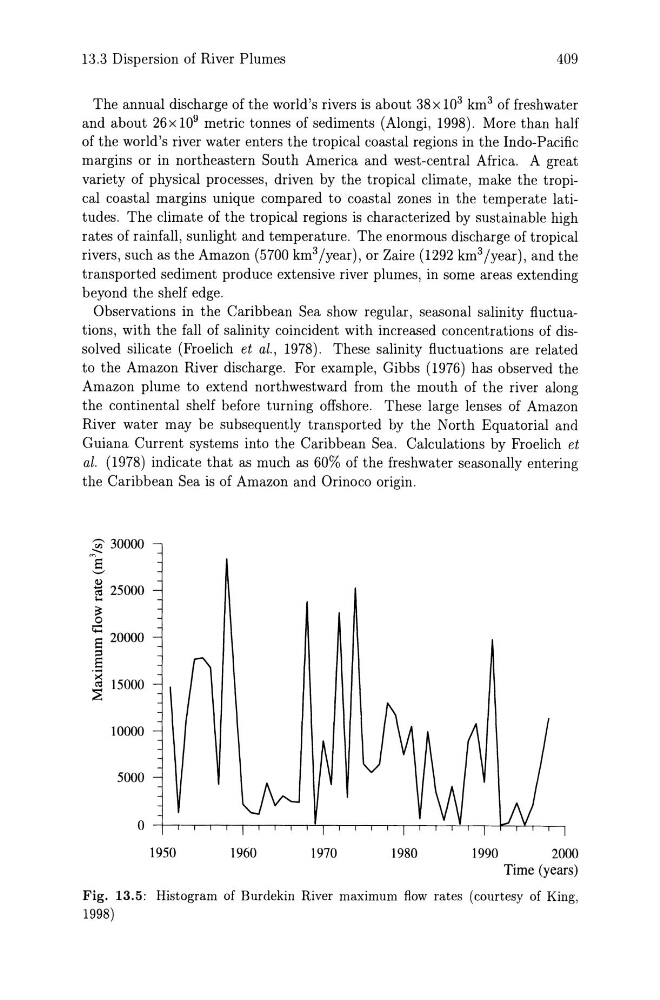
Fig. 13.5: Histogram of Burdekin River maximum flow rates (courtesy of King,
1998)
409
The annual discharge of the world's rivers is about 38 x 10 3 km 3 of freshwater
and about 26x 10 9 metric tonnes of sediments (Alongi, 1998). More than half
of the world's river water enters the tropical coastal regions in the Indo-Pacific
margins or in northeastern South America and west-central Africa. A great
variety of physical processes, driven by the tropical climate, make the tropical coastal margins unique compared to coastal zones in the temperate latitudes. The climate of the tropical regions is characterized by sustainable high
rates of rainfall, sunlight and temperature. The enormous discharge of tropical
rivers, such as the Amazon (5700 km 3 /year), or Zaire (1292 km 3 /year), and the
transported sediment produce extensive river plumes, in some areas extending
beyond the shelf edge.
Observations in the Caribbean Sea show regular, seasonal salinity fluctuations, with the fall of salinity coincident with increased concentrations of dissolved silicate (Froelich et al., 1978). These salinity fluctuations are related
to the Amazon River discharge. For example, Gibbs (1976) has observed the
Amazon plume to extend northwestward from the mouth of the river along
the continental shelf before turning offshore. These large lenses of Amazon
River water may be subsequently transported by the North Equatorial and
Guiana Current systems into the Caribbean Sea. Calculations by Froelich et
al. (1978) indicate that as much as 60% of the freshwater seasonally entering
the Caribbean Sea is of Amazon and Orinoco origin.
~ 30000
MS
'-'
£ 25000
CIS
....
~
0
c;:: 20000
S
::l
S
.;<
15000
CIS
:::E
10000
5000
0
1950
1960
1970
1980
1990
2000
Time (years)
Fig. 13.5: Histogram of Burdekin River maximum flow rates (courtesy of King,
1998)