

301
Chapter thirteen: Disease
As all of these seal species have a thick blubber layer as insulation, the polar bear diet is
high in fat. Lipophilic contaminants, such as PCBs, DDT, and a variety of flame retardants
are stored in fat over the lifetime of the animal. Thus, the polar bear diet is also high in
contaminants.
Many contaminants can have effects on reproduction by disrupting hormone pathways
and can cause immunosuppression, leaving animals with an increased susceptibility to
infectious diseases or certain types of cancer. Studies over three decades have tracked levels of lipophilic contaminants in polar bear fat. Nearly all of the legacy organochlorine contaminants (which have been banned or highly regulated) showed a statistically significant
decline, suggesting that banning these compounds will lead to them slowly disappearing
from the environment (Dietz et al. 2013a). However, relatively high levels still persist in
polar bear tissues, at levels that continue to have the potential to cause health changes.
Unfortunately, when studying contaminants for which no international bans currently
exist, the trends are reversed. Brominated flame retardant (BFR) concentrations more than
doubled on average across the same study period (Dietz et al. 2013b). In addition to the
effects described above, BFRs can also cause neurotoxicity, and may affect the liver and
thyroid. Due to their unique diet, polar bears are exposed to high levels of lipophilic contaminants. This is only one health risk that these animals are exposed to as they live in a
changing Arctic.
13.7 Marine mammal populations
As we have illustrated, individual marine mammals are susceptible to disease due to a
variety of physiological and anatomical adaptations that allow them to inhabit an aquatic
environment. However, disease can also have a dramatic negative effect on health of a
population of marine mammals and is a major risk to small isolated populations. Many
threats from infectious agents to marine mammal populations are a direct consequence of
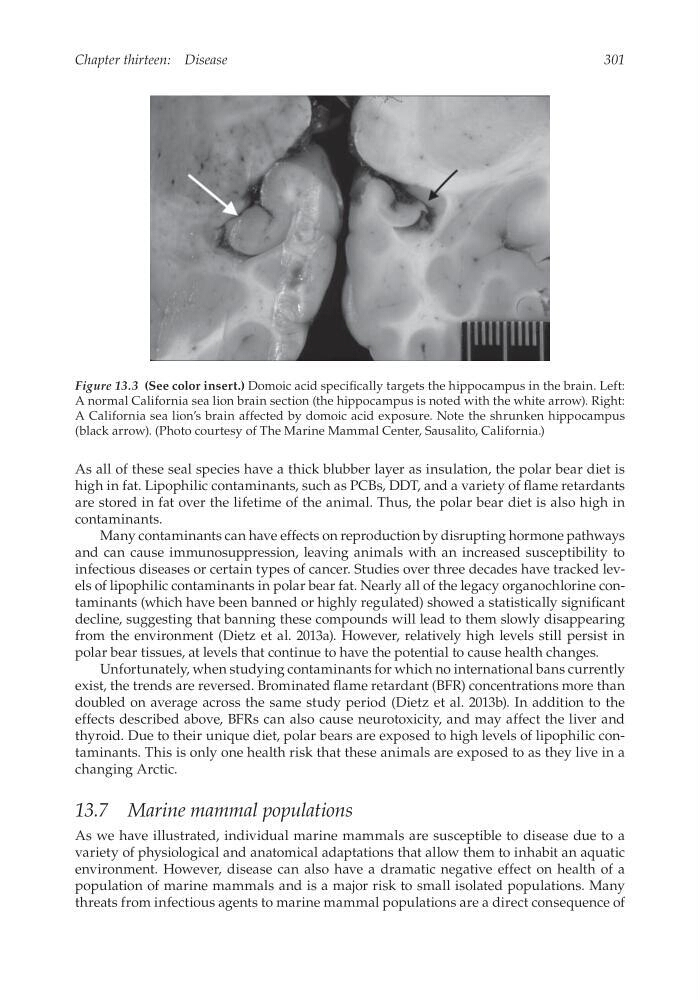
Figure 13.3 (See color insert.) Domoic acid specifically targets the hippocampus in the brain. Left:
A normal California sea lion brain section (the hippocampus is noted with the white arrow). Right:
A California sea lion’s brain affected by domoic acid exposure. Note the shrunken hippocampus
(black arrow). (Photo courtesy of The Marine Mammal Center, Sausalito, California.)
Chapter thirteen: Disease
As all of these seal species have a thick blubber layer as insulation, the polar bear diet is
high in fat. Lipophilic contaminants, such as PCBs, DDT, and a variety of flame retardants
are stored in fat over the lifetime of the animal. Thus, the polar bear diet is also high in
contaminants.
Many contaminants can have effects on reproduction by disrupting hormone pathways
and can cause immunosuppression, leaving animals with an increased susceptibility to
infectious diseases or certain types of cancer. Studies over three decades have tracked levels of lipophilic contaminants in polar bear fat. Nearly all of the legacy organochlorine contaminants (which have been banned or highly regulated) showed a statistically significant
decline, suggesting that banning these compounds will lead to them slowly disappearing
from the environment (Dietz et al. 2013a). However, relatively high levels still persist in
polar bear tissues, at levels that continue to have the potential to cause health changes.
Unfortunately, when studying contaminants for which no international bans currently
exist, the trends are reversed. Brominated flame retardant (BFR) concentrations more than
doubled on average across the same study period (Dietz et al. 2013b). In addition to the
effects described above, BFRs can also cause neurotoxicity, and may affect the liver and
thyroid. Due to their unique diet, polar bears are exposed to high levels of lipophilic contaminants. This is only one health risk that these animals are exposed to as they live in a
changing Arctic.
13.7 Marine mammal populations
As we have illustrated, individual marine mammals are susceptible to disease due to a
variety of physiological and anatomical adaptations that allow them to inhabit an aquatic
environment. However, disease can also have a dramatic negative effect on health of a
population of marine mammals and is a major risk to small isolated populations. Many
threats from infectious agents to marine mammal populations are a direct consequence of
Figure 13.3 (See color insert.) Domoic acid specifically targets the hippocampus in the brain. Left:
A normal California sea lion brain section (the hippocampus is noted with the white arrow). Right:
A California sea lion’s brain affected by domoic acid exposure. Note the shrunken hippocampus
(black arrow). (Photo courtesy of The Marine Mammal Center, Sausalito, California.)