

224
Marine Mammal Physiology: Requisites for Ocean Living
away from potential predators, and sometimes distant from their patchy food resources.
The strategy for managing the separation of marine feeding and terrestrial birth leads to
the major differences between individual phocid and otariid species reproductive biology.
10.2.2.1 Lactation strategies
The general pattern in phocids is that the majority of parental investment is derived
from stored body reserves, a capital breeding strategy. This strategy is associated with a
short lactation period for their body size (Figure 10.1). In some species (e.g., harbor [Phoca
vitulina], gray [Halichoerus grypus], bearded [Erignathus barbatus], harp [Pagophilus groenlandicus], ringed [Pusa hispida], and Weddell seals [Leptonychotes weddellii]), individuals
may feed during lactation; but this tendency varies individually with body reserves and
the proximity of food resources (Lydersen et al. 1995; Lydersen and Kovacs 1996). Some
of the smallest phocids, like harbor seals and ringed seals, feed frequently throughout
lactation (Lydersen 1995; Bowen et al. 2001). In phocid species that do forage during lactation, the foraging trip is usually short, lasting just a few hours. This capital breeding
strategy is analogous to the short lactation period relative to body size described previously for fasting mysticete whales. The phocid lactation period varies between 4 days
in the hooded seal to up to 6–7 weeks in the Weddell seal. Weaning is often abrupt and
occurs when the mother abandons the pup to return to sea. In phocid species where the
mother feeds during lactation, weaning may be less abrupt and pups may spend significant time in the water prior to weaning. The most extreme example of the abbreviated
phocid lactation system is the hooded seal (Cystophora cristata), where females lactate for
only 3–4 days. In this short time, the pup can double its birth mass receiving more than
10 L of milk per day containing an average fat content of 59% (Lydersen et al. 1997). The
abbreviated duration and complete separation of lactation from foraging allows many
phocid seals to use highly dispersed food resources and undergo long foraging migrations to distant feeding areas.
Within capital breeding phocids, there is wide variation in the postweaning behavior and physiology of the pups. In some species, like northern elephant seals (Mirounga
angustirostris), the pup remains at the rookery and undergoes a period of extended fasting
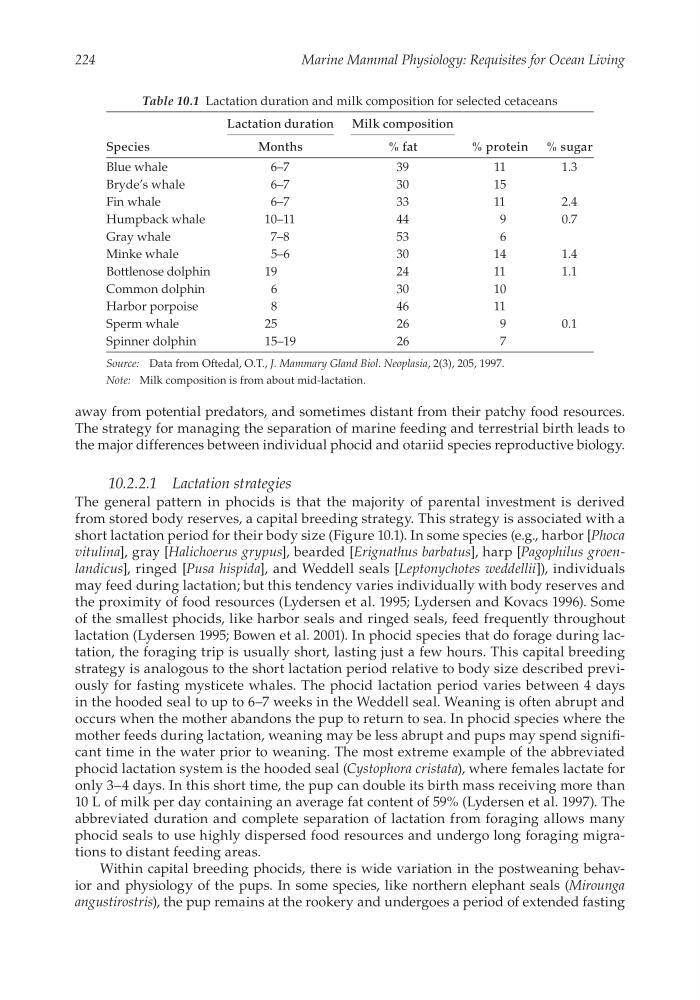
Table 10.1 Lactation duration and milk composition for selected cetaceans
Lactation duration Milk composition
Species
Months
% fat
% protein % sugar
Blue whale
6–7
39
11
1.3
Bryde’s whale
6–7
30
15
Fin whale
6–7
33
11
2.4
Humpback whale
10–11
44
9
0.7
Gray whale
7–8
53
6
Minke whale
5–6
30
14
1.4
Bottlenose dolphin
19
24
11
1.1
Common dolphin
6
30
10
Harbor porpoise
8
46
11
Sperm whale
25
26
9
0.1
Spinner dolphin
15–19
26
7
Source: Data from Oftedal, O.T., J. Mammary Gland Biol. Neoplasia, 2(3), 205, 1997.
Note: Milk composition is from about mid-lactation.
Marine Mammal Physiology: Requisites for Ocean Living
away from potential predators, and sometimes distant from their patchy food resources.
The strategy for managing the separation of marine feeding and terrestrial birth leads to
the major differences between individual phocid and otariid species reproductive biology.
10.2.2.1 Lactation strategies
The general pattern in phocids is that the majority of parental investment is derived
from stored body reserves, a capital breeding strategy. This strategy is associated with a
short lactation period for their body size (Figure 10.1). In some species (e.g., harbor [Phoca
vitulina], gray [Halichoerus grypus], bearded [Erignathus barbatus], harp [Pagophilus groenlandicus], ringed [Pusa hispida], and Weddell seals [Leptonychotes weddellii]), individuals
may feed during lactation; but this tendency varies individually with body reserves and
the proximity of food resources (Lydersen et al. 1995; Lydersen and Kovacs 1996). Some
of the smallest phocids, like harbor seals and ringed seals, feed frequently throughout
lactation (Lydersen 1995; Bowen et al. 2001). In phocid species that do forage during lactation, the foraging trip is usually short, lasting just a few hours. This capital breeding
strategy is analogous to the short lactation period relative to body size described previously for fasting mysticete whales. The phocid lactation period varies between 4 days
in the hooded seal to up to 6–7 weeks in the Weddell seal. Weaning is often abrupt and
occurs when the mother abandons the pup to return to sea. In phocid species where the
mother feeds during lactation, weaning may be less abrupt and pups may spend significant time in the water prior to weaning. The most extreme example of the abbreviated
phocid lactation system is the hooded seal (Cystophora cristata), where females lactate for
only 3–4 days. In this short time, the pup can double its birth mass receiving more than
10 L of milk per day containing an average fat content of 59% (Lydersen et al. 1997). The
abbreviated duration and complete separation of lactation from foraging allows many
phocid seals to use highly dispersed food resources and undergo long foraging migrations to distant feeding areas.
Within capital breeding phocids, there is wide variation in the postweaning behavior and physiology of the pups. In some species, like northern elephant seals (Mirounga
angustirostris), the pup remains at the rookery and undergoes a period of extended fasting
Table 10.1 Lactation duration and milk composition for selected cetaceans
Lactation duration Milk composition
Species
Months
% fat
% protein % sugar
Blue whale
6–7
39
11
1.3
Bryde’s whale
6–7
30
15
Fin whale
6–7
33
11
2.4
Humpback whale
10–11
44
9
0.7
Gray whale
7–8
53
6
Minke whale
5–6
30
14
1.4
Bottlenose dolphin
19
24
11
1.1
Common dolphin
6
30
10
Harbor porpoise
8
46
11
Sperm whale
25
26
9
0.1
Spinner dolphin
15–19
26
7
Source: Data from Oftedal, O.T., J. Mammary Gland Biol. Neoplasia, 2(3), 205, 1997.
Note: Milk composition is from about mid-lactation.