

222
Marine Mammal Physiology: Requisites for Ocean Living
warmer waters for parturition, nursing, and mating. Feeding may be essentially absent at
the birthing locations. It has been hypothesized that these breeding areas may provide environments with warmer and calmer water for the calves, which may lower thermoregulatory costs, thereby increasing growth efficiency. However, more recent studies indicate that
baleen whale mothers and their calves are thermal-neutral in cold water, and the migration
(a)
Mother
Parturition
Lactation
pup
0
2 7
100
Mother gradually regains
mass for subsequent
reproduction
Pup departs for initial
foraging trip to sea
500
330
140
Mass (kg)
40
Foraging at sea
Postweaning fast
120
Pup attains nutritional
independence
Mother alternates between fasting while nursing
during attendance periods and foraging at sea
Pup
Perinatal
period
Mother
45
35
20
Mass (kg)
5
Parturition
Mother weans pup after
prolonged lactation
114
108
102
32
26
Days post-parturition
(b)
20
14
8
0
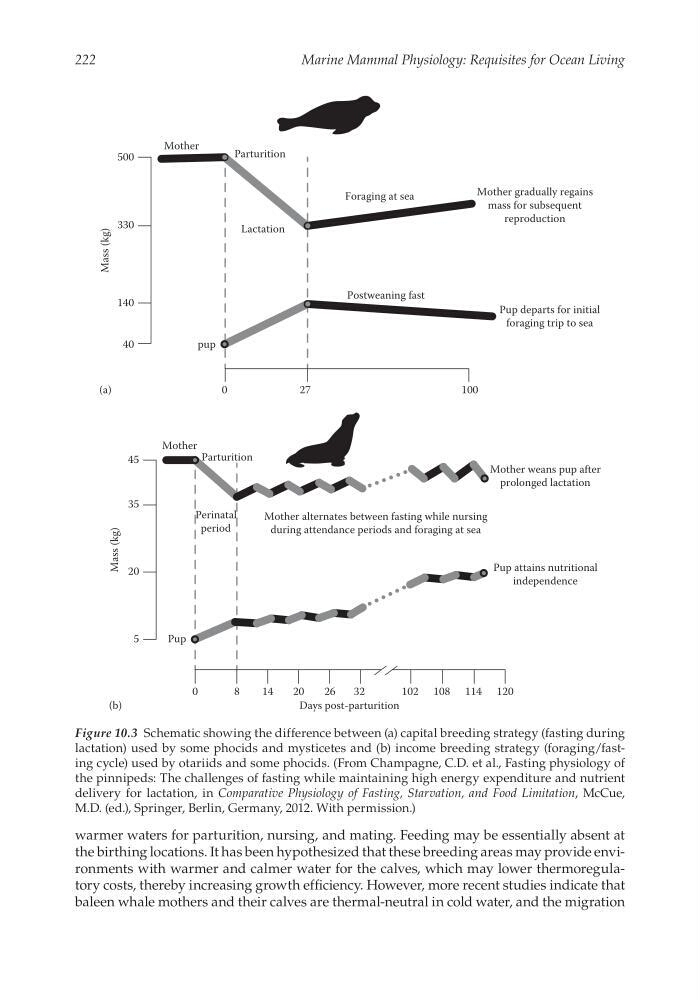
Figure 10.3 Schematic showing the difference between (a) capital breeding strategy (fasting during
lactation) used by some phocids and mysticetes and (b) income breeding strategy (foraging/fasting cycle) used by otariids and some phocids. (From Champagne, C.D. et al., Fasting physiology of
the pinnipeds: The challenges of fasting while maintaining high energy expenditure and nutrient
delivery for lactation, in Comparative Physiology of Fasting, Starvation, and Food Limitation, McCue,
M.D. (ed.), Springer, Berlin, Germany, 2012. With permission.)
Marine Mammal Physiology: Requisites for Ocean Living
warmer waters for parturition, nursing, and mating. Feeding may be essentially absent at
the birthing locations. It has been hypothesized that these breeding areas may provide environments with warmer and calmer water for the calves, which may lower thermoregulatory costs, thereby increasing growth efficiency. However, more recent studies indicate that
baleen whale mothers and their calves are thermal-neutral in cold water, and the migration
(a)
Mother
Parturition
Lactation
pup
0
2 7
100
Mother gradually regains
mass for subsequent
reproduction
Pup departs for initial
foraging trip to sea
500
330
140
Mass (kg)
40
Foraging at sea
Postweaning fast
120
Pup attains nutritional
independence
Mother alternates between fasting while nursing
during attendance periods and foraging at sea
Pup
Perinatal
period
Mother
45
35
20
Mass (kg)
5
Parturition
Mother weans pup after
prolonged lactation
114
108
102
32
26
Days post-parturition
(b)
20
14
8
0
Figure 10.3 Schematic showing the difference between (a) capital breeding strategy (fasting during
lactation) used by some phocids and mysticetes and (b) income breeding strategy (foraging/fasting cycle) used by otariids and some phocids. (From Champagne, C.D. et al., Fasting physiology of
the pinnipeds: The challenges of fasting while maintaining high energy expenditure and nutrient
delivery for lactation, in Comparative Physiology of Fasting, Starvation, and Food Limitation, McCue,
M.D. (ed.), Springer, Berlin, Germany, 2012. With permission.)