

108
Marine Mammal Physiology: Requisites for Ocean Living
5.2.4 Order Carnivora: Sea otters
Sea otters (Enhydra lutris) are the smallest and most recent group of marine mammals to
return to marine habitats. They are thought to have arisen in the North Pacific during
the Pleistocene (Leffler 1964; Mitchell 1966; Repenning 1976) and have only become fully
aquatic in the last 1–3 million years (Berta and Sumich 1999). Taxonomically, they are in
the order Carnivora, Family Mustelidae. However, two subfamilies are commonly recognized, the mustelinae (mainly terrestrial mustelids such as fishers, martens, and wolverines) and the Lutrinae (otters including sea otters). Their similarity to their aquatic otter
relatives may be the reason why sea otter feeding has not received much attention. In fact,
although some function studies of dietary adaptations have been conducted in terrestrial
mustelids, there are few data for otters (Lutrinae) in general.
Although feeding adaptations have been examined to some extent in terrestrial mustelids (Riley 1985; Popowics 2003; Lee and Miller 2004; Abramov and Puzachenko 2005),
few data exist for aquatic mustelids such as otters (Lutrinae). Morphological and behavioral diversity among otters is reflected in their diet and foraging behaviors (Radinsky
1981a,b; Kruuk et al. 1994; Hussain and Choudhury 1997; Lee and Miller 2004; Sacco and
Van Valkenburgh 2004; Meiri et al. 2005; Goswami 2006; Van Valkenburg 2007; Wroe and
(d)
5 cm
100 cm
B
C
D
A
5 cm
5 cm
5 cm
Mexico—Early pliocene
India—Early miocene
Florid—Late oligocene
1. Metaxytherium sp.
2. Crenatosiren olseni
3. Dioplotherium manigaulti
3
6
5
4
7
8
9
2
1
5 cm
6. Bharatisiren kachchhensis
5. Domningia sodhae
7. Nanosiren cf. N. garciae
8. Dioplotherium sp.
9. Corystosiren
varguezi
Lozenge
Flattened
Round
5 cm
4. Kutchisiren cylindrica
60°
78°
5 cm
30%-40%
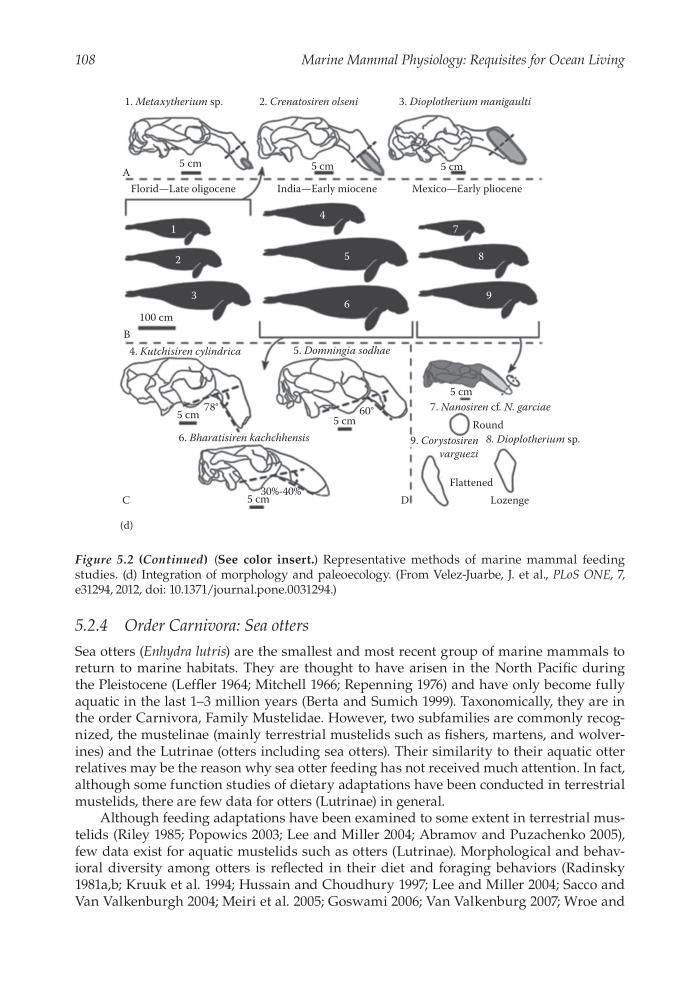
Figure 5.2 (Continued) (See color insert.) Representative methods of marine mammal feeding
studies. (d) Integration of morphology and paleoecology. (From Velez-Juarbe, J. et al., PLoS ONE, 7,
e31294, 2012, doi: 10.1371/journal.pone.0031294.)
Marine Mammal Physiology: Requisites for Ocean Living
5.2.4 Order Carnivora: Sea otters
Sea otters (Enhydra lutris) are the smallest and most recent group of marine mammals to
return to marine habitats. They are thought to have arisen in the North Pacific during
the Pleistocene (Leffler 1964; Mitchell 1966; Repenning 1976) and have only become fully
aquatic in the last 1–3 million years (Berta and Sumich 1999). Taxonomically, they are in
the order Carnivora, Family Mustelidae. However, two subfamilies are commonly recognized, the mustelinae (mainly terrestrial mustelids such as fishers, martens, and wolverines) and the Lutrinae (otters including sea otters). Their similarity to their aquatic otter
relatives may be the reason why sea otter feeding has not received much attention. In fact,
although some function studies of dietary adaptations have been conducted in terrestrial
mustelids, there are few data for otters (Lutrinae) in general.
Although feeding adaptations have been examined to some extent in terrestrial mustelids (Riley 1985; Popowics 2003; Lee and Miller 2004; Abramov and Puzachenko 2005),
few data exist for aquatic mustelids such as otters (Lutrinae). Morphological and behavioral diversity among otters is reflected in their diet and foraging behaviors (Radinsky
1981a,b; Kruuk et al. 1994; Hussain and Choudhury 1997; Lee and Miller 2004; Sacco and
Van Valkenburgh 2004; Meiri et al. 2005; Goswami 2006; Van Valkenburg 2007; Wroe and
(d)
5 cm
100 cm
B
C
D
A
5 cm
5 cm
5 cm
Mexico—Early pliocene
India—Early miocene
Florid—Late oligocene
1. Metaxytherium sp.
2. Crenatosiren olseni
3. Dioplotherium manigaulti
3
6
5
4
7
8
9
2
1
5 cm
6. Bharatisiren kachchhensis
5. Domningia sodhae
7. Nanosiren cf. N. garciae
8. Dioplotherium sp.
9. Corystosiren
varguezi
Lozenge
Flattened
Round
5 cm
4. Kutchisiren cylindrica
60°
78°
5 cm
30%-40%
Figure 5.2 (Continued) (See color insert.) Representative methods of marine mammal feeding
studies. (d) Integration of morphology and paleoecology. (From Velez-Juarbe, J. et al., PLoS ONE, 7,
e31294, 2012, doi: 10.1371/journal.pone.0031294.)