

Prehistoric and Ancient Historic Interactions
21
appear to distinguish the freshwater creatures from those in the marine scene. Wall
reliefs in King Sargon’s palace at Khorsabad have been categorized as “monumental
sculptural arts.” Dating from 721–705 B.C.E., the relief on the southeast wall of a
prominent courtroom in the palace shows an aquatic scene emphasizing the transport
of timber; the sculpture may have originally measured 3 m high by 14 m wide.
Interpreted as a seascape of the Mediterranean coast, it seems to have been an
important geopolitical statement about Assyria’s domination over trade routes and
states along the eastern shore of the Mediterranean (Albenda, 1983). Several turtles
are depicted in the aquatic setting. Their form, particularly the limbs that are not
flipper-shaped, but rather like webbed feet, each with five claws, is not consistent
with that of a marine turtle. Moreover, one of the turtles seems to have been added
at the Museum at the Louvre during a restoration of the wall (Albenda, 1983: 6).
However, because Assyrian depictions of turtles in other situations also show characteristics that deviate from real features, it has been argued that the turtles on the
wall at Khorsabad are marine turtles (Albenda, 1983: 27).
For decades it has been claimed that tortoiseshell was used in ancient Egypt (Lucas,
1948: 50; see also Parsons, 1972), so it has been argued that tortoiseshell was also used
in ancient Mesopotamia (Leemans, 1960, in particular footnote 4, pp. 25–26). Yet, there
seems to have been confusion among contemporary scholars of both Egypt and Mesopotamia in distinguishing between the shell of a land tortoise and the epidermal scutes
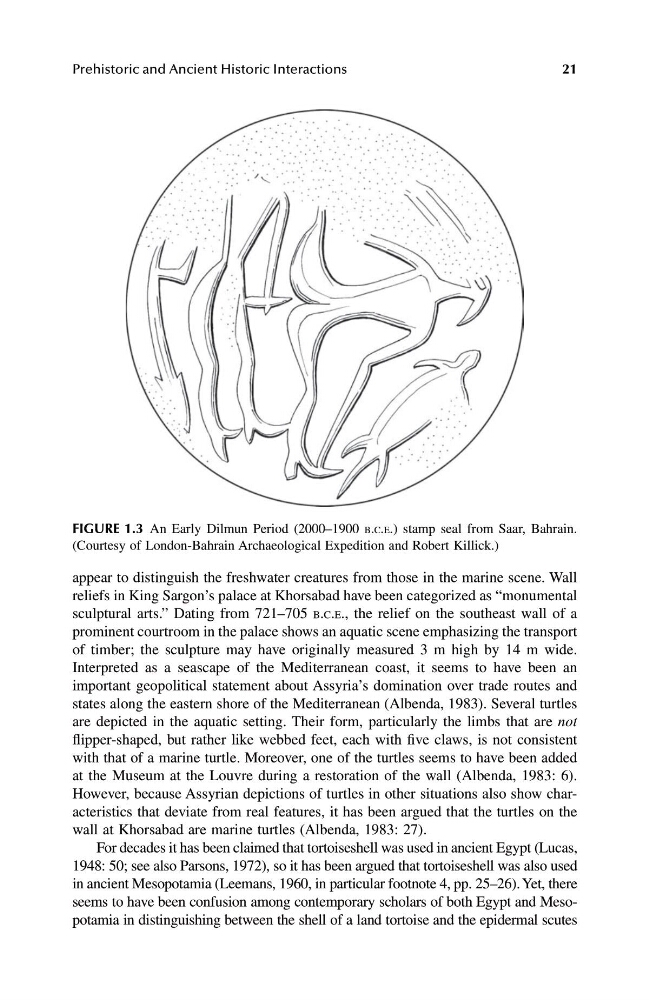
FIGURE 1.3 An Early Dilmun Period (2000–1900 B.C.E.) stamp seal from Saar, Bahrain.
(Courtesy of London-Bahrain Archaeological Expedition and Robert Killick.)
1123_C01.fm Page 21 Friday, November 15, 2002 11:13 AM
21
appear to distinguish the freshwater creatures from those in the marine scene. Wall
reliefs in King Sargon’s palace at Khorsabad have been categorized as “monumental
sculptural arts.” Dating from 721–705 B.C.E., the relief on the southeast wall of a
prominent courtroom in the palace shows an aquatic scene emphasizing the transport
of timber; the sculpture may have originally measured 3 m high by 14 m wide.
Interpreted as a seascape of the Mediterranean coast, it seems to have been an
important geopolitical statement about Assyria’s domination over trade routes and
states along the eastern shore of the Mediterranean (Albenda, 1983). Several turtles
are depicted in the aquatic setting. Their form, particularly the limbs that are not
flipper-shaped, but rather like webbed feet, each with five claws, is not consistent
with that of a marine turtle. Moreover, one of the turtles seems to have been added
at the Museum at the Louvre during a restoration of the wall (Albenda, 1983: 6).
However, because Assyrian depictions of turtles in other situations also show characteristics that deviate from real features, it has been argued that the turtles on the
wall at Khorsabad are marine turtles (Albenda, 1983: 27).
For decades it has been claimed that tortoiseshell was used in ancient Egypt (Lucas,
1948: 50; see also Parsons, 1972), so it has been argued that tortoiseshell was also used
in ancient Mesopotamia (Leemans, 1960, in particular footnote 4, pp. 25–26). Yet, there
seems to have been confusion among contemporary scholars of both Egypt and Mesopotamia in distinguishing between the shell of a land tortoise and the epidermal scutes
FIGURE 1.3 An Early Dilmun Period (2000–1900 B.C.E.) stamp seal from Saar, Bahrain.
(Courtesy of London-Bahrain Archaeological Expedition and Robert Killick.)
1123_C01.fm Page 21 Friday, November 15, 2002 11:13 AM