

Physiological and Genetic Responses to Environmental Stress
175
6.3.4 D ISEASE
Disease can be both a cause and a symptom of stress. Large numbers of leeches,
for example, can lead to anemia and damage the dermis, thus opening routes for
secondary infections, whereas barnacle loads increase stress by increasing drag
(George, 1997). Models of swimming and drag suggest that a heavy barnacle load
may increase drag up to tenfold and energetic requirements in swimming sea turtles
by more than threefold (Gascoigne and Mansfield, 2002).
In general, bacterial infections are relatively rare in free-roaming sea turtles
(although they occur more frequently in the crowded conditions of captivity); traumatic injury to the dermis and aspiration of seawater are the two primary routes by
which bacteria enter (George, 1997; see also Chapter 15). Even infections that are
less acutely toxic may have significant effects on sea turtle health that will increase
overall stress on the animal. This is seen, for instance, in the buoyancy abnormalities
associated with pneumonia reported by Jacobson et al. (1979). Health problems and
diseases of sea turtles are reviewed extensively in the first volume of this series
(George, 1997).
6.3.4.1 Trematodes
Among loggerhead turtles, the most damaging parasites are the spirorchid trematodes, which reside in the vascular system and affect up to 30% of the Atlantic
loggerhead population (Wolke et al., 1982). Green turtles are also vulnerable. A
histopathological examination of four dead green turtles by Raidal et al. (1998)
revealed severe granulomatous vasculitis, with aggregations of spirorchid eggs and
microabcesses in the intestines, kidney, liver, lung, and brain. This damage in turn
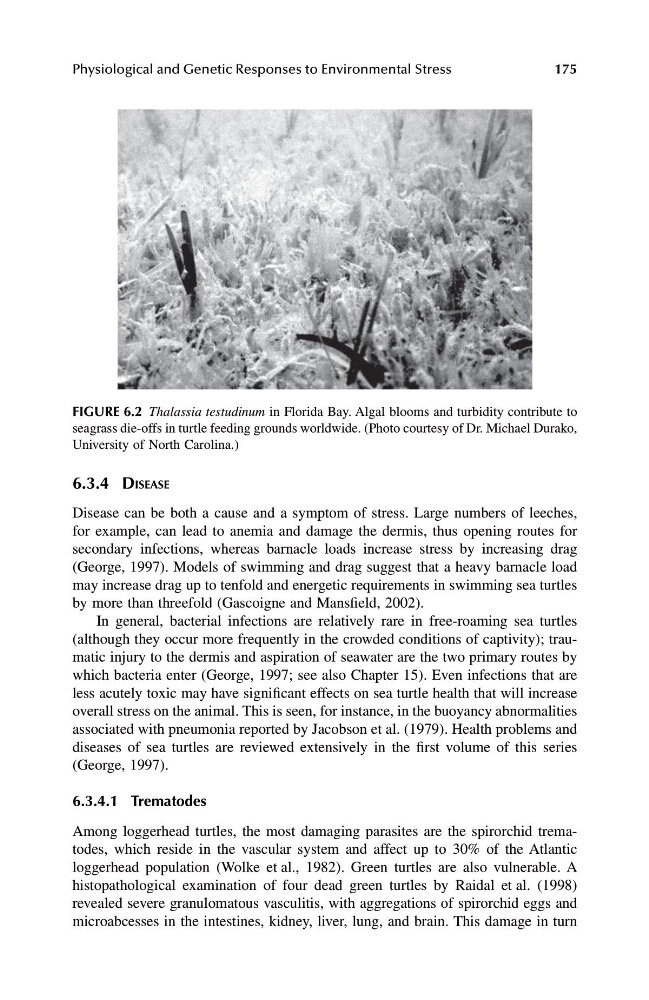
FIGURE 6.2 Thalassia testudinum in Florida Bay. Algal blooms and turbidity contribute to
seagrass die-offs in turtle feeding grounds worldwide. (Photo courtesy of Dr. Michael Durako,
University of North Carolina.)
1123 book.book Page 175 Monday, November 11, 2002 11:11 AM
175
6.3.4 D ISEASE
Disease can be both a cause and a symptom of stress. Large numbers of leeches,
for example, can lead to anemia and damage the dermis, thus opening routes for
secondary infections, whereas barnacle loads increase stress by increasing drag
(George, 1997). Models of swimming and drag suggest that a heavy barnacle load
may increase drag up to tenfold and energetic requirements in swimming sea turtles
by more than threefold (Gascoigne and Mansfield, 2002).
In general, bacterial infections are relatively rare in free-roaming sea turtles
(although they occur more frequently in the crowded conditions of captivity); traumatic injury to the dermis and aspiration of seawater are the two primary routes by
which bacteria enter (George, 1997; see also Chapter 15). Even infections that are
less acutely toxic may have significant effects on sea turtle health that will increase
overall stress on the animal. This is seen, for instance, in the buoyancy abnormalities
associated with pneumonia reported by Jacobson et al. (1979). Health problems and
diseases of sea turtles are reviewed extensively in the first volume of this series
(George, 1997).
6.3.4.1 Trematodes
Among loggerhead turtles, the most damaging parasites are the spirorchid trematodes, which reside in the vascular system and affect up to 30% of the Atlantic
loggerhead population (Wolke et al., 1982). Green turtles are also vulnerable. A
histopathological examination of four dead green turtles by Raidal et al. (1998)
revealed severe granulomatous vasculitis, with aggregations of spirorchid eggs and
microabcesses in the intestines, kidney, liver, lung, and brain. This damage in turn
FIGURE 6.2 Thalassia testudinum in Florida Bay. Algal blooms and turbidity contribute to
seagrass die-offs in turtle feeding grounds worldwide. (Photo courtesy of Dr. Michael Durako,
University of North Carolina.)
1123 book.book Page 175 Monday, November 11, 2002 11:11 AM