

Alternative Green Biofuel from Microalgae: A Promising Renewable Resource 261
yields in a short reaction time, even if they are applied at low molar concentrations. Metal hydroxides are
cheaper than metal alkoxides, but less active. However, they are a good alternative since they can give
the same high conversions of oils just by increasing the catalyst concentration to 1 or 2 mol%. However,
homogeneous transesterification conversions involve high-energy consumption, a difficult separation of
the catalyst from the homogenous reaction mixtures, and are expensive as well as chemically wasteful
(Lotero et al. 2005). Re-usable heterogeneous catalysts have gained attention as replacement for
homogenous catalysts, due to the ease of product separation and reusability.
Several reports about the use of heterogeneous acid catalysts to produce biodiesel, including
MCM–41 (Pariente et al. 2003), Nafion (Ngaosuwan et al. 2007), lanthanum zeolite-β (Shu et al. 2007),
metal carbonates or oxides (Demirbas 2008), zeolites (Ramos et al. 2008), Amberlyst-15 (Talukder et al.
2009), heteropolyacid catalyst (Zhang et al. 2010), sulphonated amorphous carbon (Toda et al. 2005; Shu
et al. 2010), and metal oxides (Joana et al. 2012) have been published in the last few years. However,
the aforementioned catalysts have also some drawbacks, such as tedious preparation, elevated price of
starting materials, and possible leaching into the reaction medium, which makes them non-reusable
(Ngaosuwan et al. 2007; Park et al. 2009). Therefore, carbon-based heterogeneous acid (Devi et al. 2009)
and base (Devi et al. 2017) catalysts are the key to new developments in the production of biodiesel,
combined with their reusable application in a continuous process and easy separation from the reaction
mixture. These catalysts have therefore the potential of substantially decreasing the costs of biodiesel
production.
Enzymatic-catalysed transesterification: There is increasing interest in using biocatalysts in TAG
conversion to biodiesel. Biocatalysts allow easy substrate-catalyst separation, the use of mild, simple
reaction conditions, attaining high product purity. Biocatalysts can be prepared from renewable
sources, being re-usable, and favour stereospecific environment-friendly reactions of esterification and
transesterification. Contrary to chemical catalysts, enzymes do not form soaps and catalyse esterification
of FFA and TAG in one step without any need for the washing step. A number of studies have reported
that lipases yield promising results as alternative catalysts (Nelson et al. 1996; Iso et al. 2001; Kose et al.
2002; Shimada et al. 2002). Nonetheless, the enzymatic process for the production of biodiesel is still not
commercially feasible, due to the relatively high cost of the biocatalyst (Fukuda et al. 2001) and enzyme
inactivation by alcohols such as methanol, ethanol, and glycerol (Samukawa et al. 2000). It was reported
that the activity of the lipase inhibited by methanol can be restored to a certain extent by washing the
enzyme with secondary and tertiary alcohols such as isopropanol, 2-butanol, and tertiary butanol (Chen
R-COOMe
R
1
-COOMe
Transesterification
R
1 -COOH
R
1 -COOMe
+
+
Esterification
Triacylglycerol
Fatty Acid
Biodiesel
Glycerol
+
Biodiesel
+
R, R
1 = Alkyl chain
O-C-R
R-C-O
O-C-R
O
O
O
O-C-R
R-C-O
O-C-R
O
O
O
OH
HO
OH
Triacylglycerol
methanol/acid catalyst
methanol/ acid or
base catalyst
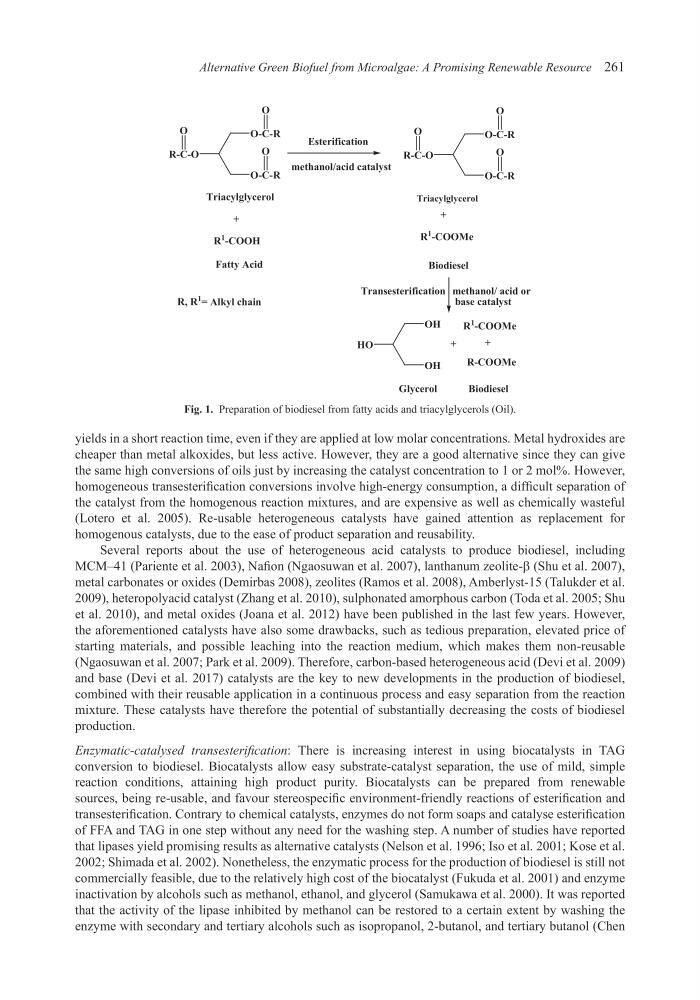
Fig. 1. Preparation of biodiesel from fatty acids and triacylglycerols (Oil).
yields in a short reaction time, even if they are applied at low molar concentrations. Metal hydroxides are
cheaper than metal alkoxides, but less active. However, they are a good alternative since they can give
the same high conversions of oils just by increasing the catalyst concentration to 1 or 2 mol%. However,
homogeneous transesterification conversions involve high-energy consumption, a difficult separation of
the catalyst from the homogenous reaction mixtures, and are expensive as well as chemically wasteful
(Lotero et al. 2005). Re-usable heterogeneous catalysts have gained attention as replacement for
homogenous catalysts, due to the ease of product separation and reusability.
Several reports about the use of heterogeneous acid catalysts to produce biodiesel, including
MCM–41 (Pariente et al. 2003), Nafion (Ngaosuwan et al. 2007), lanthanum zeolite-β (Shu et al. 2007),
metal carbonates or oxides (Demirbas 2008), zeolites (Ramos et al. 2008), Amberlyst-15 (Talukder et al.
2009), heteropolyacid catalyst (Zhang et al. 2010), sulphonated amorphous carbon (Toda et al. 2005; Shu
et al. 2010), and metal oxides (Joana et al. 2012) have been published in the last few years. However,
the aforementioned catalysts have also some drawbacks, such as tedious preparation, elevated price of
starting materials, and possible leaching into the reaction medium, which makes them non-reusable
(Ngaosuwan et al. 2007; Park et al. 2009). Therefore, carbon-based heterogeneous acid (Devi et al. 2009)
and base (Devi et al. 2017) catalysts are the key to new developments in the production of biodiesel,
combined with their reusable application in a continuous process and easy separation from the reaction
mixture. These catalysts have therefore the potential of substantially decreasing the costs of biodiesel
production.
Enzymatic-catalysed transesterification: There is increasing interest in using biocatalysts in TAG
conversion to biodiesel. Biocatalysts allow easy substrate-catalyst separation, the use of mild, simple
reaction conditions, attaining high product purity. Biocatalysts can be prepared from renewable
sources, being re-usable, and favour stereospecific environment-friendly reactions of esterification and
transesterification. Contrary to chemical catalysts, enzymes do not form soaps and catalyse esterification
of FFA and TAG in one step without any need for the washing step. A number of studies have reported
that lipases yield promising results as alternative catalysts (Nelson et al. 1996; Iso et al. 2001; Kose et al.
2002; Shimada et al. 2002). Nonetheless, the enzymatic process for the production of biodiesel is still not
commercially feasible, due to the relatively high cost of the biocatalyst (Fukuda et al. 2001) and enzyme
inactivation by alcohols such as methanol, ethanol, and glycerol (Samukawa et al. 2000). It was reported
that the activity of the lipase inhibited by methanol can be restored to a certain extent by washing the
enzyme with secondary and tertiary alcohols such as isopropanol, 2-butanol, and tertiary butanol (Chen
R-COOMe
R
1
-COOMe
Transesterification
R
1 -COOH
R
1 -COOMe
+
+
Esterification
Triacylglycerol
Fatty Acid
Biodiesel
Glycerol
+
Biodiesel
+
R, R
1 = Alkyl chain
O-C-R
R-C-O
O-C-R
O
O
O
O-C-R
R-C-O
O-C-R
O
O
O
OH
HO
OH
Triacylglycerol
methanol/acid catalyst
methanol/ acid or
base catalyst
Fig. 1. Preparation of biodiesel from fatty acids and triacylglycerols (Oil).