

Degradation of Pesticides in the Environment
69
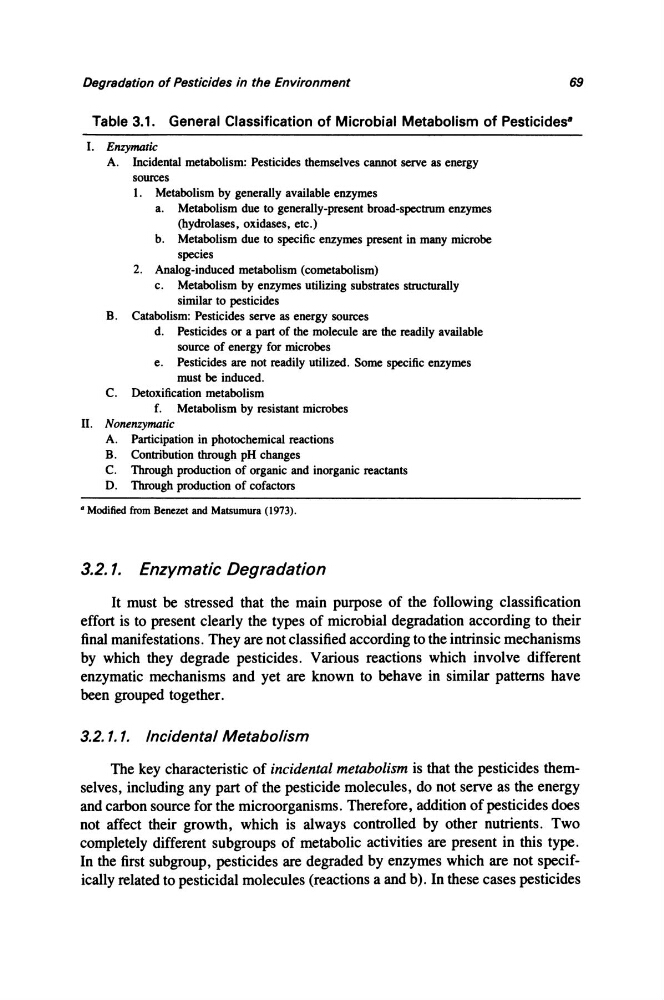
Table 3.1. General Classification of Microbial Metabolism of Pesticides"
I. Enzymatic
A. Incidental metabolism: Pesticides themselves cannot serve as energy
sources
1. Metabolism by generally available enzymes
a. Metabolism due to generally-present broad-spectrum enzymes
(hydrolases, oxidases, etc.)
b. Metabolism due to specific enzymes present in many microbe
species
2. Analog-induced metabolism (cometabolism)
c. Metabolism by enzymes utilizing substrates structurally
similar to pesticides
B. Catabolism: Pesticides serve as energy sources
d. Pesticides or a part of the molecule are the readily available
source of energy for microbes
e. Pesticides are not readily utilized. Some specific enzymes
must be induced.
C. Detoxification metabolism
f. Metabolism by resistant microbes
II. Nonenzymatic
A. Participation in photochemical reactions
B. Contribution through pH changes
C. Through production of organic and inorganic reactants
D. Through production of cofactors
• Modified from Benezet and Matsumura (1973).
3.2.1. Enzymatic Degradation
It must be stressed that the main purpose of the following classification
effort is to present clearly the types of microbial degradation according to their
final manifestations. They are not classified according to the intrinsic mechanisms
by which they degrade pesticides. Various reactions which involve different
enzymatic mechanisms and yet are known to behave in similar patterns have
been grouped together.
3.2. 1. 1. Incidental Metabolism
The key characteristic of incidental metabolism is that the pesticides themselves, including any part of the pesticide molecules, do not serve as the energy
and carbon source for the microorganisms. Therefore, addition of pesticides does
not affect their growth, which is always controlled by other nutrients. Two
completely different subgroups of metabolic activities are present in this type.
In the first subgroup, pesticides are degraded by enzymes which are not specifically related to pesticidal molecules (reactions a and b). In these cases pesticides
69
Table 3.1. General Classification of Microbial Metabolism of Pesticides"
I. Enzymatic
A. Incidental metabolism: Pesticides themselves cannot serve as energy
sources
1. Metabolism by generally available enzymes
a. Metabolism due to generally-present broad-spectrum enzymes
(hydrolases, oxidases, etc.)
b. Metabolism due to specific enzymes present in many microbe
species
2. Analog-induced metabolism (cometabolism)
c. Metabolism by enzymes utilizing substrates structurally
similar to pesticides
B. Catabolism: Pesticides serve as energy sources
d. Pesticides or a part of the molecule are the readily available
source of energy for microbes
e. Pesticides are not readily utilized. Some specific enzymes
must be induced.
C. Detoxification metabolism
f. Metabolism by resistant microbes
II. Nonenzymatic
A. Participation in photochemical reactions
B. Contribution through pH changes
C. Through production of organic and inorganic reactants
D. Through production of cofactors
• Modified from Benezet and Matsumura (1973).
3.2.1. Enzymatic Degradation
It must be stressed that the main purpose of the following classification
effort is to present clearly the types of microbial degradation according to their
final manifestations. They are not classified according to the intrinsic mechanisms
by which they degrade pesticides. Various reactions which involve different
enzymatic mechanisms and yet are known to behave in similar patterns have
been grouped together.
3.2. 1. 1. Incidental Metabolism
The key characteristic of incidental metabolism is that the pesticides themselves, including any part of the pesticide molecules, do not serve as the energy
and carbon source for the microorganisms. Therefore, addition of pesticides does
not affect their growth, which is always controlled by other nutrients. Two
completely different subgroups of metabolic activities are present in this type.
In the first subgroup, pesticides are degraded by enzymes which are not specifically related to pesticidal molecules (reactions a and b). In these cases pesticides