

Pesticide Metabolism in Plants
51
SOLUBLE AND
INSOLUBLE PRODUCTS
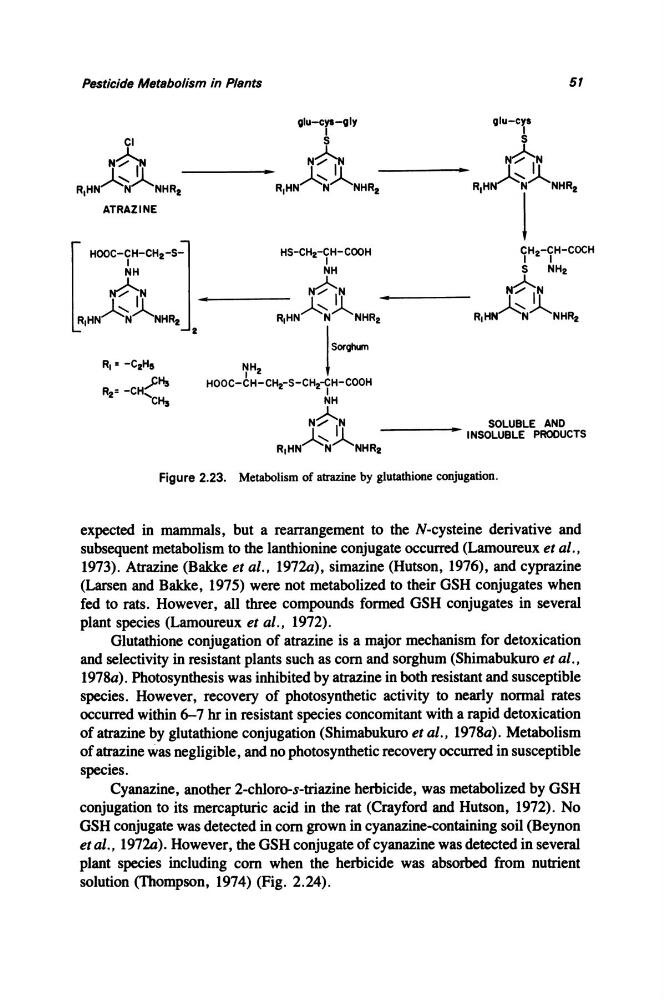
Figure 2.23. Metabolism of attazine by glutathione conjugation.
expected in mammals, but a rearrangement to the N-cysteine derivative and
subsequent metabolism to the lanthionine conjugate occurred (Lamoureux et al.,
1973). Atrazine (Bakke et al., 1972a), simazine (Hutson, 1976), and cyprazine
(Larsen and Bakke, 1975) were not metabolized to their GSH conjugates when
fed to rats. However, all three compounds formed GSH conjugates in several
plant species (Lamoureux et al., 1972).
Glutathione conjugation of atrazine is a major mechanism for detoxication
and selectivity in resistant plants such as corn and sorghum (Shimabukuro et al.,
1978a). Photosynthesis was inhibited by atrazine in both resistant and susceptible
species. However, recovery of photosynthetic activity to nearly normal rates
occurred within 6-7 hr in resistant species concomitant with a rapid detoxication
of atrazine by glutathione conjugation (Shimabukuro et al., 1978a). Metabolism
of atrazine was negligible, and no photosynthetic recovery occurred in susceptible
species.
Cyanazine, another 2-chloro-s-triazine herbicide, was metabolized by OSH
conjugation to its mercapturic acid in the rat (Crayford and Hutson, 1972). No
GSH conjugate was detected in corn grown in cyanazine-containing soil (Beynon
etal., 1972a). However, the OSH conjugate of cyanazine was detected in several
plant species including corn when the herbicide was absorbed from nutrient
solution (Thompson, 1974) (Fig. 2.24).
51
SOLUBLE AND
INSOLUBLE PRODUCTS
Figure 2.23. Metabolism of attazine by glutathione conjugation.
expected in mammals, but a rearrangement to the N-cysteine derivative and
subsequent metabolism to the lanthionine conjugate occurred (Lamoureux et al.,
1973). Atrazine (Bakke et al., 1972a), simazine (Hutson, 1976), and cyprazine
(Larsen and Bakke, 1975) were not metabolized to their GSH conjugates when
fed to rats. However, all three compounds formed GSH conjugates in several
plant species (Lamoureux et al., 1972).
Glutathione conjugation of atrazine is a major mechanism for detoxication
and selectivity in resistant plants such as corn and sorghum (Shimabukuro et al.,
1978a). Photosynthesis was inhibited by atrazine in both resistant and susceptible
species. However, recovery of photosynthetic activity to nearly normal rates
occurred within 6-7 hr in resistant species concomitant with a rapid detoxication
of atrazine by glutathione conjugation (Shimabukuro et al., 1978a). Metabolism
of atrazine was negligible, and no photosynthetic recovery occurred in susceptible
species.
Cyanazine, another 2-chloro-s-triazine herbicide, was metabolized by OSH
conjugation to its mercapturic acid in the rat (Crayford and Hutson, 1972). No
GSH conjugate was detected in corn grown in cyanazine-containing soil (Beynon
etal., 1972a). However, the OSH conjugate of cyanazine was detected in several
plant species including corn when the herbicide was absorbed from nutrient
solution (Thompson, 1974) (Fig. 2.24).