

34
Richard H. Shimabukuro et al.
CI
CI
CI
NO~N
NO~N
N~N
H~ ~H---· It ~H - - - - - IO.,.l
C2 H,N
N
NCH(CH 3 '2
H2 N-""'""'N
NCH(CH3'2
H2 N""N
NH2
ATRAZINE
CF
OQ-N~CH'
o
CI
CH 3
H
-
R-NCH3 -
R-NH2
SAN 9789
SAN 6706
H
-----;.~ R-NCH 3 -
R-NH 2
DIPHENAMID
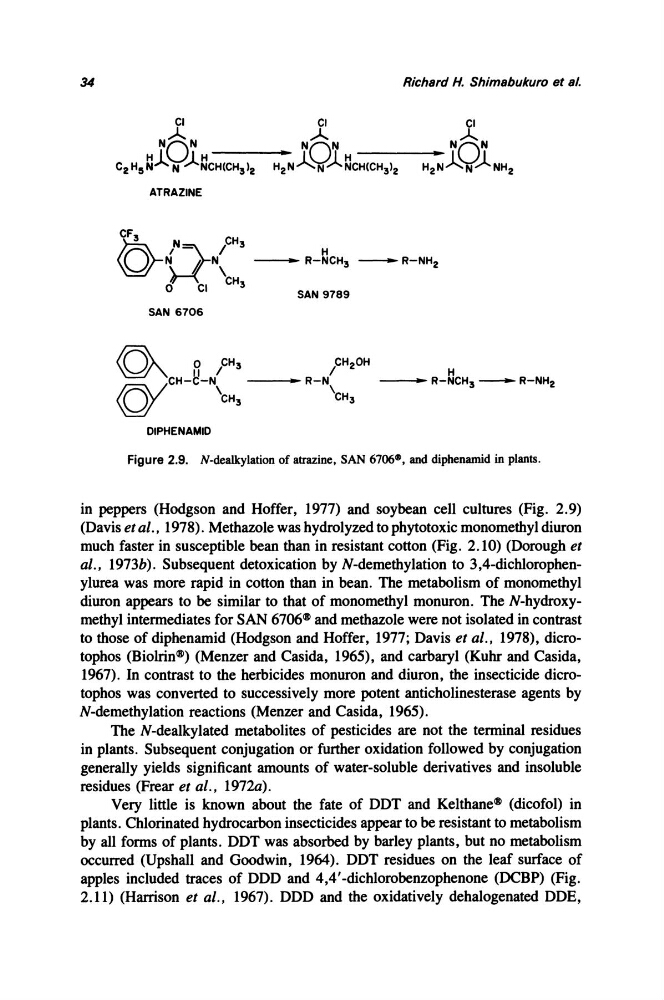
Figure 2.9. N-dealkylation of atrazine, SAN 6706~, and diphenamid in plants.
in peppers (Hodgson and Hoffer, 1977) and soybean cell cultures (Fig. 2.9)
(Davis et al., 1978). Methazole was hydrolyzed to phytotoxic monomethyl diuron
much faster in susceptible bean than in resistant cotton (Fig. 2.10) (Dorough et
al., 1973b). Subsequent detoxication by N-demethylation to 3,4-dichlorophenylurea was more rapid in cotton than in bean. The metabolism of monomethyl
diuron appears to be similar to that of monomethyl monuron. The N-hydroxymethyl intermediates for SAN 6706® and methazole were not isolated in contrast
to those of diphenarnid (Hodgson and Hoffer, 1977; Davis et al., 1978), dicrotophos (Biolrin®) (Menzer and Casida, 1965), and carbaryl (Kuhr and Casida,
1967). In contrast to the herbicides monuron and diuron, the insecticide dicrotophos was converted to successively more potent anticholinesterase agents by
N-demethylation reactions (Menzer and Casida, 1965).
The N-dealkylated metabolites of pesticides are not the terminal residues
in plants. Subsequent conjugation or further oxidation followed by conjugation
generally yields significant amounts of water-soluble derivatives and insoluble
residues (Frear et al., 19720).
Very little is known about the fate of DDT and Kelthane® (dicofol) in
plants. Chlorinated hydrocarbon insecticides appear to be resistant to metabolism
by all forms of plants. DDT was absorbed by barley plants, but no metabolism
occurred (Upshall and Goodwin, 1964). DDT residues on the leaf surface of
apples included traces of DDD and 4,4' -dichlorobenzophenone (DCBP) (Fig.
2.11) (Harrison et al., 1967). DDD and the oxidatively dehalogenated DDE,
Richard H. Shimabukuro et al.
CI
CI
CI
NO~N
NO~N
N~N
H~ ~H---· It ~H - - - - - IO.,.l
C2 H,N
N
NCH(CH 3 '2
H2 N-""'""'N
NCH(CH3'2
H2 N""N
NH2
ATRAZINE
CF
OQ-N~CH'
o
CI
CH 3
H
-
R-NCH3 -
R-NH2
SAN 9789
SAN 6706
H
-----;.~ R-NCH 3 -
R-NH 2
DIPHENAMID
Figure 2.9. N-dealkylation of atrazine, SAN 6706~, and diphenamid in plants.
in peppers (Hodgson and Hoffer, 1977) and soybean cell cultures (Fig. 2.9)
(Davis et al., 1978). Methazole was hydrolyzed to phytotoxic monomethyl diuron
much faster in susceptible bean than in resistant cotton (Fig. 2.10) (Dorough et
al., 1973b). Subsequent detoxication by N-demethylation to 3,4-dichlorophenylurea was more rapid in cotton than in bean. The metabolism of monomethyl
diuron appears to be similar to that of monomethyl monuron. The N-hydroxymethyl intermediates for SAN 6706® and methazole were not isolated in contrast
to those of diphenarnid (Hodgson and Hoffer, 1977; Davis et al., 1978), dicrotophos (Biolrin®) (Menzer and Casida, 1965), and carbaryl (Kuhr and Casida,
1967). In contrast to the herbicides monuron and diuron, the insecticide dicrotophos was converted to successively more potent anticholinesterase agents by
N-demethylation reactions (Menzer and Casida, 1965).
The N-dealkylated metabolites of pesticides are not the terminal residues
in plants. Subsequent conjugation or further oxidation followed by conjugation
generally yields significant amounts of water-soluble derivatives and insoluble
residues (Frear et al., 19720).
Very little is known about the fate of DDT and Kelthane® (dicofol) in
plants. Chlorinated hydrocarbon insecticides appear to be resistant to metabolism
by all forms of plants. DDT was absorbed by barley plants, but no metabolism
occurred (Upshall and Goodwin, 1964). DDT residues on the leaf surface of
apples included traces of DDD and 4,4' -dichlorobenzophenone (DCBP) (Fig.
2.11) (Harrison et al., 1967). DDD and the oxidatively dehalogenated DDE,