

Pesticide Metabolism in Plants
c~ ____ ~._
~'fc, ~
CI
ALr lN
,,~
c' fc, ~
ALDRIN TRANS-DIOL
CI~CI CI
0
CI
CI
CI
DIELDRIN
~
CI~CI CI
0
CI
H
CI
CI
PHOTODIELDRIN
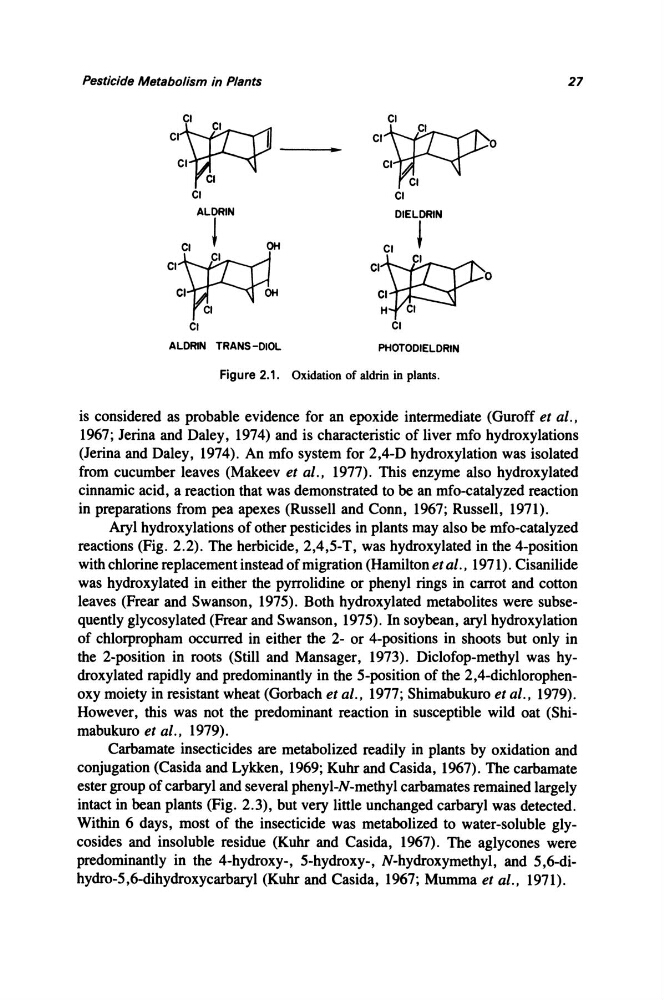
Figure 2.1. Oxidation of aldrin in plants.
27
is considered as probable evidence for an epoxide intennediate (Guroff et ai.,
1967; Jerina and Daley, 1974) and is characteristic of liver mfo hydroxylations
(Jerina and Daley, 1974). An mfo system for 2,4-0 hydroxylation was isolated
from cucumber leaves (Makeev et ai., 1977). This enzyme also hydroxylated
cinnamic acid, a reaction that was demonstrated to be an mfo-catalyzed reaction
in preparations from pea apexes (Russell and Conn, 1967; Russell, 1971).
Aryl hydroxylations of other pesticides in plants may also be mfo-catalyzed
reactions (Fig. 2.2). The herbicide, 2,4,5-T, was hydroxylated in the 4-position
with chlorine replacement instead of migration (Hamilton et ai., 1971). Cisanilide
was hydroxylated in either the pyrrolidine or phenyl rings in carrot and cotton
leaves (Frear and Swanson, 1975). Both hydroxylated metabolites were subsequently glycosylated (Frear and Swanson, 1975). In soybean, aryl hydroxylation
of chlorpropham occurred in either the 2- or 4-positions in shoots but only in
the 2-position in roots (Still and Mansager, 1973). Diclofop-methyl was hydroxylated rapidly and predominantly in the 5-position of the 2,4-dichlorophenoxy moiety in resistant wheat (Gorbach et ai., 1977; Shimabukuro et ai., 1979).
However, this was not the predominant reaction in susceptible wild oat (Shimabukuro et ai., 1979).
Carbamate insecticides are metabolized readily in plants by oxidation and
conjugation (Casida and Lykken, 1969; Kuhr and Casida, 1967). The carbamate
ester group of carbaryl and several phenyl-N-methyl carbamates remained largely
intact in bean plants (Fig. 2.3), but very little unchanged carbaryl was detected.
Within 6 days, most of the insecticide was metabolized to water-soluble glycosides and insoluble residue (Kuhr and Casida, 1967). The aglycones were
predominantly in the 4-hydroxy-, 5-hydroxy-, N-hydroxymethyl, and 5,6-dihydro-5,6-dihydroxycarbaryl (Kuhr and Casida, 1967; Mumma et ai., 1971).
c~ ____ ~._
~'fc, ~
CI
ALr lN
,,~
c' fc, ~
ALDRIN TRANS-DIOL
CI~CI CI
0
CI
CI
CI
DIELDRIN
~
CI~CI CI
0
CI
H
CI
CI
PHOTODIELDRIN
Figure 2.1. Oxidation of aldrin in plants.
27
is considered as probable evidence for an epoxide intennediate (Guroff et ai.,
1967; Jerina and Daley, 1974) and is characteristic of liver mfo hydroxylations
(Jerina and Daley, 1974). An mfo system for 2,4-0 hydroxylation was isolated
from cucumber leaves (Makeev et ai., 1977). This enzyme also hydroxylated
cinnamic acid, a reaction that was demonstrated to be an mfo-catalyzed reaction
in preparations from pea apexes (Russell and Conn, 1967; Russell, 1971).
Aryl hydroxylations of other pesticides in plants may also be mfo-catalyzed
reactions (Fig. 2.2). The herbicide, 2,4,5-T, was hydroxylated in the 4-position
with chlorine replacement instead of migration (Hamilton et ai., 1971). Cisanilide
was hydroxylated in either the pyrrolidine or phenyl rings in carrot and cotton
leaves (Frear and Swanson, 1975). Both hydroxylated metabolites were subsequently glycosylated (Frear and Swanson, 1975). In soybean, aryl hydroxylation
of chlorpropham occurred in either the 2- or 4-positions in shoots but only in
the 2-position in roots (Still and Mansager, 1973). Diclofop-methyl was hydroxylated rapidly and predominantly in the 5-position of the 2,4-dichlorophenoxy moiety in resistant wheat (Gorbach et ai., 1977; Shimabukuro et ai., 1979).
However, this was not the predominant reaction in susceptible wild oat (Shimabukuro et ai., 1979).
Carbamate insecticides are metabolized readily in plants by oxidation and
conjugation (Casida and Lykken, 1969; Kuhr and Casida, 1967). The carbamate
ester group of carbaryl and several phenyl-N-methyl carbamates remained largely
intact in bean plants (Fig. 2.3), but very little unchanged carbaryl was detected.
Within 6 days, most of the insecticide was metabolized to water-soluble glycosides and insoluble residue (Kuhr and Casida, 1967). The aglycones were
predominantly in the 4-hydroxy-, 5-hydroxy-, N-hydroxymethyl, and 5,6-dihydro-5,6-dihydroxycarbaryl (Kuhr and Casida, 1967; Mumma et ai., 1971).