

Basic Study on the Remediation Technology
100
~ o
-; 80
g>
C 60
Q)
e
~40
cu
~ 20
E
Q)
.....
o
X1! mol
:
:
:
:
rNa iron chlo~ide added
nrn
j
jnnnnn mi
o 20 40 60 80 1 00 120 140
Heating time(min.)
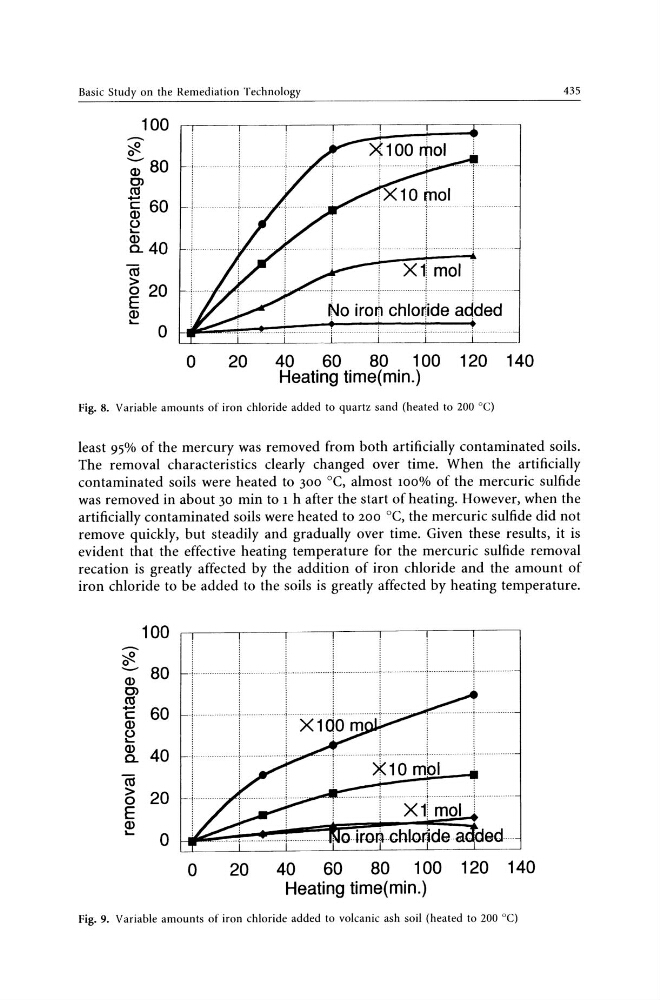
Fig. 8. Variable amounts of iron chloride added to quartz sand (heated to 200 °C)
435
least 95% of the mercury was removed from both artificially contaminated soils.
The removal characteristics clearly changed over time. When the artificially
contaminated soils were heated to 300°C, almost 100% of the mercuric sulfide
was removed in about 30 min to 1 h after the start of heating. However, when the
artificially contaminated soils were heated to 200°C, the mercuric sulfide did not
remove quickly, but steadily and gradually over time. Given these results, it is
evident that the effective heating temperature for the mercuric sulfide removal
recation is greatly affected by the addition of iron chloride and the amount of
iron chloride to be added to the soils is greatly affected by heating temperature.
100
~
~
Q)
80
g>
..... C Q)
e
Q)
a.
cu
60
40
~ 20
E
Q)
.....
o
o 20 40 60 80 1 00 120 140
Heating time(min.)
Fig. 9. Variable amounts of iron chloride added to volcanic ash soil (heated to 200 °C)
100
~ o
-; 80
g>
C 60
Q)
e
~40
cu
~ 20
E
Q)
.....
o
X1! mol
:
:
:
:
rNa iron chlo~ide added
nrn
j
jnnnnn mi
o 20 40 60 80 1 00 120 140
Heating time(min.)
Fig. 8. Variable amounts of iron chloride added to quartz sand (heated to 200 °C)
435
least 95% of the mercury was removed from both artificially contaminated soils.
The removal characteristics clearly changed over time. When the artificially
contaminated soils were heated to 300°C, almost 100% of the mercuric sulfide
was removed in about 30 min to 1 h after the start of heating. However, when the
artificially contaminated soils were heated to 200°C, the mercuric sulfide did not
remove quickly, but steadily and gradually over time. Given these results, it is
evident that the effective heating temperature for the mercuric sulfide removal
recation is greatly affected by the addition of iron chloride and the amount of
iron chloride to be added to the soils is greatly affected by heating temperature.
100
~
~
Q)
80
g>
..... C Q)
e
Q)
a.
cu
60
40
~ 20
E
Q)
.....
o
o 20 40 60 80 1 00 120 140
Heating time(min.)
Fig. 9. Variable amounts of iron chloride added to volcanic ash soil (heated to 200 °C)