

Estimation of Gaseous Mercury Emissions in Germany
379
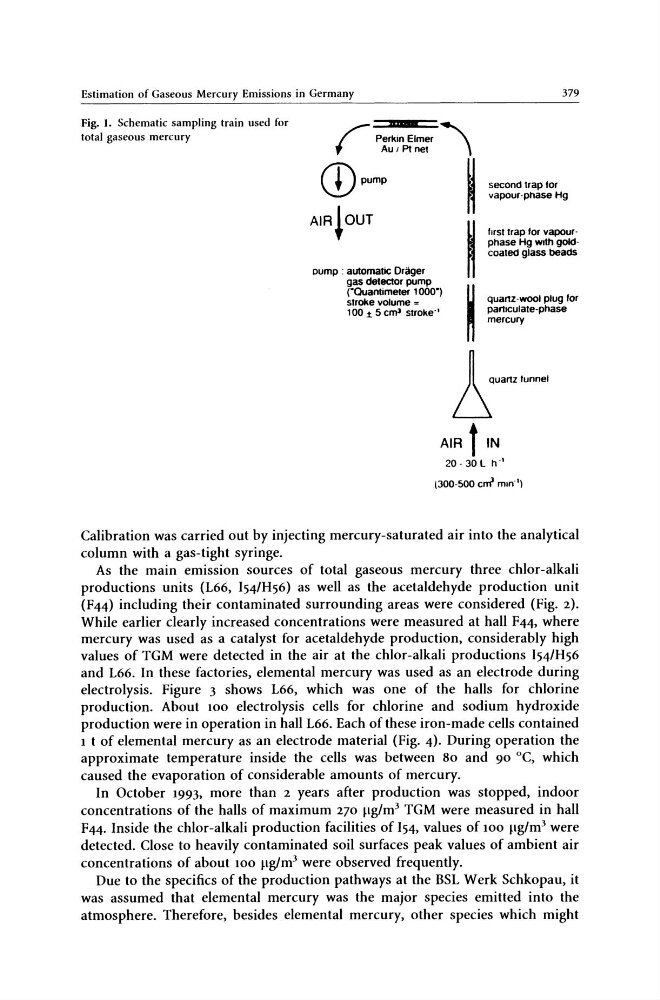
Fig. 1. Schematic sampling train used for
total gaseous mercury
/
Perkin Elmer ~
f
AUJPtnet
\
CD pump
AIR!OUT
DUmp" automatic Drager
gas detector pump
("Quantimeter 1000")
stroke volume =
100 :t 5 cm> stroke-'
~
~
second trap for
vapour-phase Hg
first trap for vapourphase Hg with goldcoated glass beads
~
quartz-wool plug for
particulate-phase
mercury
~-'"AIR t IN
20-30Lh"'
1300-500 CnT mln-')
Calibration was carried out by injecting mercury-saturated air into the analytical
column with a gas-tight syringe.
As the main emission sources of total gaseous mercury three chlor-alkali
productions units (L66, 154/H56) as well as the acetaldehyde production unit
(F44) including their contaminated surrounding areas were considered (Fig. 2).
While earlier clearly increased concentrations were measured at hall F44, where
mercury was used as a catalyst for acetaldehyde production, considerably high
values of TGM were detected in the air at the chlor-alkali productions 154/H56
and L66. In these factories, elemental mercury was used as an electrode during
electrolysis. Figure 3 shows L66, which was one of the halls for chlorine
production. About 100 electrolysis cells for chlorine and sodium hydroxide
production were in operation in hall L66. Each of these iron-made cells contained
1 t of elemental mercury as an electrode material (Fig. 4). During operation the
approximate temperature inside the cells was between 80 and 90 DC, which
caused the evaporation of considerable amounts of mercury.
In October 1993, more than 2 years after production was stopped, indoor
concentrations of the halls of maximum 270 ~lg/m3 TGM were measured in hall
F44. Inside the chlor-alkali production facilities of 154, values of 100 ~lg/m3 were
detected. Close to heavily contaminated soil surfaces peak values of ambient air
concentrations of about 100 ~lg/m3 were observed frequently.
Due to the specifics of the production pathways at the BSL Werk Schkopau, it
was assumed that elemental mercury was the major species emitted into the
atmosphere. Therefore, besides elemental mercury, other species which might
379
Fig. 1. Schematic sampling train used for
total gaseous mercury
/
Perkin Elmer ~
f
AUJPtnet
\
CD pump
AIR!OUT
DUmp" automatic Drager
gas detector pump
("Quantimeter 1000")
stroke volume =
100 :t 5 cm> stroke-'
~
~
second trap for
vapour-phase Hg
first trap for vapourphase Hg with goldcoated glass beads
~
quartz-wool plug for
particulate-phase
mercury
~-'"AIR t IN
20-30Lh"'
1300-500 CnT mln-')
Calibration was carried out by injecting mercury-saturated air into the analytical
column with a gas-tight syringe.
As the main emission sources of total gaseous mercury three chlor-alkali
productions units (L66, 154/H56) as well as the acetaldehyde production unit
(F44) including their contaminated surrounding areas were considered (Fig. 2).
While earlier clearly increased concentrations were measured at hall F44, where
mercury was used as a catalyst for acetaldehyde production, considerably high
values of TGM were detected in the air at the chlor-alkali productions 154/H56
and L66. In these factories, elemental mercury was used as an electrode during
electrolysis. Figure 3 shows L66, which was one of the halls for chlorine
production. About 100 electrolysis cells for chlorine and sodium hydroxide
production were in operation in hall L66. Each of these iron-made cells contained
1 t of elemental mercury as an electrode material (Fig. 4). During operation the
approximate temperature inside the cells was between 80 and 90 DC, which
caused the evaporation of considerable amounts of mercury.
In October 1993, more than 2 years after production was stopped, indoor
concentrations of the halls of maximum 270 ~lg/m3 TGM were measured in hall
F44. Inside the chlor-alkali production facilities of 154, values of 100 ~lg/m3 were
detected. Close to heavily contaminated soil surfaces peak values of ambient air
concentrations of about 100 ~lg/m3 were observed frequently.
Due to the specifics of the production pathways at the BSL Werk Schkopau, it
was assumed that elemental mercury was the major species emitted into the
atmosphere. Therefore, besides elemental mercury, other species which might