

164
A.C.A. da Costa
CH 2
CH
CH2
I
I
I
0
0
0
I
I
I
P0 4 =
C=O
C=O
I
I
(Polar head)
CH 2
I
CH 2
I
CH2
I
CH 2
I
CH2
I
CH 2
I
CH 2
I
CH2
I
CH2
I
CH2
I
CH 2
I
CH2
I
CH3
CH 3
(Non-polar head)
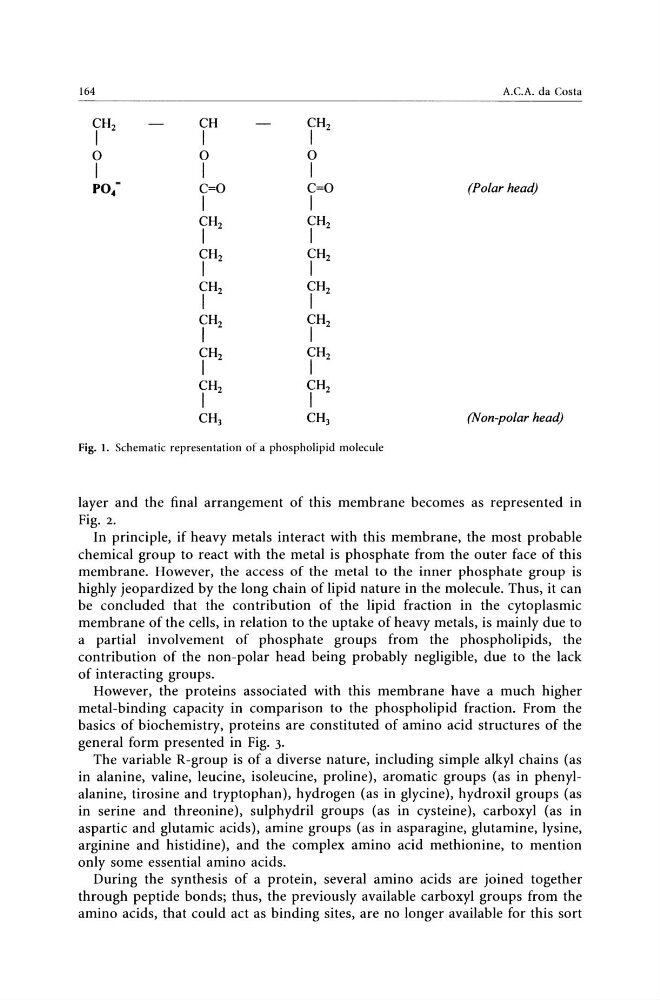
Fig. 1. Schematic representation of a phospholipid molecule
layer and the final arrangement of this membrane becomes as represented in
Fig. 2.
In principle, if heavy metals interact with this membrane, the most probable
chemical group to react with the metal is phosphate from the outer face of this
membrane. However, the access of the metal to the inner phosphate group is
highly jeopardized by the long chain of lipid nature in the molecule. Thus, it can
be concluded that the contribution of the lipid fraction in the cytoplasmic
membrane of the cells, in relation to the uptake of heavy metals, is mainly due to
a partial involvement of phosphate groups from the phospholipids, the
contribution of the non-polar head being probably negligible, due to the lack
of interacting groups.
However, the proteins associated with this membrane have a much higher
metal-binding capacity in comparison to the phospholipid fraction. From the
basics of biochemistry, proteins are constituted of amino acid structures of the
general form presented in Fig. 3.
The variable R-group is of a diverse nature, including simple alkyl chains (as
in alanine, valine, leucine, isoleucine, proline), aromatic groups (as in phenylalanine, tirosine and tryptophan), hydrogen (as in glycine), hydroxil groups (as
in serine and threonine), sulphydril groups (as in cysteine), carboxyl (as in
aspartic and glutamic acids), amine groups (as in asparagine, glutamine, lysine,
arginine and histidine), and the complex amino acid methionine, to mention
only some essential amino acids.
During the synthesis of a protein, several amino acids are joined together
through peptide bonds; thus, the previously available carboxyl groups from the
amino acids, that could act as binding sites, are no longer available for this sort
A.C.A. da Costa
CH 2
CH
CH2
I
I
I
0
0
0
I
I
I
P0 4 =
C=O
C=O
I
I
(Polar head)
CH 2
I
CH 2
I
CH2
I
CH 2
I
CH2
I
CH 2
I
CH 2
I
CH2
I
CH2
I
CH2
I
CH 2
I
CH2
I
CH3
CH 3
(Non-polar head)
Fig. 1. Schematic representation of a phospholipid molecule
layer and the final arrangement of this membrane becomes as represented in
Fig. 2.
In principle, if heavy metals interact with this membrane, the most probable
chemical group to react with the metal is phosphate from the outer face of this
membrane. However, the access of the metal to the inner phosphate group is
highly jeopardized by the long chain of lipid nature in the molecule. Thus, it can
be concluded that the contribution of the lipid fraction in the cytoplasmic
membrane of the cells, in relation to the uptake of heavy metals, is mainly due to
a partial involvement of phosphate groups from the phospholipids, the
contribution of the non-polar head being probably negligible, due to the lack
of interacting groups.
However, the proteins associated with this membrane have a much higher
metal-binding capacity in comparison to the phospholipid fraction. From the
basics of biochemistry, proteins are constituted of amino acid structures of the
general form presented in Fig. 3.
The variable R-group is of a diverse nature, including simple alkyl chains (as
in alanine, valine, leucine, isoleucine, proline), aromatic groups (as in phenylalanine, tirosine and tryptophan), hydrogen (as in glycine), hydroxil groups (as
in serine and threonine), sulphydril groups (as in cysteine), carboxyl (as in
aspartic and glutamic acids), amine groups (as in asparagine, glutamine, lysine,
arginine and histidine), and the complex amino acid methionine, to mention
only some essential amino acids.
During the synthesis of a protein, several amino acids are joined together
through peptide bonds; thus, the previously available carboxyl groups from the
amino acids, that could act as binding sites, are no longer available for this sort