

Remediation Techniques for Hg-Contaminated Sites
115
---. sorting step ----. mixing step
separation step
polluted
r
material
t
!
chemicals
treatment
residue
04
01' extracting
clean
soil
residue
agent
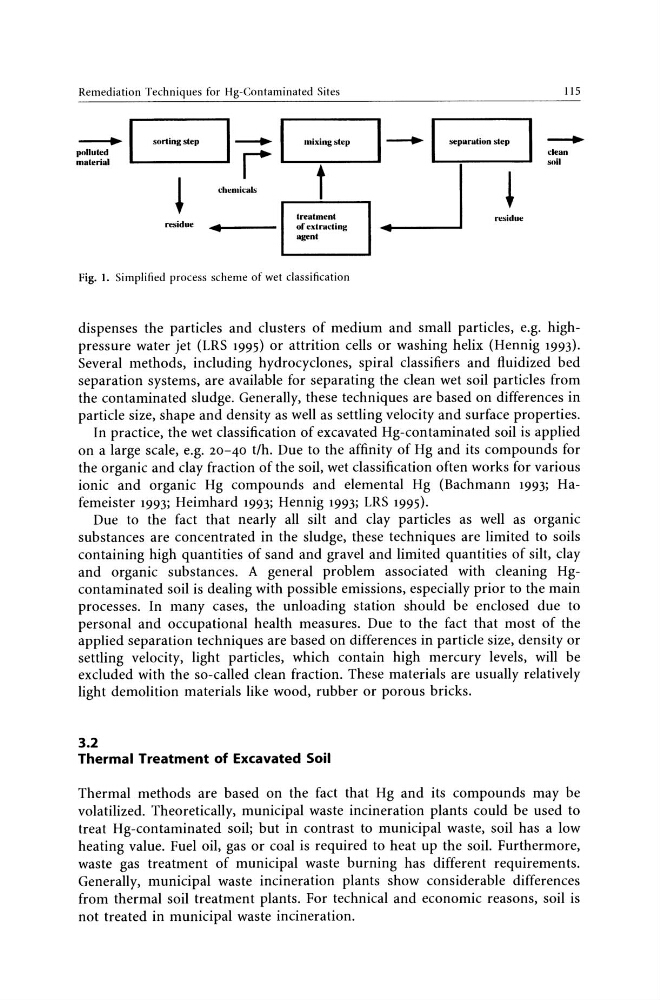
Fig. 1. Simplified process scheme of wet classification
dispenses the particles and clusters of medium and small particles, e.g. highpressure water jet (LRS 1995) or attrition cells or washing helix (Hennig 1993).
Several methods, including hydrocyclones, spiral classifiers and fluidized bed
separation systems, are available for separating the clean wet soil particles from
the contaminated sludge. Generally, these techniques are based on differences in
particle size, shape and density as well as settling velocity and surface properties.
In practice, the wet classification of excavated Hg-contaminated soil is applied
on a large scale, e.g. 20-40 t/h. Due to the affinity of Hg and its compounds for
the organic and clay fraction of the soil, wet classification often works for various
ionic and organic Hg compounds and elemental Hg (Bachmann 1993; Hafemeister 1993; Heimhard 1993; Hennig 1993; LRS 1995).
Due to the fact that nearly all silt and clay particles as well as organic
substances are concentrated in the sludge, these techniques are limited to soils
containing high quantities of sand and gravel and limited quantities of silt, clay
and organic substances. A general problem associated with cleaning Hgcontaminated soil is dealing with possible emissions, especially prior to the main
processes. In many cases, the unloading station should be enclosed due to
personal and occupational health measures. Due to the fact that most of the
applied separation techniques are based on differences in particle size, density or
settling velocity, light particles, which contain high mercury levels, will be
excluded with the so-called clean fraction. These materials are usually relatively
light demolition materials like wood, rubber or porous bricks.
3.2
Thermal Treatment of Excavated Soil
Thermal methods are based on the fact that Hg and its compounds may be
volatilized. Theoretically, municipal waste incineration plants could be used to
treat Hg-contaminated soil; but in contrast to municipal waste, soil has a low
heating value. Fuel oil, gas or coal is required to heat up the soil. Furthermore,
waste gas treatment of municipal waste burning has different requirements.
Generally, municipal waste incineration plants show considerable differences
from thermal soil treatment plants. For technical and economic reasons, soil is
not treated in municipal waste incineration.
115
---. sorting step ----. mixing step
separation step
polluted
r
material
t
!
chemicals
treatment
residue
04
01' extracting
clean
soil
residue
agent
Fig. 1. Simplified process scheme of wet classification
dispenses the particles and clusters of medium and small particles, e.g. highpressure water jet (LRS 1995) or attrition cells or washing helix (Hennig 1993).
Several methods, including hydrocyclones, spiral classifiers and fluidized bed
separation systems, are available for separating the clean wet soil particles from
the contaminated sludge. Generally, these techniques are based on differences in
particle size, shape and density as well as settling velocity and surface properties.
In practice, the wet classification of excavated Hg-contaminated soil is applied
on a large scale, e.g. 20-40 t/h. Due to the affinity of Hg and its compounds for
the organic and clay fraction of the soil, wet classification often works for various
ionic and organic Hg compounds and elemental Hg (Bachmann 1993; Hafemeister 1993; Heimhard 1993; Hennig 1993; LRS 1995).
Due to the fact that nearly all silt and clay particles as well as organic
substances are concentrated in the sludge, these techniques are limited to soils
containing high quantities of sand and gravel and limited quantities of silt, clay
and organic substances. A general problem associated with cleaning Hgcontaminated soil is dealing with possible emissions, especially prior to the main
processes. In many cases, the unloading station should be enclosed due to
personal and occupational health measures. Due to the fact that most of the
applied separation techniques are based on differences in particle size, density or
settling velocity, light particles, which contain high mercury levels, will be
excluded with the so-called clean fraction. These materials are usually relatively
light demolition materials like wood, rubber or porous bricks.
3.2
Thermal Treatment of Excavated Soil
Thermal methods are based on the fact that Hg and its compounds may be
volatilized. Theoretically, municipal waste incineration plants could be used to
treat Hg-contaminated soil; but in contrast to municipal waste, soil has a low
heating value. Fuel oil, gas or coal is required to heat up the soil. Furthermore,
waste gas treatment of municipal waste burning has different requirements.
Generally, municipal waste incineration plants show considerable differences
from thermal soil treatment plants. For technical and economic reasons, soil is
not treated in municipal waste incineration.