

Chapitre V
Résultats et Discussion
5.3. Les espèces rencontrées dans l'échantillon S6P2
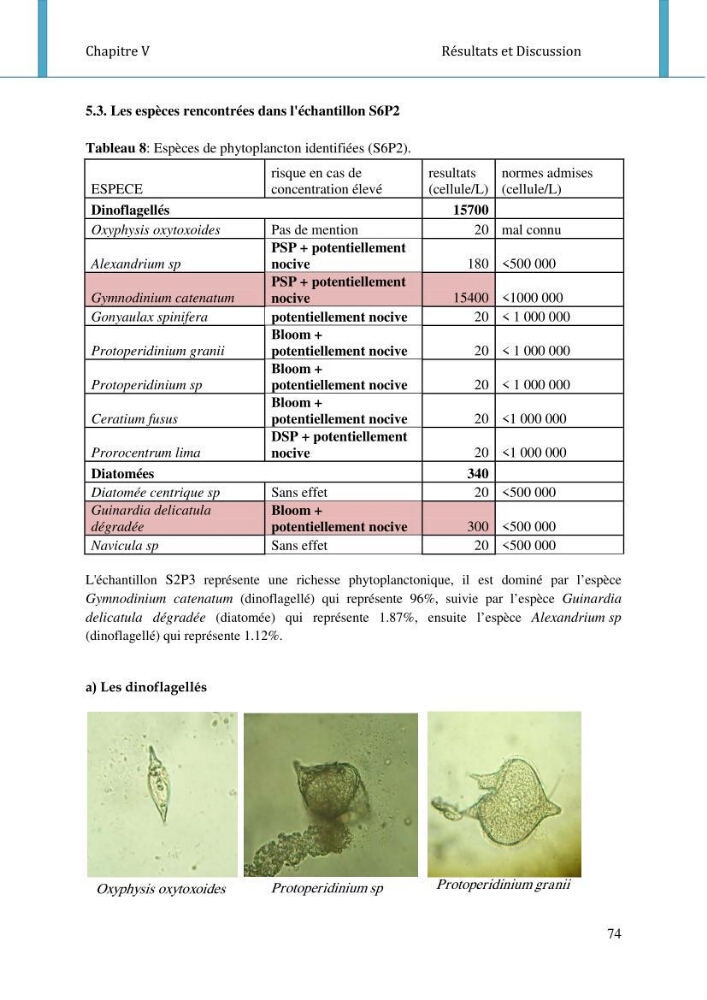
Tableau 8: Espèces de phytoplancton identifiées (S6P2).
ESPECE
risque en cas de
concentration élevé
resultats
(cellule/L)
normes admises
(cellule/L)
Dinoflagellés
15700
Oxyphysis oxytoxoides
Pas de mention
20 mal connu
Alexandrium sp
PSP + potentiellement
nocive
180 <500 000
Gymnodinium catenatum
PSP + potentiellement
nocive
15400 <1000 000
Gonyaulax spinifera
potentiellement nocive
20 < 1 000 000
Protoperidinium granii
Bloom +
potentiellement nocive
20 < 1 000 000
Protoperidinium sp
Bloom +
potentiellement nocive
20 < 1 000 000
Ceratium fusus
Bloom +
potentiellement nocive
20 <1 000 000
Prorocentrum lima
DSP + potentiellement
nocive
20 <1 000 000
Diatomées
340
Diatomée centrique sp
Sans effet
20 <500 000
Guinardia delicatula
dégradée
Bloom +
potentiellement nocive
300 <500 000
Navicula sp
Sans effet
20 <500 000
L'échantillon S2P3 représente une richesse phytoplanctonique, il est dominé par l’espèce
Gymnodinium catenatum (dinoflagellé) qui représente 96%, suivie par l’espèce Guinardia
delicatula dégradée (diatomée) qui représente 1.87%, ensuite l’espèce Alexandrium sp
(dinoflagellé) qui représente 1.12%.
a) Les dinoflagellés
Oxyphysis oxytoxoides
Protoperidinium sp
Protoperidinium granii
74
Résultats et Discussion
5.3. Les espèces rencontrées dans l'échantillon S6P2
Tableau 8: Espèces de phytoplancton identifiées (S6P2).
ESPECE
risque en cas de
concentration élevé
resultats
(cellule/L)
normes admises
(cellule/L)
Dinoflagellés
15700
Oxyphysis oxytoxoides
Pas de mention
20 mal connu
Alexandrium sp
PSP + potentiellement
nocive
180 <500 000
Gymnodinium catenatum
PSP + potentiellement
nocive
15400 <1000 000
Gonyaulax spinifera
potentiellement nocive
20 < 1 000 000
Protoperidinium granii
Bloom +
potentiellement nocive
20 < 1 000 000
Protoperidinium sp
Bloom +
potentiellement nocive
20 < 1 000 000
Ceratium fusus
Bloom +
potentiellement nocive
20 <1 000 000
Prorocentrum lima
DSP + potentiellement
nocive
20 <1 000 000
Diatomées
340
Diatomée centrique sp
Sans effet
20 <500 000
Guinardia delicatula
dégradée
Bloom +
potentiellement nocive
300 <500 000
Navicula sp
Sans effet
20 <500 000
L'échantillon S2P3 représente une richesse phytoplanctonique, il est dominé par l’espèce
Gymnodinium catenatum (dinoflagellé) qui représente 96%, suivie par l’espèce Guinardia
delicatula dégradée (diatomée) qui représente 1.87%, ensuite l’espèce Alexandrium sp
(dinoflagellé) qui représente 1.12%.
a) Les dinoflagellés
Oxyphysis oxytoxoides
Protoperidinium sp
Protoperidinium granii
74