

522
M.G. McGarry, CD. Lin and J.L. Merto
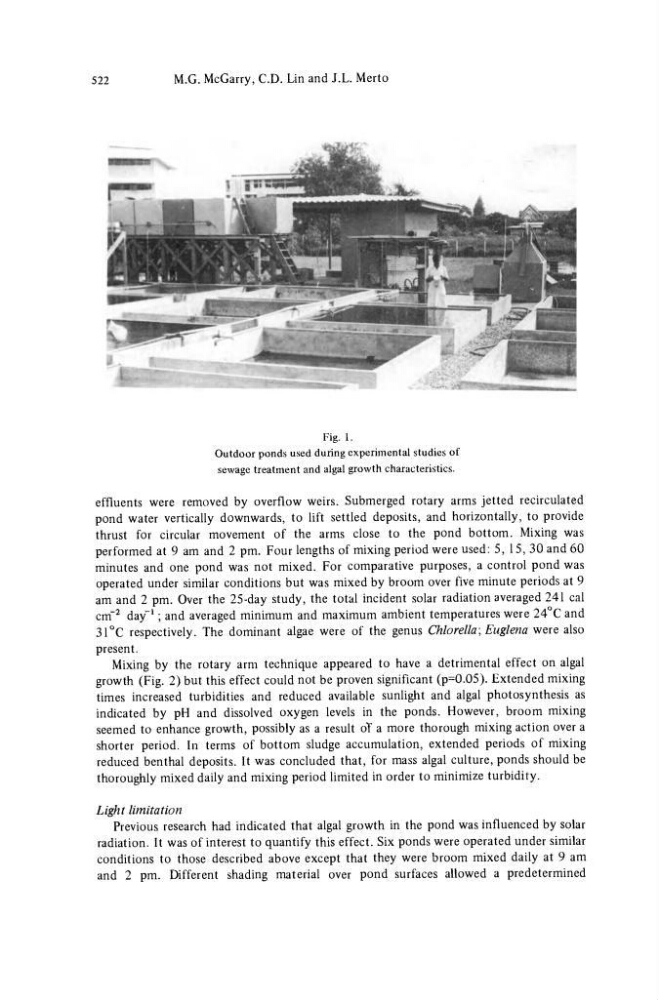
Fig. 1.
Outdoor ponds used during experimental studies of
sewage treatment and algal growth characteristics.
effluents were removed by overflow weirs. Submerged rotary arms jetted recirculated
pond water vertically downwards, to lift settled deposits, and horizontally, to provide
thrust for circular movement of the arms close to the pond bottom. Mixing was
performed at 9 am and 2 pm. Four lengths of mixing period were used: 5, 15, 30 and 60
minutes and one pond was not mixed. For comparative purposes, a control pond was
operated under similar conditions but was mixed by broom over five minute periods at 9
am and 2 pm. Over the 25-day study, the total incident solar radiation averaged 241 cal
cm"
2 day
-1 ; and averaged minimum and maximum ambient temperatures were 24°C and
31°C respectively. The dominant algae were of the genus Chlorella; Euglena were also
present.
Mixing by the rotary arm technique appeared to have a detrimental effect on algal
growth (Fig. 2) but this effect could not be proven significant (p=0.05). Extended mixing
times increased turbidities and reduced available sunlight and algal photosynthesis as
indicated by pH and dissolved oxygen levels in the ponds. However, broom mixing
seemed to enhance growth, possibly as a result οΐ a more thorough mixing action over a
shorter period. In terms of bottom sludge accumulation, extended periods of mixing
reduced benthal deposits. It was concluded that, for mass algal culture, ponds should be
thoroughly mixed daily and mixing period limited in order to minimize turbidity.
Light limitation
Previous research had indicated that algal growth in the pond was influenced by solar
radiation. It was of interest to quantify this effect. Six ponds were operated under similar
conditions to those described above except that they were broom mixed daily at 9 am
and 2 pm. Different shading material over pond surfaces allowed a predetermined
M.G. McGarry, CD. Lin and J.L. Merto
Fig. 1.
Outdoor ponds used during experimental studies of
sewage treatment and algal growth characteristics.
effluents were removed by overflow weirs. Submerged rotary arms jetted recirculated
pond water vertically downwards, to lift settled deposits, and horizontally, to provide
thrust for circular movement of the arms close to the pond bottom. Mixing was
performed at 9 am and 2 pm. Four lengths of mixing period were used: 5, 15, 30 and 60
minutes and one pond was not mixed. For comparative purposes, a control pond was
operated under similar conditions but was mixed by broom over five minute periods at 9
am and 2 pm. Over the 25-day study, the total incident solar radiation averaged 241 cal
cm"
2 day
-1 ; and averaged minimum and maximum ambient temperatures were 24°C and
31°C respectively. The dominant algae were of the genus Chlorella; Euglena were also
present.
Mixing by the rotary arm technique appeared to have a detrimental effect on algal
growth (Fig. 2) but this effect could not be proven significant (p=0.05). Extended mixing
times increased turbidities and reduced available sunlight and algal photosynthesis as
indicated by pH and dissolved oxygen levels in the ponds. However, broom mixing
seemed to enhance growth, possibly as a result οΐ a more thorough mixing action over a
shorter period. In terms of bottom sludge accumulation, extended periods of mixing
reduced benthal deposits. It was concluded that, for mass algal culture, ponds should be
thoroughly mixed daily and mixing period limited in order to minimize turbidity.
Light limitation
Previous research had indicated that algal growth in the pond was influenced by solar
radiation. It was of interest to quantify this effect. Six ponds were operated under similar
conditions to those described above except that they were broom mixed daily at 9 am
and 2 pm. Different shading material over pond surfaces allowed a predetermined