

COST AND PERFORMANCE OF
RETENTION BASINS
IN THE TREATMENT OF
WET-WEATHER SEWAGE FLOWS
D.H. WALLER
Associate Professor of Civil Engineering, Nova Scotia Technical College,
Box 1000, Halifax, Nova Scotia, Canada
Approximately one-half of the urban population of Canada and the United States is
served by combined sewerage systems. Untreated wet-weather discharges from these
systems constitute a major source of water pollution. As demands for improved receiving
water quality result in provision of improved treatment for dry-weather sewage flows, the
effects of wet-weather discharges will become more apparent. The magnitude of peak
combined sewage flow rates — several hundred times dry-weather flow rates — precludes
construction of conventional treatment facilities of adequate capacity to treat
wet-weather flows.
In 1969 to 1971, information was obtained about the composition and rates of flow
of combined sewage and surface runoff from a 168 acre drainage area at Halifax, Nova
Scotia. The study included observations of the performance of a combined sewage
retention basin that is intended to control pollution due to wet-weather overflows of
combined sewage from this drainage area.
NATURE AND MAGNITUDE OF COMBINED SEWAGE POLLUTION
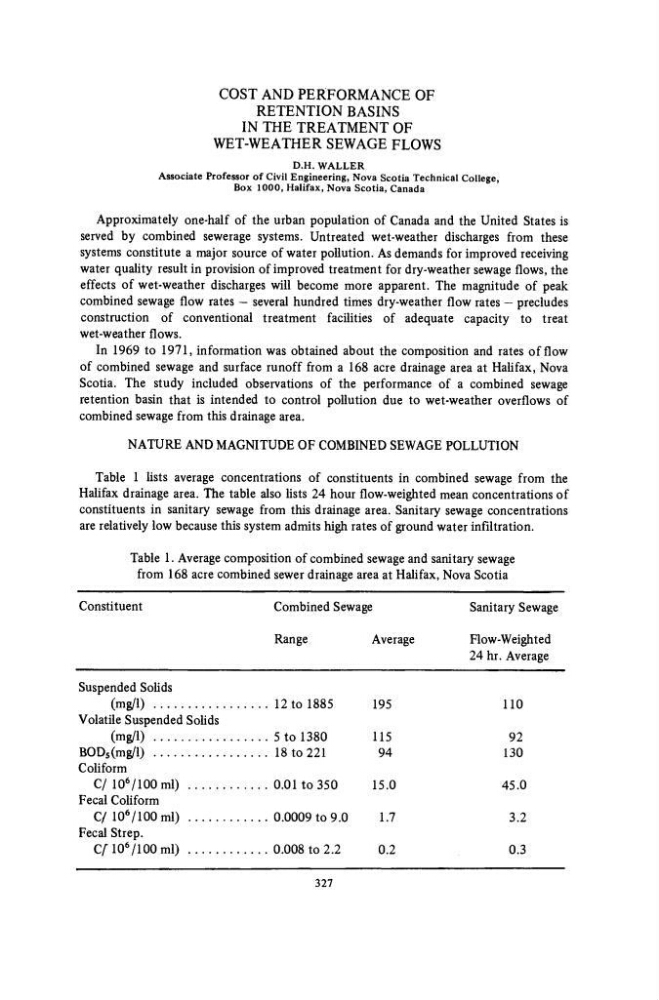
Table 1 lists average concentrations of constituents in combined sewage from the
Halifax drainage area. The table also lists 24 hour flow-weighted mean concentrations of
constituents in sanitary sewage from this drainage area. Sanitary sewage concentrations
are relatively low because this system admits high rates of ground water infiltration.
Table 1. Average composition of combined sewage and sanitary sewage
from 168 acre combined sewer drainage area at Halifax, Nova Scotia
Constituent
Combined Sewage
Sanitary Sewage
Range
Average
Flow-Weighted
24 hr. Average
Suspended Solids
(mg/1)
12 to 1885
195
110
Volatile Suspended Solids
(mg/1)
5 to 1380
115
92
BOD 5 (mg/l)
18 to 221
94
130
Coliform
C/ 10
6 /100 ml)
0.01 to 350
15.0
45.0
Fecal Coliform
C/ 10
6 /100 ml)
0.0009 to 9.0
1.7
3.2
Fecal Strep.
Qf 10
6 /100 ml)
0.008 to 2.2
0.2
0.3
327
RETENTION BASINS
IN THE TREATMENT OF
WET-WEATHER SEWAGE FLOWS
D.H. WALLER
Associate Professor of Civil Engineering, Nova Scotia Technical College,
Box 1000, Halifax, Nova Scotia, Canada
Approximately one-half of the urban population of Canada and the United States is
served by combined sewerage systems. Untreated wet-weather discharges from these
systems constitute a major source of water pollution. As demands for improved receiving
water quality result in provision of improved treatment for dry-weather sewage flows, the
effects of wet-weather discharges will become more apparent. The magnitude of peak
combined sewage flow rates — several hundred times dry-weather flow rates — precludes
construction of conventional treatment facilities of adequate capacity to treat
wet-weather flows.
In 1969 to 1971, information was obtained about the composition and rates of flow
of combined sewage and surface runoff from a 168 acre drainage area at Halifax, Nova
Scotia. The study included observations of the performance of a combined sewage
retention basin that is intended to control pollution due to wet-weather overflows of
combined sewage from this drainage area.
NATURE AND MAGNITUDE OF COMBINED SEWAGE POLLUTION
Table 1 lists average concentrations of constituents in combined sewage from the
Halifax drainage area. The table also lists 24 hour flow-weighted mean concentrations of
constituents in sanitary sewage from this drainage area. Sanitary sewage concentrations
are relatively low because this system admits high rates of ground water infiltration.
Table 1. Average composition of combined sewage and sanitary sewage
from 168 acre combined sewer drainage area at Halifax, Nova Scotia
Constituent
Combined Sewage
Sanitary Sewage
Range
Average
Flow-Weighted
24 hr. Average
Suspended Solids
(mg/1)
12 to 1885
195
110
Volatile Suspended Solids
(mg/1)
5 to 1380
115
92
BOD 5 (mg/l)
18 to 221
94
130
Coliform
C/ 10
6 /100 ml)
0.01 to 350
15.0
45.0
Fecal Coliform
C/ 10
6 /100 ml)
0.0009 to 9.0
1.7
3.2
Fecal Strep.
Qf 10
6 /100 ml)
0.008 to 2.2
0.2
0.3
327