

The Filtration of Coliform Bacteria in Sand Dunes
151
identical with that of the influent suspension and no filtration took place. In order to
prove that this difference is actually a difference in filtration efficiency and is not a result
of bacterial death, the E.C. MPN of the sand was also determined. A coliform balance
showed that the missing bacteria adhered to the sand.
Figs. 2 and 3 show the effect of the addition of different electrolytes on filtration
efficiency. It is readily seen that the cation concentration and valence determine filtration
efficiency and the anions have little effect.
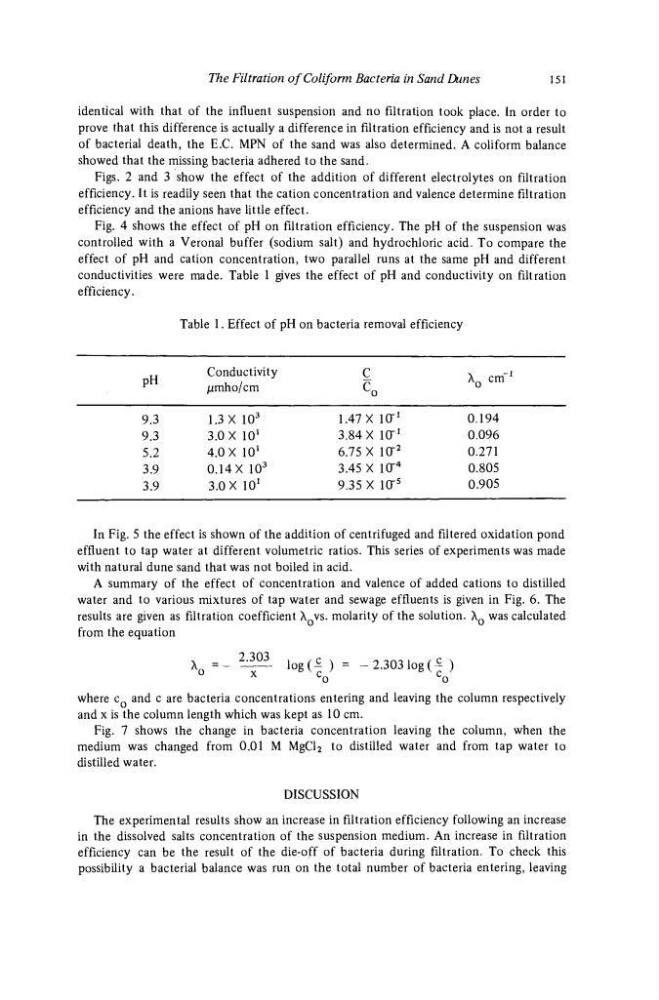
Fig. 4 shows the effect of pH on filtration efficiency. The pH of the suspension was
controlled with a Veronal buffer (sodium salt) and hydrochloric acid. To compare the
effect of pH and cation concentration, two parallel runs at the same pH and different
conductivities were made. Table 1 gives the effect of pH and conductivity on filtration
efficiency.
Table 1. Effect of pH on bacteria removal efficiency
Conductivity
C
λ cm"
1
"
//mhn/rm
C
O
μιηηο/ατι
C
9.3
9.3
5.2
3.9
3.9
1.3 X 10
3
3.0 X 10
1
4.0 X 10
1
0.14X 10
3
3.0 X 10
1
1.47 X ΐ σ
1
3.84 X ΐ σ
1
6.75 X lCT
2
3.45 X lCT
4
9.35 X 1CT
5
0.194
0.096
0.271
0.805
0.905
In Fig. 5 the effect is shown of the addition of centrifuged and filtered oxidation pond
effluent to tap water at different volumetric ratios. This series of experiments was made
with natural dune sand that was not boiled in acid.
A summary of the effect of concentration and valence of added cations to distilled
water and to various mixtures of tap water and sewage effluents is given in Fig. 6. The
results are given as filtration coefficient λ vs. molarity of the solution. \ Q was calculated
from the equation
\=2
~ψl0
S(f )
= - 2.303 log ( ^ )
x
c o
c o
where c and c are bacteria concentrations entering and leaving the column respectively
and x is the column length which was kept as 10 cm.
Fig. 7 shows the change in bacteria concentration leaving the column, when the
medium was changed from 0.01 M MgCl 2 to distilled water and from tap water to
distilled water.
DISCUSSION
The experimental results show an increase in filtration efficiency following an increase
in the dissolved salts concentration of the suspension medium. An increase in filtration
efficiency can be the result of the die-off of bacteria during filtration. To check this
possibility a bacterial balance was run on the total number of bacteria entering, leaving
151
identical with that of the influent suspension and no filtration took place. In order to
prove that this difference is actually a difference in filtration efficiency and is not a result
of bacterial death, the E.C. MPN of the sand was also determined. A coliform balance
showed that the missing bacteria adhered to the sand.
Figs. 2 and 3 show the effect of the addition of different electrolytes on filtration
efficiency. It is readily seen that the cation concentration and valence determine filtration
efficiency and the anions have little effect.
Fig. 4 shows the effect of pH on filtration efficiency. The pH of the suspension was
controlled with a Veronal buffer (sodium salt) and hydrochloric acid. To compare the
effect of pH and cation concentration, two parallel runs at the same pH and different
conductivities were made. Table 1 gives the effect of pH and conductivity on filtration
efficiency.
Table 1. Effect of pH on bacteria removal efficiency
Conductivity
C
λ cm"
1
"
//mhn/rm
C
O
μιηηο/ατι
C
9.3
9.3
5.2
3.9
3.9
1.3 X 10
3
3.0 X 10
1
4.0 X 10
1
0.14X 10
3
3.0 X 10
1
1.47 X ΐ σ
1
3.84 X ΐ σ
1
6.75 X lCT
2
3.45 X lCT
4
9.35 X 1CT
5
0.194
0.096
0.271
0.805
0.905
In Fig. 5 the effect is shown of the addition of centrifuged and filtered oxidation pond
effluent to tap water at different volumetric ratios. This series of experiments was made
with natural dune sand that was not boiled in acid.
A summary of the effect of concentration and valence of added cations to distilled
water and to various mixtures of tap water and sewage effluents is given in Fig. 6. The
results are given as filtration coefficient λ vs. molarity of the solution. \ Q was calculated
from the equation
\=2
~ψl0
S(f )
= - 2.303 log ( ^ )
x
c o
c o
where c and c are bacteria concentrations entering and leaving the column respectively
and x is the column length which was kept as 10 cm.
Fig. 7 shows the change in bacteria concentration leaving the column, when the
medium was changed from 0.01 M MgCl 2 to distilled water and from tap water to
distilled water.
DISCUSSION
The experimental results show an increase in filtration efficiency following an increase
in the dissolved salts concentration of the suspension medium. An increase in filtration
efficiency can be the result of the die-off of bacteria during filtration. To check this
possibility a bacterial balance was run on the total number of bacteria entering, leaving