

114
T.G. Metcalf, C. Wallis and J.L. Melnick
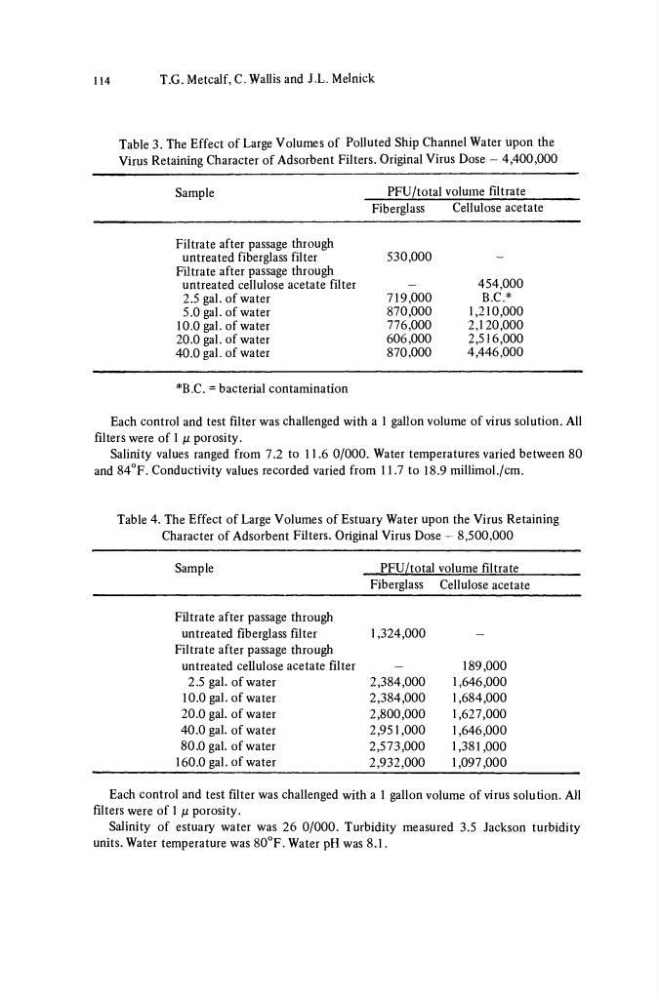
Table 3. The Effect of Large Volumes of Polluted Ship Channel Water upon the
Virus Retaining Character of Adsorbent Filters. Original Virus Dose - 4,400,000
Sample
Filtrate after passage through
untreated fiberglass filter
Filtrate after passage through
untreated cellulose acetate filter
2.5 gal. of water
5.0 gal. of water
10.0 gal. of water
20.0 gal. of water
40.0 gal. of water
PFU/total volume filtrate
Fiberglass
530,000
—
719,000
870,000
776,000
606,000
870,000
Cellulose acetate
—
454,000
B.C.*
1,210,000
2,120,000
2,516,000
4,446,000
*B.C. = bacterial contamination
Each control and test filter was challenged with a 1 gallon volume of virus solution. All
filters were of 1 μ porosity.
Salinity values ranged from 7.2 to 11.6 0/000. Water temperatures varied between 80
and 84°F. Conductivity values recorded varied from 11.7 to 18.9 millimol./cm.
Table 4. The Effect of Large Volumes of Estuary Water upon the Virus Retaining
Character of Adsorbent Filters. Original Virus Dose - 8,500,000
Sample
PFU/total volume filtrate
Fiberglass Cellulose acetate
Filtrate after passage through
untreated fiberglass filter
1,324,000
—
Filtrate after passage through
untreated cellulose acetate filter
—
189,000
2.5 gal. of water
2,384,000
1,646,000
10.0 gal. of water
2,384,000
1,684,000
20.0 gal. of water
2,800,000
1,627,000
40.0 gal. of water
2,951,000
1,646,000
80.0 gal. of water
2,573,000
1,381,000
160.0 gal, of water
2,932,000
1,097,000
Each control and test filter was challenged with a 1 gallon volume of virus solution. All
filters were of 1 μ porosity.
Salinity of estuary water was 26 0/000. Turbidity measured 3.5 Jackson turbidity
units. Water temperature was 80°F. Water pH was 8.1.
T.G. Metcalf, C. Wallis and J.L. Melnick
Table 3. The Effect of Large Volumes of Polluted Ship Channel Water upon the
Virus Retaining Character of Adsorbent Filters. Original Virus Dose - 4,400,000
Sample
Filtrate after passage through
untreated fiberglass filter
Filtrate after passage through
untreated cellulose acetate filter
2.5 gal. of water
5.0 gal. of water
10.0 gal. of water
20.0 gal. of water
40.0 gal. of water
PFU/total volume filtrate
Fiberglass
530,000
—
719,000
870,000
776,000
606,000
870,000
Cellulose acetate
—
454,000
B.C.*
1,210,000
2,120,000
2,516,000
4,446,000
*B.C. = bacterial contamination
Each control and test filter was challenged with a 1 gallon volume of virus solution. All
filters were of 1 μ porosity.
Salinity values ranged from 7.2 to 11.6 0/000. Water temperatures varied between 80
and 84°F. Conductivity values recorded varied from 11.7 to 18.9 millimol./cm.
Table 4. The Effect of Large Volumes of Estuary Water upon the Virus Retaining
Character of Adsorbent Filters. Original Virus Dose - 8,500,000
Sample
PFU/total volume filtrate
Fiberglass Cellulose acetate
Filtrate after passage through
untreated fiberglass filter
1,324,000
—
Filtrate after passage through
untreated cellulose acetate filter
—
189,000
2.5 gal. of water
2,384,000
1,646,000
10.0 gal. of water
2,384,000
1,684,000
20.0 gal. of water
2,800,000
1,627,000
40.0 gal. of water
2,951,000
1,646,000
80.0 gal. of water
2,573,000
1,381,000
160.0 gal, of water
2,932,000
1,097,000
Each control and test filter was challenged with a 1 gallon volume of virus solution. All
filters were of 1 μ porosity.
Salinity of estuary water was 26 0/000. Turbidity measured 3.5 Jackson turbidity
units. Water temperature was 80°F. Water pH was 8.1.