

10
Introduction
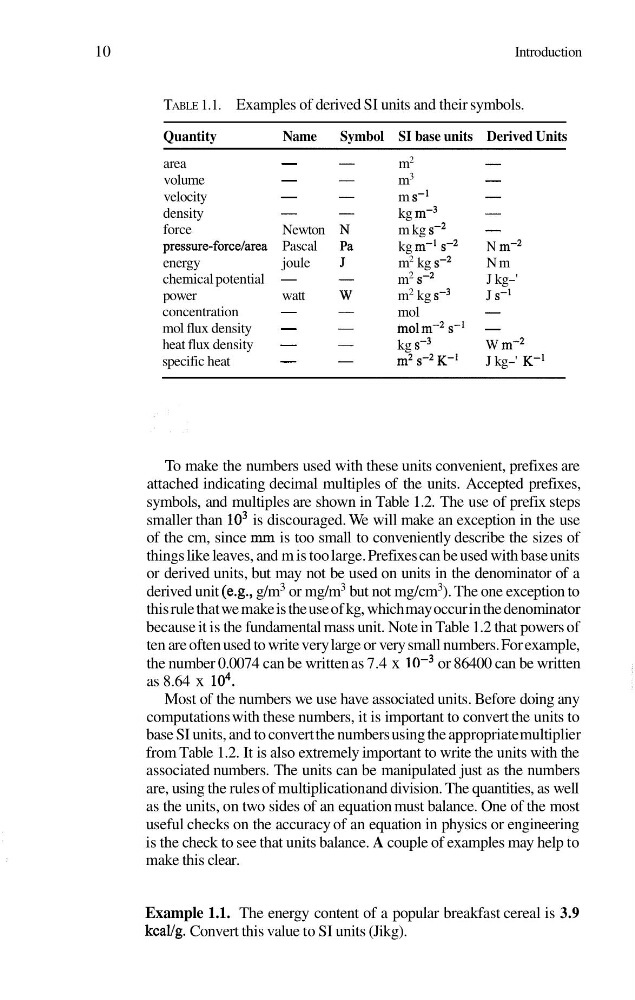
TABLE 1.1. Examples of derived SI units and their symbols.
Quantity
Name
Symbol SI base units Derived Units
area
volume
velocity
density
force
pressure-forcelarea
energy
chemical potential
power
concentration
mol flux density
heat flux density
specific heat
-
-
-
-
Newton
Pascal
joule
-
watt
-
-
-
-
m
2
m
3
m s-I
kg m-3
m kg s-2
kg m-I s-2
m
2 kg s2
m
2 s - ~
m 2 kg s-3
mol
mol m-2 s-I
kg s3
m2 s-2 K-I
-
-
-
-
-
N m-2
N m
J kg-'
J s-I
-
-
W m-2
J kg-' K-'
To make the numbers used with these units convenient, prefixes are
attached indicating decimal multiples of the units. Accepted prefixes,
symbols, and multiples are shown in Table 1.2. The use of prefix steps
smaller than lo3 is discouraged. We will make an exception in the use
of the cm, since mm is too small to conveniently describe the sizes of
things like leaves, and m is too large. Prefixes can be used with base units
or derived units, but may not be used on units in the denominator of a
derived unit (e.g., g/m 3 or mg/m 3 but not mg/cm 3 ). The one exception to
this rule that we make is the use of kg, which may occur in the denominator
because it is the fundamental mass unit. Note in Table 1.2 that powers of
ten are often used to write very large or very small numbers. For example,
the number 0.0074 can be written as 7.4 x
or 86400 can be written
as 8.64 x lo4.
Most of the numbers we use have associated units. Before doing any
computations with these numbers, it is important to convert the units to
base SI units, and to convert the numbers using the appropriate multiplier
from Table 1.2. It is also extremely important to write the units with the
associated numbers. The units can be manipulated just as the numbers
are, using the rules of multiplication and division. The quantities, as well
as the units, on two sides of an equation must balance. One of the most
useful checks on the accuracy of an equation in physics or engineering
is the check to see that units balance. A couple of examples may help to
make this clear.
Example 1.1. The energy content of a popular breakfast cereal is 3.9
kcallg. Convert this value to SI units (Jikg).
Introduction
TABLE 1.1. Examples of derived SI units and their symbols.
Quantity
Name
Symbol SI base units Derived Units
area
volume
velocity
density
force
pressure-forcelarea
energy
chemical potential
power
concentration
mol flux density
heat flux density
specific heat
-
-
-
-
Newton
Pascal
joule
-
watt
-
-
-
-
m
2
m
3
m s-I
kg m-3
m kg s-2
kg m-I s-2
m
2 kg s2
m
2 s - ~
m 2 kg s-3
mol
mol m-2 s-I
kg s3
m2 s-2 K-I
-
-
-
-
-
N m-2
N m
J kg-'
J s-I
-
-
W m-2
J kg-' K-'
To make the numbers used with these units convenient, prefixes are
attached indicating decimal multiples of the units. Accepted prefixes,
symbols, and multiples are shown in Table 1.2. The use of prefix steps
smaller than lo3 is discouraged. We will make an exception in the use
of the cm, since mm is too small to conveniently describe the sizes of
things like leaves, and m is too large. Prefixes can be used with base units
or derived units, but may not be used on units in the denominator of a
derived unit (e.g., g/m 3 or mg/m 3 but not mg/cm 3 ). The one exception to
this rule that we make is the use of kg, which may occur in the denominator
because it is the fundamental mass unit. Note in Table 1.2 that powers of
ten are often used to write very large or very small numbers. For example,
the number 0.0074 can be written as 7.4 x
or 86400 can be written
as 8.64 x lo4.
Most of the numbers we use have associated units. Before doing any
computations with these numbers, it is important to convert the units to
base SI units, and to convert the numbers using the appropriate multiplier
from Table 1.2. It is also extremely important to write the units with the
associated numbers. The units can be manipulated just as the numbers
are, using the rules of multiplication and division. The quantities, as well
as the units, on two sides of an equation must balance. One of the most
useful checks on the accuracy of an equation in physics or engineering
is the check to see that units balance. A couple of examples may help to
make this clear.
Example 1.1. The energy content of a popular breakfast cereal is 3.9
kcallg. Convert this value to SI units (Jikg).