

Models, Heterogeneity, and Scale
rTHERMAL RADIATION
PRECIP
+
SOLAR RADIATION
LATENT + SENSIBLE + HEAT + NET PLANT = NET RADIATION
HEAT
HEAT
STORAGE PHOTOSYNTHESIS
+
RUNOFF
+
DRAINAGE
+
WATER STORAGE
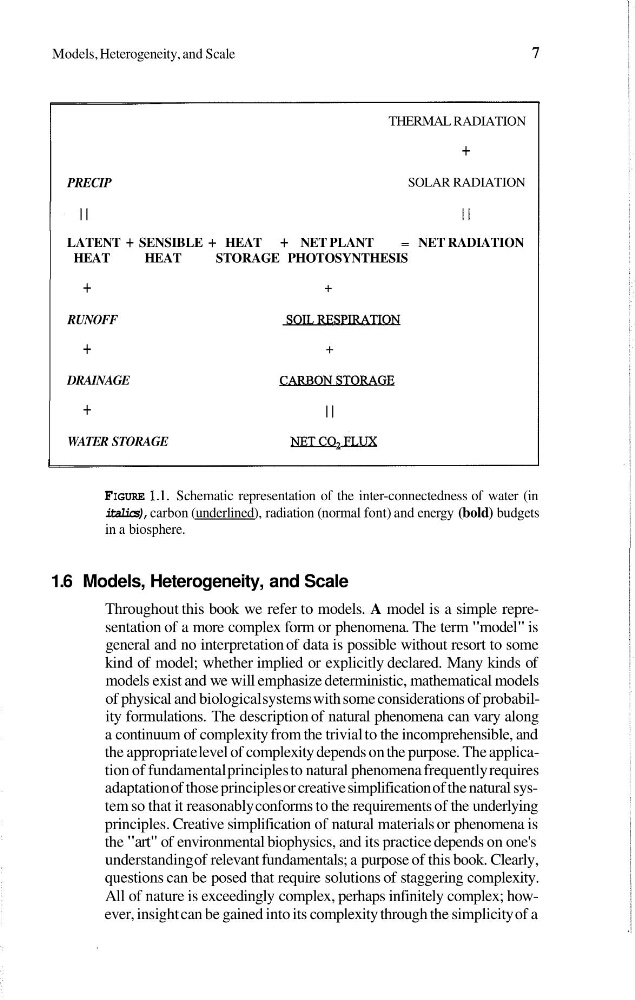
FIGURE 1 .l. Schematic representation of the inter-connectedness of water (in
italics), carbon (underlined), radiation (normal font) and energy (bold) budgets
in a biosphere.
1.6 Models, Heterogeneity, and Scale
Throughout this book we refer to models. A model is a simple representation of a more complex form or phenomena. The term "model" is
general and no interpretation of data is possible without resort to some
kind of model; whether implied or explicitly declared. Many kinds of
models exist and we will emphasize deterministic, mathematical models
of physical and biological systems with some considerations of probability formulations. The description of natural phenomena can vary along
a continuum of complexity from the trivial to the incomprehensible, and
the appropriate level of complexity depends on the purpose. The application of fundamental principles to natural phenomena frequently requires
adaptation of those principles or creative simplification of the natural system so that it reasonably conforms to the requirements of the underlying
principles. Creative simplification of natural materials or phenomena is
the "art" of environmental biophysics, and its practice depends on one's
understanding of relevant fundamentals; a purpose of this book. Clearly,
questions can be posed that require solutions of staggering complexity.
All of nature is exceedingly complex, perhaps infinitely complex; however, insight can be gained into its complexity through the simplicity of a
rTHERMAL RADIATION
PRECIP
+
SOLAR RADIATION
LATENT + SENSIBLE + HEAT + NET PLANT = NET RADIATION
HEAT
HEAT
STORAGE PHOTOSYNTHESIS
+
RUNOFF
+
DRAINAGE
+
WATER STORAGE
FIGURE 1 .l. Schematic representation of the inter-connectedness of water (in
italics), carbon (underlined), radiation (normal font) and energy (bold) budgets
in a biosphere.
1.6 Models, Heterogeneity, and Scale
Throughout this book we refer to models. A model is a simple representation of a more complex form or phenomena. The term "model" is
general and no interpretation of data is possible without resort to some
kind of model; whether implied or explicitly declared. Many kinds of
models exist and we will emphasize deterministic, mathematical models
of physical and biological systems with some considerations of probability formulations. The description of natural phenomena can vary along
a continuum of complexity from the trivial to the incomprehensible, and
the appropriate level of complexity depends on the purpose. The application of fundamental principles to natural phenomena frequently requires
adaptation of those principles or creative simplification of the natural system so that it reasonably conforms to the requirements of the underlying
principles. Creative simplification of natural materials or phenomena is
the "art" of environmental biophysics, and its practice depends on one's
understanding of relevant fundamentals; a purpose of this book. Clearly,
questions can be posed that require solutions of staggering complexity.
All of nature is exceedingly complex, perhaps infinitely complex; however, insight can be gained into its complexity through the simplicity of a