

Références bibliographiques
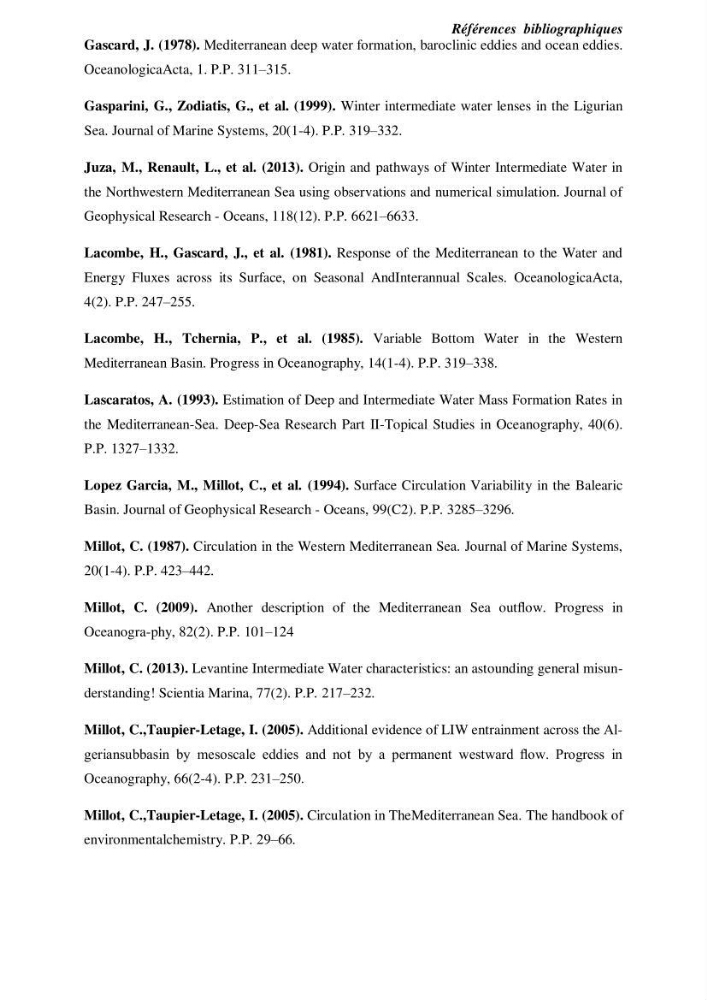
Gascard, J. (1978). Mediterranean deep water formation, baroclinic eddies and ocean eddies.
OceanologicaActa, 1. P.P. 311–315.
Gasparini, G., Zodiatis, G., et al. (1999). Winter intermediate water lenses in the Ligurian
Sea. Journal of Marine Systems, 20(1-4). P.P. 319–332.
Juza, M., Renault, L., et al. (2013). Origin and pathways of Winter Intermediate Water in
the Northwestern Mediterranean Sea using observations and numerical simulation. Journal of
Geophysical Research - Oceans, 118(12). P.P. 6621–6633.
Lacombe, H., Gascard, J., et al. (1981). Response of the Mediterranean to the Water and
Energy Fluxes across its Surface, on Seasonal AndInterannual Scales. OceanologicaActa,
4(2). P.P. 247–255.
Lacombe, H., Tchernia, P., et al. (1985). Variable Bottom Water in the Western
Mediterranean Basin. Progress in Oceanography, 14(1-4). P.P. 319–338.
Lascaratos, A. (1993). Estimation of Deep and Intermediate Water Mass Formation Rates in
the Mediterranean-Sea. Deep-Sea Research Part II-Topical Studies in Oceanography, 40(6).
P.P. 1327–1332.
Lopez Garcia, M., Millot, C., et al. (1994). Surface Circulation Variability in the Balearic
Basin. Journal of Geophysical Research - Oceans, 99(C2). P.P. 3285–3296.
Millot, C. (1987). Circulation in the Western Mediterranean Sea. Journal of Marine Systems,
20(1-4). P.P. 423–442.
Millot, C. (2009). Another description of the Mediterranean Sea outflow. Progress in
Oceanogra-phy, 82(2). P.P. 101–124
Millot, C. (2013). Levantine Intermediate Water characteristics: an astounding general misunderstanding! Scientia Marina, 77(2). P.P. 217–232.
Millot, C.,Taupier-Letage, I. (2005). Additional evidence of LIW entrainment across the Algeriansubbasin by mesoscale eddies and not by a permanent westward flow. Progress in
Oceanography, 66(2-4). P.P. 231–250.
Millot, C.,Taupier-Letage, I. (2005). Circulation in TheMediterranean Sea. The handbook of
environmentalchemistry. P.P. 29–66.
Gascard, J. (1978). Mediterranean deep water formation, baroclinic eddies and ocean eddies.
OceanologicaActa, 1. P.P. 311–315.
Gasparini, G., Zodiatis, G., et al. (1999). Winter intermediate water lenses in the Ligurian
Sea. Journal of Marine Systems, 20(1-4). P.P. 319–332.
Juza, M., Renault, L., et al. (2013). Origin and pathways of Winter Intermediate Water in
the Northwestern Mediterranean Sea using observations and numerical simulation. Journal of
Geophysical Research - Oceans, 118(12). P.P. 6621–6633.
Lacombe, H., Gascard, J., et al. (1981). Response of the Mediterranean to the Water and
Energy Fluxes across its Surface, on Seasonal AndInterannual Scales. OceanologicaActa,
4(2). P.P. 247–255.
Lacombe, H., Tchernia, P., et al. (1985). Variable Bottom Water in the Western
Mediterranean Basin. Progress in Oceanography, 14(1-4). P.P. 319–338.
Lascaratos, A. (1993). Estimation of Deep and Intermediate Water Mass Formation Rates in
the Mediterranean-Sea. Deep-Sea Research Part II-Topical Studies in Oceanography, 40(6).
P.P. 1327–1332.
Lopez Garcia, M., Millot, C., et al. (1994). Surface Circulation Variability in the Balearic
Basin. Journal of Geophysical Research - Oceans, 99(C2). P.P. 3285–3296.
Millot, C. (1987). Circulation in the Western Mediterranean Sea. Journal of Marine Systems,
20(1-4). P.P. 423–442.
Millot, C. (2009). Another description of the Mediterranean Sea outflow. Progress in
Oceanogra-phy, 82(2). P.P. 101–124
Millot, C. (2013). Levantine Intermediate Water characteristics: an astounding general misunderstanding! Scientia Marina, 77(2). P.P. 217–232.
Millot, C.,Taupier-Letage, I. (2005). Additional evidence of LIW entrainment across the Algeriansubbasin by mesoscale eddies and not by a permanent westward flow. Progress in
Oceanography, 66(2-4). P.P. 231–250.
Millot, C.,Taupier-Letage, I. (2005). Circulation in TheMediterranean Sea. The handbook of
environmentalchemistry. P.P. 29–66.