

Fishing is one of Florida’s signature pastimes. However, fishing
line and other tackle can cause problems when they enter
Florida’s aquatic environment.
Monofilament is the most common type of fishing line and
is not biodegradable, lasting up to 600 years depending on
environmental conditions. Because it is thin and often clear, it is
very difficult for birds and animals to see. This can lead to them
easily becoming entangled, resulting in different types of injuries.
You can do your part to help prevent these issues by avoiding
snags and properly disposing of used fishing line through our
Monofilament Recovery and Recycling Program (MRRP).
MRRP is an innovative statewide project dedicated to reducing
damage caused by monofilament and fluorocarbon fishing line
through cleanup events and a network of recycling bins and
drop-off locations.
Place your used monofilament or fluorocarbon in one of the
PVC MRRP bins found at many boat ramps and piers. These
bins are monitored regularly by individuals or organizations
that have adopted them. Many tackle shops also act as
convenient line recycling drop off locations.
Once the monofilament and fluorocarbon is collected from
recycling bins and cleaned by volunteers, it is then shipped to
the Berkley Pure Fishing company in Iowa. Berkley melts the
line down into plastic pellets that are made into other products
such as tackle boxes, spools for line, and fish habitats.
Disposing of Non-monofilament
Line and Tackle
To discard non-monofilament line,
such as braid or wire, cut the line
into 12-inch or smaller pieces
and place into a covered trash
receptacle. Line placed in trash
receptacles without lids can blow
out into the environment and
entangle wildlife. When disposing of
tackle such as hooks and lures, it is
important to clip off sharp points to
avoid injuring humans and wildlife.
As part of the “Pitch It” campaign,
soft plastic baits with the hook or jig head removed can be
discarded in special program containers that are separate from
monofilament recycling bins. Learn more about soft bait disposal
and the “Pitch It” campaign by visiting Pledgetopitchit.org.
Visit MRRP.MyFWC.com or email Marine@MyFWC.com for
more information on how to:
• Build your own Monofilament Recycling Bin
• Adopt a Monofilament Recycling Bin
• Volunteer at a local cleanup or host your own
• Educate others about the importance of fishing line recycling
How to Recycle Your Fishing Line
H H H H
Visit MyFWC.com
to learn how to become
an FWC officer.
At the FWC, it pays to
love the outdoors!
Join the nation’s largest conservation law enforcement agency—become an FWC
law enforcement officer. For more information contact the Florida Fish and Wildlife
Conservation Commission at 1-866-FWC-HIRE (392-4473) or visit MyFWC.com/Law
• To purchase fishing licenses:
888-FISH-FLORIDA (347-4356)
GoOutdoorsFlorida.com
• FWC Division of Law Enforcement
888-404-FWCC (3922)
• To report fish and wildlife law violations,
call the Wildlife Alert Hotline:
888-404-FWCC (3922)
• FWC Fish and Wildlife Research Institute
727-896-8626
MyFWC.com/Research
• To report fish kills:
800-636-0511
• To report fish tags:
800-367-4461
TagReturn@MyFWC.com
• To report sawfish sightings:
941-255-7403
sawfish@MyFWC.com
• Bird entanglement
888-404-3922
727-391-6211 for Tampa area
• Red tide information hotline
866-300-9399 toll free in Florida
727-552-2488 nationwide
• Aquatic toxins hotline: 888-232-8635
• Shellfish harvesting questions
FDACS, 850-488-5471
www.floridaaquaculture.com
• To report lionfish sightings:
1-877-786-7267
MyFWC.com/Lionfish
Resource Information
R R R R
F I S H I N G L I N E R E C Y C L I N G / L A W E N F O R C E M E N T
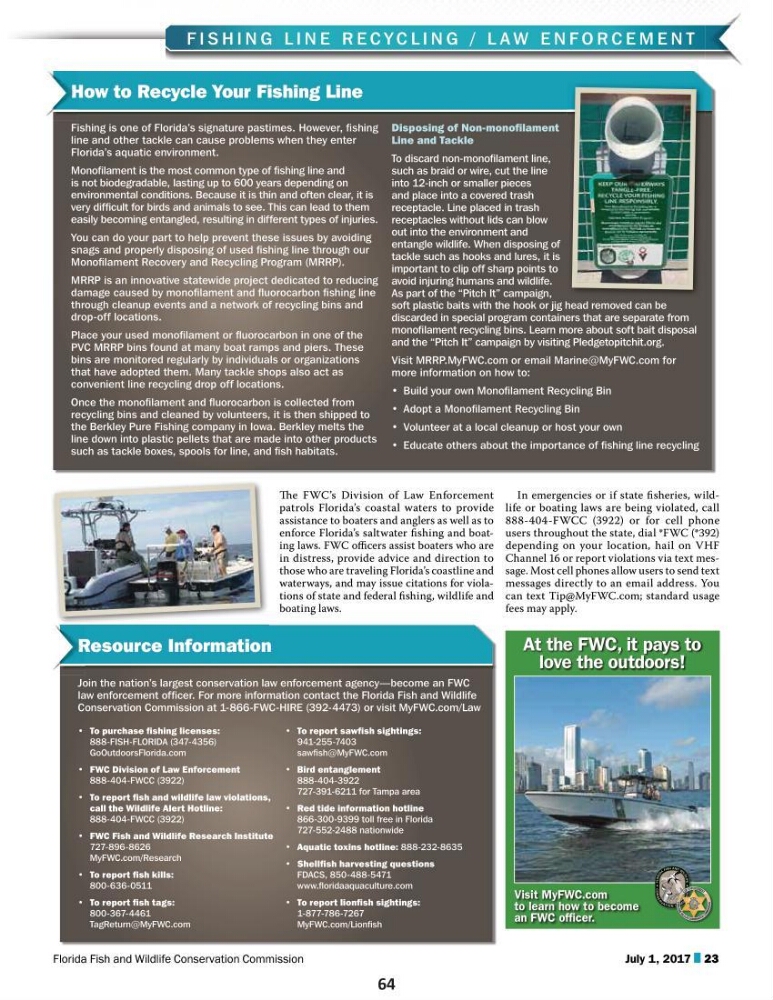
The FWC’s Division of Law Enforcement
patrols Florida’s coastal waters to provide
assistance to boaters and anglers as well as to
enforce Florida’s saltwater fishing and boating laws. FWC officers assist boaters who are
in distress, provide advice and direction to
those who are traveling Florida’s coastline and
waterways, and may issue citations for violations of state and federal fishing, wildlife and
boating laws.
In emergencies or if state fisheries, wildlife or boating laws are being violated, call
888-404-FWCC (3922) or for cell phone
users throughout the state, dial *FWC (*392)
depending on your location, hail on VHF
Channel 16 or report violations via text message. Most cell phones allow users to send text
messages directly to an email address. You
can text Tip@MyFWC.com; standard usage
fees may apply.
Florida Fish and Wildlife Conservation Commission
July 1, 2017 23
64
line and other tackle can cause problems when they enter
Florida’s aquatic environment.
Monofilament is the most common type of fishing line and
is not biodegradable, lasting up to 600 years depending on
environmental conditions. Because it is thin and often clear, it is
very difficult for birds and animals to see. This can lead to them
easily becoming entangled, resulting in different types of injuries.
You can do your part to help prevent these issues by avoiding
snags and properly disposing of used fishing line through our
Monofilament Recovery and Recycling Program (MRRP).
MRRP is an innovative statewide project dedicated to reducing
damage caused by monofilament and fluorocarbon fishing line
through cleanup events and a network of recycling bins and
drop-off locations.
Place your used monofilament or fluorocarbon in one of the
PVC MRRP bins found at many boat ramps and piers. These
bins are monitored regularly by individuals or organizations
that have adopted them. Many tackle shops also act as
convenient line recycling drop off locations.
Once the monofilament and fluorocarbon is collected from
recycling bins and cleaned by volunteers, it is then shipped to
the Berkley Pure Fishing company in Iowa. Berkley melts the
line down into plastic pellets that are made into other products
such as tackle boxes, spools for line, and fish habitats.
Disposing of Non-monofilament
Line and Tackle
To discard non-monofilament line,
such as braid or wire, cut the line
into 12-inch or smaller pieces
and place into a covered trash
receptacle. Line placed in trash
receptacles without lids can blow
out into the environment and
entangle wildlife. When disposing of
tackle such as hooks and lures, it is
important to clip off sharp points to
avoid injuring humans and wildlife.
As part of the “Pitch It” campaign,
soft plastic baits with the hook or jig head removed can be
discarded in special program containers that are separate from
monofilament recycling bins. Learn more about soft bait disposal
and the “Pitch It” campaign by visiting Pledgetopitchit.org.
Visit MRRP.MyFWC.com or email Marine@MyFWC.com for
more information on how to:
• Build your own Monofilament Recycling Bin
• Adopt a Monofilament Recycling Bin
• Volunteer at a local cleanup or host your own
• Educate others about the importance of fishing line recycling
How to Recycle Your Fishing Line
H H H H
Visit MyFWC.com
to learn how to become
an FWC officer.
At the FWC, it pays to
love the outdoors!
Join the nation’s largest conservation law enforcement agency—become an FWC
law enforcement officer. For more information contact the Florida Fish and Wildlife
Conservation Commission at 1-866-FWC-HIRE (392-4473) or visit MyFWC.com/Law
• To purchase fishing licenses:
888-FISH-FLORIDA (347-4356)
GoOutdoorsFlorida.com
• FWC Division of Law Enforcement
888-404-FWCC (3922)
• To report fish and wildlife law violations,
call the Wildlife Alert Hotline:
888-404-FWCC (3922)
• FWC Fish and Wildlife Research Institute
727-896-8626
MyFWC.com/Research
• To report fish kills:
800-636-0511
• To report fish tags:
800-367-4461
TagReturn@MyFWC.com
• To report sawfish sightings:
941-255-7403
sawfish@MyFWC.com
• Bird entanglement
888-404-3922
727-391-6211 for Tampa area
• Red tide information hotline
866-300-9399 toll free in Florida
727-552-2488 nationwide
• Aquatic toxins hotline: 888-232-8635
• Shellfish harvesting questions
FDACS, 850-488-5471
www.floridaaquaculture.com
• To report lionfish sightings:
1-877-786-7267
MyFWC.com/Lionfish
Resource Information
R R R R
F I S H I N G L I N E R E C Y C L I N G / L A W E N F O R C E M E N T
The FWC’s Division of Law Enforcement
patrols Florida’s coastal waters to provide
assistance to boaters and anglers as well as to
enforce Florida’s saltwater fishing and boating laws. FWC officers assist boaters who are
in distress, provide advice and direction to
those who are traveling Florida’s coastline and
waterways, and may issue citations for violations of state and federal fishing, wildlife and
boating laws.
In emergencies or if state fisheries, wildlife or boating laws are being violated, call
888-404-FWCC (3922) or for cell phone
users throughout the state, dial *FWC (*392)
depending on your location, hail on VHF
Channel 16 or report violations via text message. Most cell phones allow users to send text
messages directly to an email address. You
can text Tip@MyFWC.com; standard usage
fees may apply.
Florida Fish and Wildlife Conservation Commission
July 1, 2017 23
64