

128 3 Coordinates
φ 0
φ
β
O
S
N
equator
meta-equator
meta-South
meta-North
e 3 0 = e V
x 0 /r (projection)
x/r (projection)
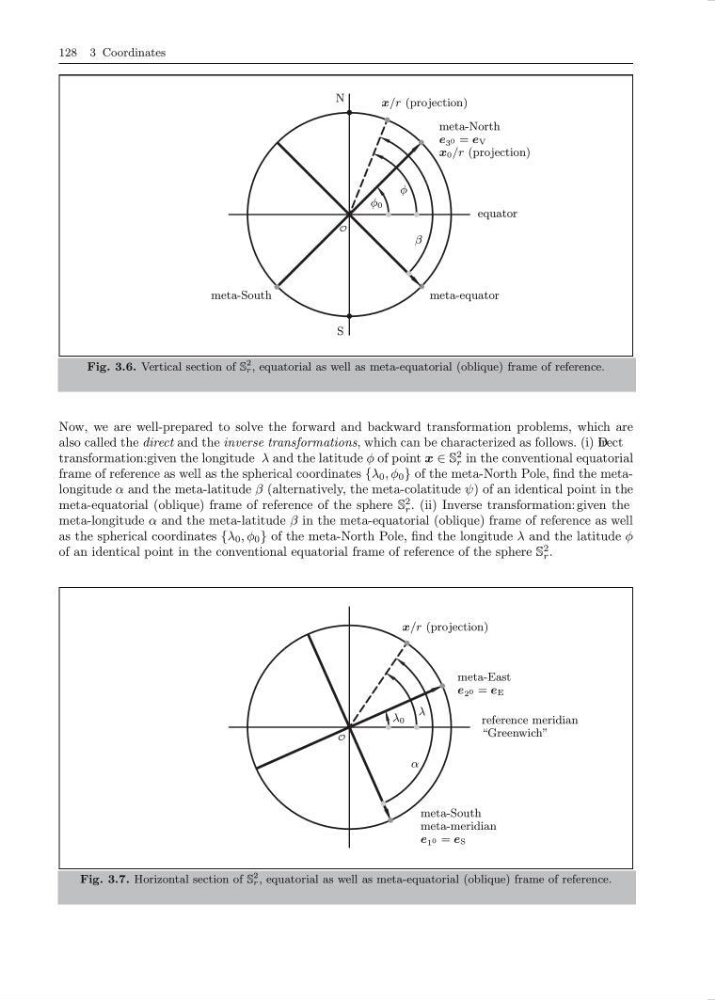
Fig. 3.6. Vertical section of S
2
r , equatorial as well as meta-equatorial (oblique) frame of reference.
Now, we are well-prepared to solve the forward and backward transformation problems, which are
also called the direct and the inverse transformations, which can be characterized as follows. (i) D
irect
transformation:given the longitude λ and the latitude φ of point x ∈ S
2
r in the conventional equatorial
frame of reference as well as the spherical coordinates {λ 0 , φ 0 } of the meta-North Pole, find the metalongitude α and the meta-latitude β (alternatively, the meta-colatitude ψ) of an identical point in the
meta-equatorial (oblique) frame of reference of the sphere S
2
r . (ii) Inverse transformation: given the
meta-longitude α and the meta-latitude β in the meta-equatorial (oblique) frame of reference as well
as the spherical coordinates {λ 0 , φ 0 } of the meta-North Pole, find the longitude λ and the latitude φ
of an identical point in the conventional equatorial frame of reference of the sphere S
2
r .
λ 0
λ
α
O
reference meridian
“Greenwich”
meta-South
meta-meridian
e 1 0 = e S
meta-East
e 2 0 = e E
x/r (projection)
Fig. 3.7. Horizontal section of S
2
r , equatorial as well as meta-equatorial (oblique) frame of reference.
φ 0
φ
β
O
S
N
equator
meta-equator
meta-South
meta-North
e 3 0 = e V
x 0 /r (projection)
x/r (projection)
Fig. 3.6. Vertical section of S
2
r , equatorial as well as meta-equatorial (oblique) frame of reference.
Now, we are well-prepared to solve the forward and backward transformation problems, which are
also called the direct and the inverse transformations, which can be characterized as follows. (i) D
irect
transformation:given the longitude λ and the latitude φ of point x ∈ S
2
r in the conventional equatorial
frame of reference as well as the spherical coordinates {λ 0 , φ 0 } of the meta-North Pole, find the metalongitude α and the meta-latitude β (alternatively, the meta-colatitude ψ) of an identical point in the
meta-equatorial (oblique) frame of reference of the sphere S
2
r . (ii) Inverse transformation: given the
meta-longitude α and the meta-latitude β in the meta-equatorial (oblique) frame of reference as well
as the spherical coordinates {λ 0 , φ 0 } of the meta-North Pole, find the longitude λ and the latitude φ
of an identical point in the conventional equatorial frame of reference of the sphere S
2
r .
λ 0
λ
α
O
reference meridian
“Greenwich”
meta-South
meta-meridian
e 1 0 = e S
meta-East
e 2 0 = e E
x/r (projection)
Fig. 3.7. Horizontal section of S
2
r , equatorial as well as meta-equatorial (oblique) frame of reference.