

1.3. Groundwater Modeling
7
Determine study goals and tasks
~
Make a survey of the geologie, hydrologie situations and
environment of the studied area
l
Select the type of water quality and flow model and
preliminarily determine the perameters
~
Collect and analyse historical da ta and complete field tests
I
Select the method of numerical solution, write programs and
prepare the required input data
I
Complete the model ca\i.bration and reliablilityanalysis
,
Predict the contamination development according to present state
~
Select the optimal scheme for controlling and harnessing contamination
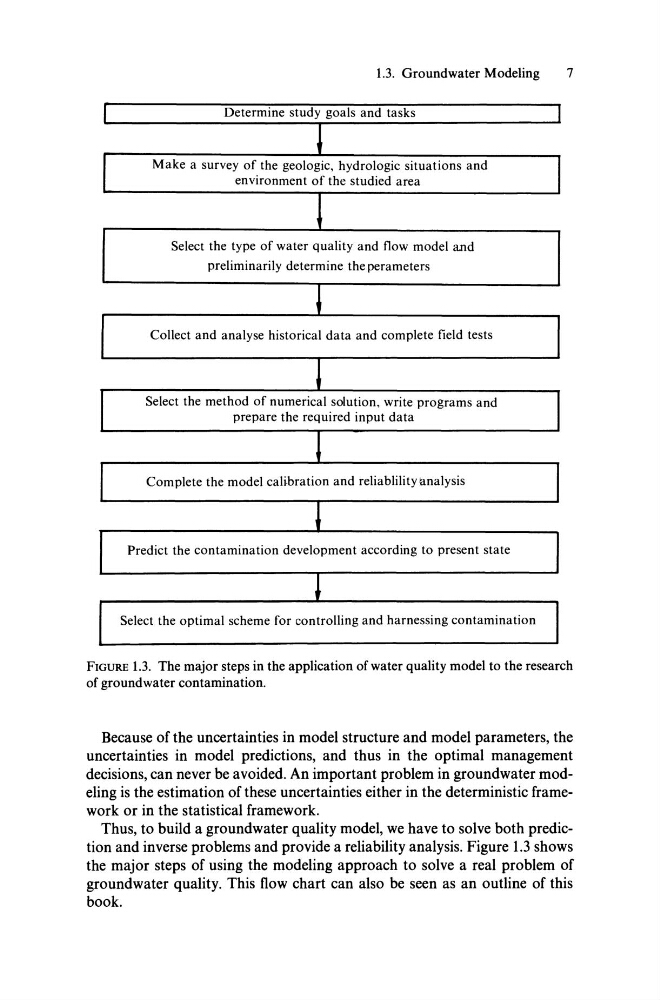
FIGURE 1.3. The major steps in the application ofwater quality model to the research
of groundwater contamination.
Because of the uncertainties in model structure and model parameters, the
uncertainties in model predictions, and thus in the optimal management
decisions, can never be avoided. An important problem in groundwater modeling is the estimation of these uncertainties either in the deterministic framework or in the statistical framework.
Thus, to build a groundwater quality model, we have to solve both prediction and inverse problems and provide a reliability analysis. Figure 1.3 shows
the major steps of using the modeling approach to solve a real problem of
groundwater quality. This flow chart can also be seen as an outline of this
book.
7
Determine study goals and tasks
~
Make a survey of the geologie, hydrologie situations and
environment of the studied area
l
Select the type of water quality and flow model and
preliminarily determine the perameters
~
Collect and analyse historical da ta and complete field tests
I
Select the method of numerical solution, write programs and
prepare the required input data
I
Complete the model ca\i.bration and reliablilityanalysis
,
Predict the contamination development according to present state
~
Select the optimal scheme for controlling and harnessing contamination
FIGURE 1.3. The major steps in the application ofwater quality model to the research
of groundwater contamination.
Because of the uncertainties in model structure and model parameters, the
uncertainties in model predictions, and thus in the optimal management
decisions, can never be avoided. An important problem in groundwater modeling is the estimation of these uncertainties either in the deterministic framework or in the statistical framework.
Thus, to build a groundwater quality model, we have to solve both prediction and inverse problems and provide a reliability analysis. Figure 1.3 shows
the major steps of using the modeling approach to solve a real problem of
groundwater quality. This flow chart can also be seen as an outline of this
book.