

6 Application of a Numerical Statistical Model to Estimate Potential Oil Spill Risk
137
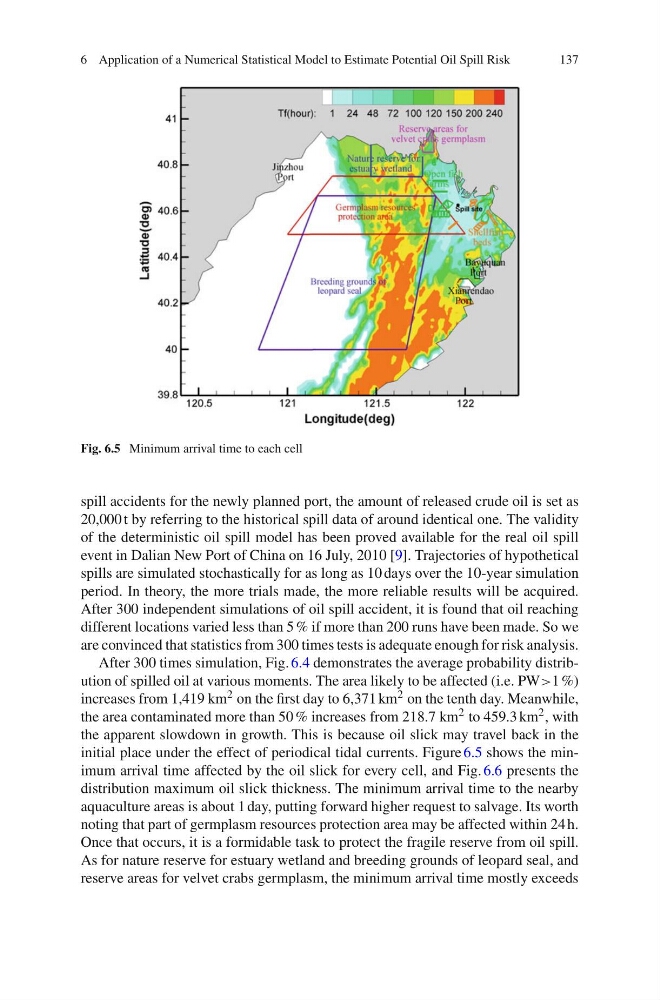
Fig. 6.5 Minimum arrival time to each cell
spill accidents for the newly planned port, the amount of released crude oil is set as
20,000 t by referring to the historical spill data of around identical one. The validity
of the deterministic oil spill model has been proved available for the real oil spill
event in Dalian New Port of China on 16 July, 2010 [9]. Trajectories of hypothetical
spills are simulated stochastically for as long as 10 days over the 10-year simulation
period. In theory, the more trials made, the more reliable results will be acquired.
After 300 independent simulations of oil spill accident, it is found that oil reaching
different locations varied less than 5 % if more than 200 runs have been made. So we
are convinced that statistics from 300 times tests is adequate enough for risk analysis.
After 300 times simulation, Fig. 6.4 demonstrates the average probability distribution of spilled oil at various moments. The area likely to be affected (i.e. PW>1 %)
increases from 1,419 km 2 on the first day to 6,371 km 2 on the tenth day. Meanwhile,
the area contaminated more than 50 % increases from 218.7 km 2 to 459.3 km 2 , with
the apparent slowdown in growth. This is because oil slick may travel back in the
initial place under the effect of periodical tidal currents. Figure 6.5 shows the minimum arrival time affected by the oil slick for every cell, and Fig. 6.6 presents the
distribution maximum oil slick thickness. The minimum arrival time to the nearby
aquaculture areas is about 1 day, putting forward higher request to salvage. Its worth
noting that part of germplasm resources protection area may be affected within 24 h.
Once that occurs, it is a formidable task to protect the fragile reserve from oil spill.
As for nature reserve for estuary wetland and breeding grounds of leopard seal, and
reserve areas for velvet crabs germplasm, the minimum arrival time mostly exceeds
137
Fig. 6.5 Minimum arrival time to each cell
spill accidents for the newly planned port, the amount of released crude oil is set as
20,000 t by referring to the historical spill data of around identical one. The validity
of the deterministic oil spill model has been proved available for the real oil spill
event in Dalian New Port of China on 16 July, 2010 [9]. Trajectories of hypothetical
spills are simulated stochastically for as long as 10 days over the 10-year simulation
period. In theory, the more trials made, the more reliable results will be acquired.
After 300 independent simulations of oil spill accident, it is found that oil reaching
different locations varied less than 5 % if more than 200 runs have been made. So we
are convinced that statistics from 300 times tests is adequate enough for risk analysis.
After 300 times simulation, Fig. 6.4 demonstrates the average probability distribution of spilled oil at various moments. The area likely to be affected (i.e. PW>1 %)
increases from 1,419 km 2 on the first day to 6,371 km 2 on the tenth day. Meanwhile,
the area contaminated more than 50 % increases from 218.7 km 2 to 459.3 km 2 , with
the apparent slowdown in growth. This is because oil slick may travel back in the
initial place under the effect of periodical tidal currents. Figure 6.5 shows the minimum arrival time affected by the oil slick for every cell, and Fig. 6.6 presents the
distribution maximum oil slick thickness. The minimum arrival time to the nearby
aquaculture areas is about 1 day, putting forward higher request to salvage. Its worth
noting that part of germplasm resources protection area may be affected within 24 h.
Once that occurs, it is a formidable task to protect the fragile reserve from oil spill.
As for nature reserve for estuary wetland and breeding grounds of leopard seal, and
reserve areas for velvet crabs germplasm, the minimum arrival time mostly exceeds