

88
however presented. Finally, dynamical effects due to topography are not treated, as they
constitute a separate category of processes whose proper analysis would require in itself
a separate paper. The purpose of the present work is mainly to expose the reader to the
physical and mathematical framework relevant to surface modeling, but the details of the
mathematical developments are often omitted, since they can be found in many original
references. Similarly, this paper is not intended to be an exhaustive review of the subject
and, admittedly, reference to some important work may be (unintentionally) missing.
2. ESEMs as part of CSMs
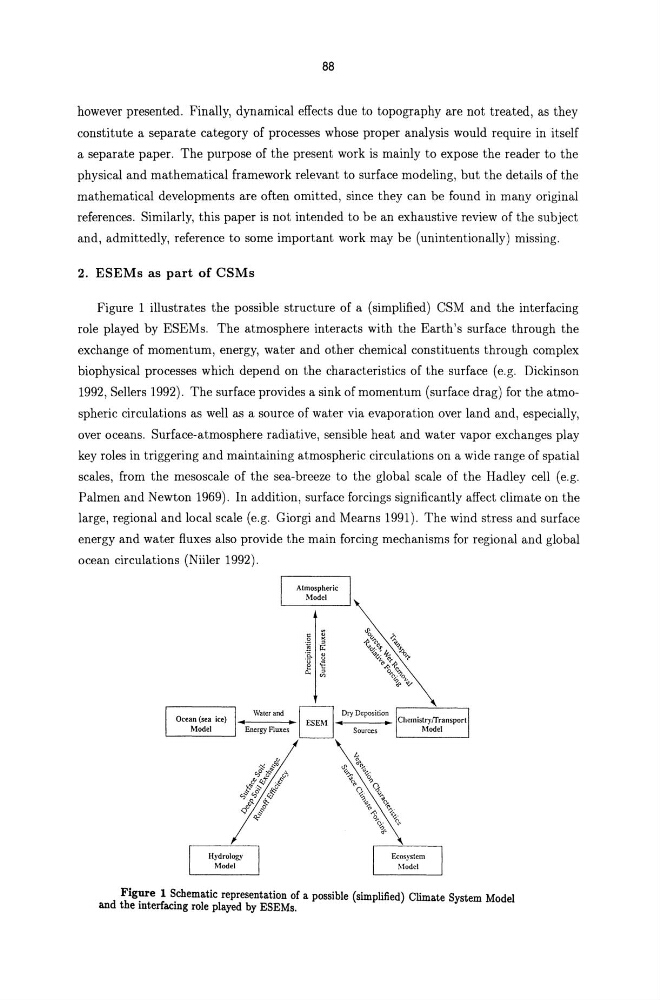
Figure 1 illustrates the possible structure of a (simplified) CSM and the interfacing
role played by ESEMs. The atmosphere interacts with the Earth's surface through the
exchange of momentum, energy, water and other chemical constituents through complex
biophysical processes which depend on the characteristics of the surface (e.g. Dickinson
1992, Sellers 1992). The surface provides a sink of momentum (surface drag) for the atmospheric circulations as well as a source of water via evaporation over land and, especially,
over oceans. Surface-atmosphere radiative, sensible heat and water vapor exchanges play
key roles in triggering and maintaining atmospheric circulations on a wide range of spatial
scales, from the mesoscale of the sea-breeze to the global scale of the Hadley cell (e.g.
Palmen and Newton 1969). In addition, surface forcings significantly affect climate on the
large, regional and local scale (e.g. Giorgi and Mearns 1991). The wind stress and surface
energy and water fluxes also provide the main forcing mechanisms for regional and global
ocean circulations (Niiler 1992).
Water and
EJ Dry Deposition
I(
-ESEMII
.,
Energy Fluxes
Sources
L -_ _ _ - - '
Fig~e 1 ~chematic representation of a possible (simplified) Climate System Model
and the mterfatlng role played by ESEMs.
however presented. Finally, dynamical effects due to topography are not treated, as they
constitute a separate category of processes whose proper analysis would require in itself
a separate paper. The purpose of the present work is mainly to expose the reader to the
physical and mathematical framework relevant to surface modeling, but the details of the
mathematical developments are often omitted, since they can be found in many original
references. Similarly, this paper is not intended to be an exhaustive review of the subject
and, admittedly, reference to some important work may be (unintentionally) missing.
2. ESEMs as part of CSMs
Figure 1 illustrates the possible structure of a (simplified) CSM and the interfacing
role played by ESEMs. The atmosphere interacts with the Earth's surface through the
exchange of momentum, energy, water and other chemical constituents through complex
biophysical processes which depend on the characteristics of the surface (e.g. Dickinson
1992, Sellers 1992). The surface provides a sink of momentum (surface drag) for the atmospheric circulations as well as a source of water via evaporation over land and, especially,
over oceans. Surface-atmosphere radiative, sensible heat and water vapor exchanges play
key roles in triggering and maintaining atmospheric circulations on a wide range of spatial
scales, from the mesoscale of the sea-breeze to the global scale of the Hadley cell (e.g.
Palmen and Newton 1969). In addition, surface forcings significantly affect climate on the
large, regional and local scale (e.g. Giorgi and Mearns 1991). The wind stress and surface
energy and water fluxes also provide the main forcing mechanisms for regional and global
ocean circulations (Niiler 1992).
Water and
EJ Dry Deposition
I(
-ESEMII
.,
Energy Fluxes
Sources
L -_ _ _ - - '
Fig~e 1 ~chematic representation of a possible (simplified) Climate System Model
and the mterfatlng role played by ESEMs.