

amounts of dietary fiber, much of the saliva secreted in the mouth is absorbed,
resulting in swelling of the food. This swelling in the food provides a sense of
satiation and suppresses overconsumption, which may represent a means of preventing obesity.
The stomach contains a pylorus, which serves as a gateway regulating the rate at
which nutrients are received. As food that is swollen from saliva absorption enters
the stomach, it remains there for a longer period of time. At this time, the pylorus
functions to prevent food from rapidly entering the duodenum and suppress
spreading, allowing for more gradual absorption in the small intestine and improved
glucose tolerance. Soluble dietary fiber has been shown to be more effective in
suppressing rises in glucose than the insoluble kind (Barsanti and Gualtieri 2014).
A cycle of enterohepatic circulation occurs as cholesterol is observed in the
jejunum (inside the small intestine) and bile acid in the ileum (lower small intestine). Blood cholesterol content has been shown to be particularly strongly suppressed by soluble dietary fiber, which has strong gel formation capabilities. This
too is a result of dietary fiber blocking the movement of cholesterol and bile acid
within the intestinal tract; decreasing absorption through bonding; and suppressing
the formation of micelles (colloidal aggregates of numerous small particles; one
example is starch solution) consisting of fat-soluble components due to
hydrophobic properties from gel formation. When dietary fiber is absent, volume
declines rapidly in the small intestine as nutrients are digested and absorbed. When
dietary fiber is abundant, volume does not change significantly, but movement time
within the small intestine increases, resulting in repeated impairment of nutrient
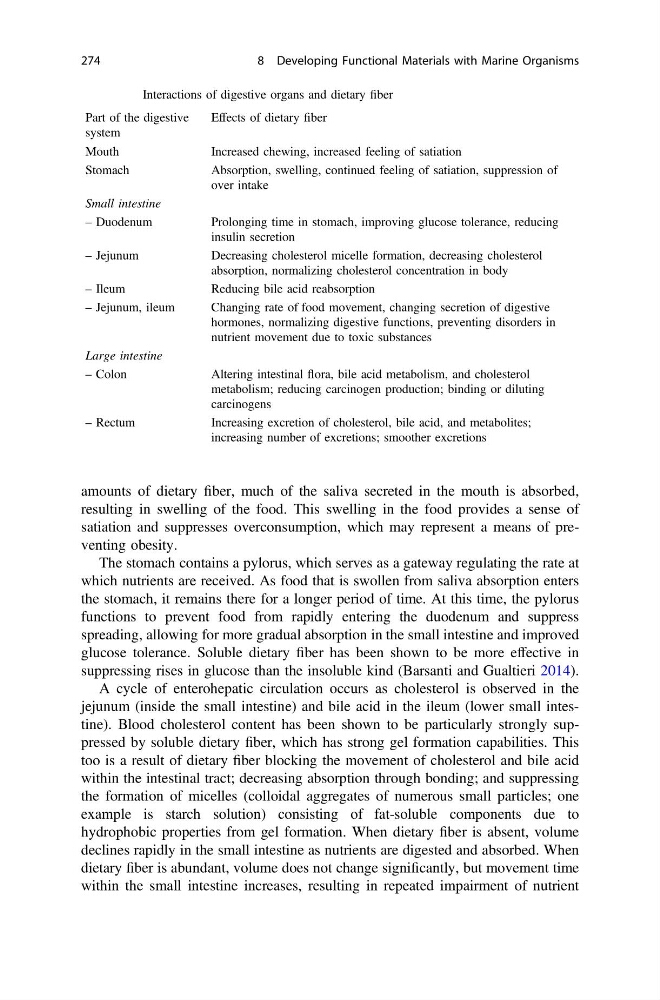
Table 8.6 Interactions of digestive organs and dietary fiber
Part of the digestive
system
Effects of dietary fiber
Mouth
Increased chewing, increased feeling of satiation
Stomach
Absorption, swelling, continued feeling of satiation, suppression of
over intake
Small intestine
– Duodenum
Prolonging time in stomach, improving glucose tolerance, reducing
insulin secretion
– Jejunum
Decreasing cholesterol micelle formation, decreasing cholesterol
absorption, normalizing cholesterol concentration in body
– Ileum
Reducing bile acid reabsorption
– Jejunum, ileum
Changing rate of food movement, changing secretion of digestive
hormones, normalizing digestive functions, preventing disorders in
nutrient movement due to toxic substances
Large intestine
– Colon
Altering intestinal flora, bile acid metabolism, and cholesterol
metabolism; reducing carcinogen production; binding or diluting
carcinogens
– Rectum
Increasing excretion of cholesterol, bile acid, and metabolites;
increasing number of excretions; smoother excretions
274
8 Developing Functional Materials with Marine Organisms
resulting in swelling of the food. This swelling in the food provides a sense of
satiation and suppresses overconsumption, which may represent a means of preventing obesity.
The stomach contains a pylorus, which serves as a gateway regulating the rate at
which nutrients are received. As food that is swollen from saliva absorption enters
the stomach, it remains there for a longer period of time. At this time, the pylorus
functions to prevent food from rapidly entering the duodenum and suppress
spreading, allowing for more gradual absorption in the small intestine and improved
glucose tolerance. Soluble dietary fiber has been shown to be more effective in
suppressing rises in glucose than the insoluble kind (Barsanti and Gualtieri 2014).
A cycle of enterohepatic circulation occurs as cholesterol is observed in the
jejunum (inside the small intestine) and bile acid in the ileum (lower small intestine). Blood cholesterol content has been shown to be particularly strongly suppressed by soluble dietary fiber, which has strong gel formation capabilities. This
too is a result of dietary fiber blocking the movement of cholesterol and bile acid
within the intestinal tract; decreasing absorption through bonding; and suppressing
the formation of micelles (colloidal aggregates of numerous small particles; one
example is starch solution) consisting of fat-soluble components due to
hydrophobic properties from gel formation. When dietary fiber is absent, volume
declines rapidly in the small intestine as nutrients are digested and absorbed. When
dietary fiber is abundant, volume does not change significantly, but movement time
within the small intestine increases, resulting in repeated impairment of nutrient
Table 8.6 Interactions of digestive organs and dietary fiber
Part of the digestive
system
Effects of dietary fiber
Mouth
Increased chewing, increased feeling of satiation
Stomach
Absorption, swelling, continued feeling of satiation, suppression of
over intake
Small intestine
– Duodenum
Prolonging time in stomach, improving glucose tolerance, reducing
insulin secretion
– Jejunum
Decreasing cholesterol micelle formation, decreasing cholesterol
absorption, normalizing cholesterol concentration in body
– Ileum
Reducing bile acid reabsorption
– Jejunum, ileum
Changing rate of food movement, changing secretion of digestive
hormones, normalizing digestive functions, preventing disorders in
nutrient movement due to toxic substances
Large intestine
– Colon
Altering intestinal flora, bile acid metabolism, and cholesterol
metabolism; reducing carcinogen production; binding or diluting
carcinogens
– Rectum
Increasing excretion of cholesterol, bile acid, and metabolites;
increasing number of excretions; smoother excretions
274
8 Developing Functional Materials with Marine Organisms