

acids. Table 8.3 shows the fatty acid composition of cod muscle lipids. Phospholipids contain more unsaturated fatty acids than triglycerides, while the high
amounts of eicosapentaenoic acid (EPA), which is known to be effective against
thrombosis, and docosahexaenoic acid (DHA), which is known to be effective in
improving memory, indicate that marine organisms are sources of a wide variety of
fatty acids.
E. Liquid Crystal Materials from Marine Archaebacteria
Marine organisms inhabit a more diverse range of environments than land-based
organisms in terms of temperature, pressure, hydrogen ion concentrations, and
saline concentrations. Marine organisms are extremely adaptable to different
environments; some life forms have even been found inhabiting areas near thermal
vents at depths of 2600 m under the sea. These bacteria that have adapted to
high-temperature, high-pressure, and highly saline environments are known as
thermophiles. Comparison in terms of homology in their RNA base sequences
shows them to be archaebacterial like methane-producing bacteria. The lipids in
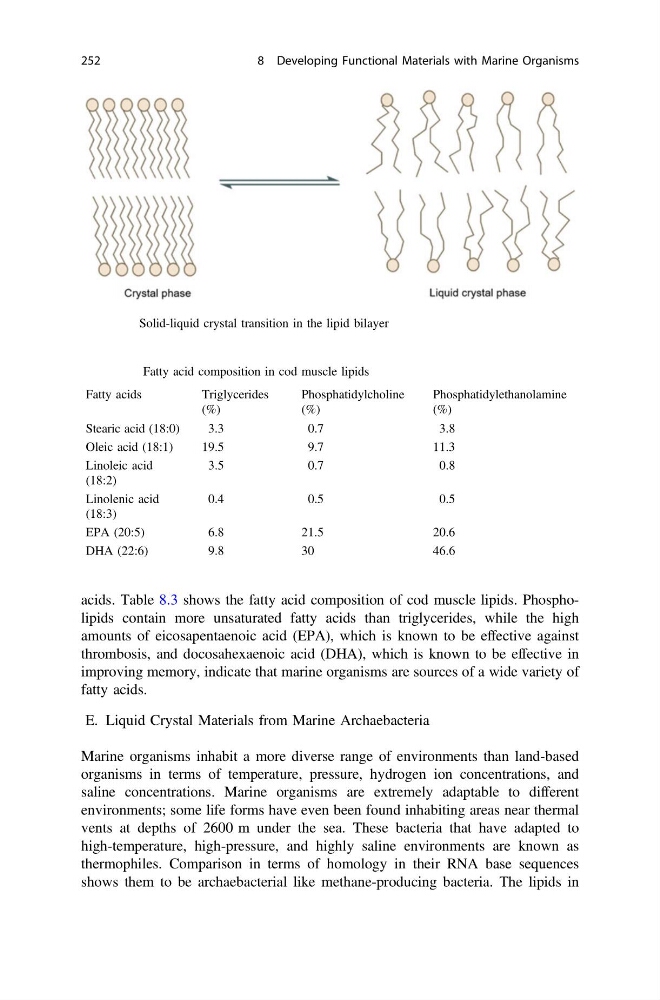
Fig. 8.21 Solid-liquid crystal transition in the lipid bilayer
Table 8.3 Fatty acid composition in cod muscle lipids
Fatty acids
Triglycerides
(%)
Phosphatidylcholine
(%)
Phosphatidylethanolamine
(%)
Stearic acid (18:0)
3.3
0.7
3.8
Oleic acid (18:1)
19.5
9.7
11.3
Linoleic acid
(18:2)
3.5
0.7
0.8
Linolenic acid
(18:3)
0.4
0.5
0.5
EPA (20:5)
6.8
21.5
20.6
DHA (22:6)
9.8
30
46.6
252
8 Developing Functional Materials with Marine Organisms
amounts of eicosapentaenoic acid (EPA), which is known to be effective against
thrombosis, and docosahexaenoic acid (DHA), which is known to be effective in
improving memory, indicate that marine organisms are sources of a wide variety of
fatty acids.
E. Liquid Crystal Materials from Marine Archaebacteria
Marine organisms inhabit a more diverse range of environments than land-based
organisms in terms of temperature, pressure, hydrogen ion concentrations, and
saline concentrations. Marine organisms are extremely adaptable to different
environments; some life forms have even been found inhabiting areas near thermal
vents at depths of 2600 m under the sea. These bacteria that have adapted to
high-temperature, high-pressure, and highly saline environments are known as
thermophiles. Comparison in terms of homology in their RNA base sequences
shows them to be archaebacterial like methane-producing bacteria. The lipids in
Fig. 8.21 Solid-liquid crystal transition in the lipid bilayer
Table 8.3 Fatty acid composition in cod muscle lipids
Fatty acids
Triglycerides
(%)
Phosphatidylcholine
(%)
Phosphatidylethanolamine
(%)
Stearic acid (18:0)
3.3
0.7
3.8
Oleic acid (18:1)
19.5
9.7
11.3
Linoleic acid
(18:2)
3.5
0.7
0.8
Linolenic acid
(18:3)
0.4
0.5
0.5
EPA (20:5)
6.8
21.5
20.6
DHA (22:6)
9.8
30
46.6
252
8 Developing Functional Materials with Marine Organisms