

1. Checking Blood Pressure Increases
The effects of alginic acid oligosaccharides on blood pressure have been observed
in seven-week-old male spontaneously hypertensive rats. An experimental group
was given food mixed with 4.0% alginic acid polysaccharides for free consumption,
while the control group was given food with 1.2% sodium chloride to provide equal
sodium content. The breeding environment included room temperature of 23 ± 3 °
C, moisture of 30–60%, 12 h each of light and darkness, and free access to water.
Noninvasive blood pressure measurement conducted each week showed suppression of rising blood pressure in the experimental group by the fourth week after
consumption began. By the eighth week, a significant continued suppression of the
rise in blood pressure was observed (Fig. 6.15).
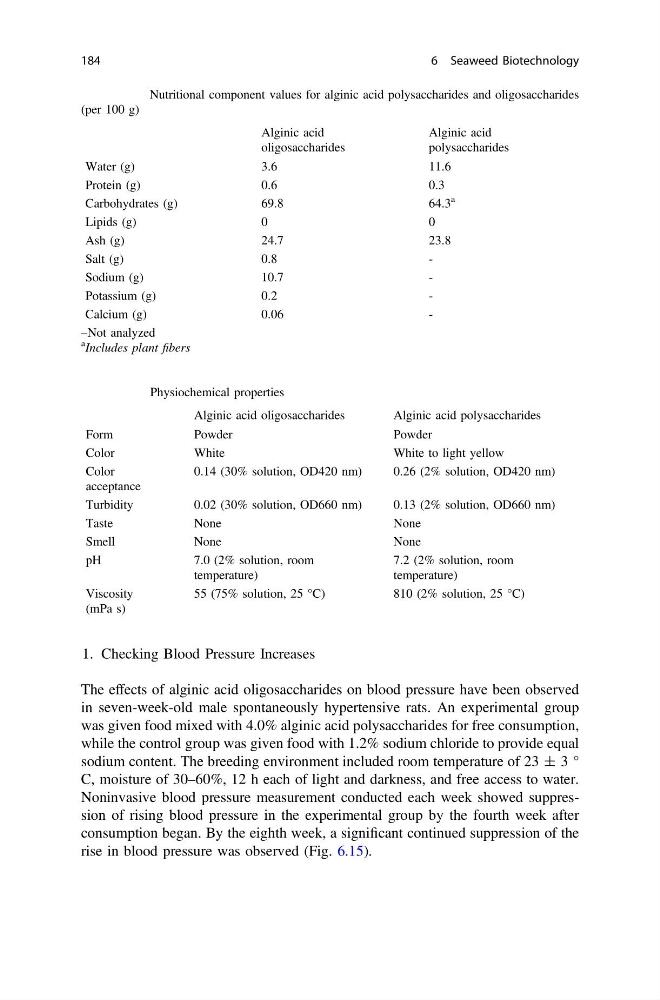
Table 6.15 Nutritional component values for alginic acid polysaccharides and oligosaccharides
(per 100 g)
Alginic acid
oligosaccharides
Alginic acid
polysaccharides
Water (g)
3.6
11.6
Protein (g)
0.6
0.3
Carbohydrates (g)
69.8
64.3
a
Lipids (g)
0
0
Ash (g)
24.7
23.8
Salt (g)
0.8
-
Sodium (g)
10.7
-
Potassium (g)
0.2
-
Calcium (g)
0.06
-
–Not analyzed
a Includes plant fibers
Table 6.16 Physiochemical properties
Alginic acid oligosaccharides
Alginic acid polysaccharides
Form
Powder
Powder
Color
White
White to light yellow
Color
acceptance
0.14 (30% solution, OD420 nm)
0.26 (2% solution, OD420 nm)
Turbidity
0.02 (30% solution, OD660 nm)
0.13 (2% solution, OD660 nm)
Taste
None
None
Smell
None
None
pH
7.0 (2% solution, room
temperature)
7.2 (2% solution, room
temperature)
Viscosity
(mPa s)
55 (75% solution, 25 °C)
810 (2% solution, 25 °C)
184
6 Seaweed Biotechnology
The effects of alginic acid oligosaccharides on blood pressure have been observed
in seven-week-old male spontaneously hypertensive rats. An experimental group
was given food mixed with 4.0% alginic acid polysaccharides for free consumption,
while the control group was given food with 1.2% sodium chloride to provide equal
sodium content. The breeding environment included room temperature of 23 ± 3 °
C, moisture of 30–60%, 12 h each of light and darkness, and free access to water.
Noninvasive blood pressure measurement conducted each week showed suppression of rising blood pressure in the experimental group by the fourth week after
consumption began. By the eighth week, a significant continued suppression of the
rise in blood pressure was observed (Fig. 6.15).
Table 6.15 Nutritional component values for alginic acid polysaccharides and oligosaccharides
(per 100 g)
Alginic acid
oligosaccharides
Alginic acid
polysaccharides
Water (g)
3.6
11.6
Protein (g)
0.6
0.3
Carbohydrates (g)
69.8
64.3
a
Lipids (g)
0
0
Ash (g)
24.7
23.8
Salt (g)
0.8
-
Sodium (g)
10.7
-
Potassium (g)
0.2
-
Calcium (g)
0.06
-
–Not analyzed
a Includes plant fibers
Table 6.16 Physiochemical properties
Alginic acid oligosaccharides
Alginic acid polysaccharides
Form
Powder
Powder
Color
White
White to light yellow
Color
acceptance
0.14 (30% solution, OD420 nm)
0.26 (2% solution, OD420 nm)
Turbidity
0.02 (30% solution, OD660 nm)
0.13 (2% solution, OD660 nm)
Taste
None
None
Smell
None
None
pH
7.0 (2% solution, room
temperature)
7.2 (2% solution, room
temperature)
Viscosity
(mPa s)
55 (75% solution, 25 °C)
810 (2% solution, 25 °C)
184
6 Seaweed Biotechnology