

species, such as zebrafish and goldfish. The comparative figure of triploid and
diploid of giant pacific oyster (Crassostrea gigas). The effect of triploidization is
remarkable with edible portion growing larger as compared to diploid.
In diploid organisms, one or two different genes involved in specific traits
occupy the same position on the pairing chromosome. The former is referred to as
homozygosity, the latter as heterozygosity. Among organisms descending from a
common ancestor, however, the likely of inheriting the same genes is high, and
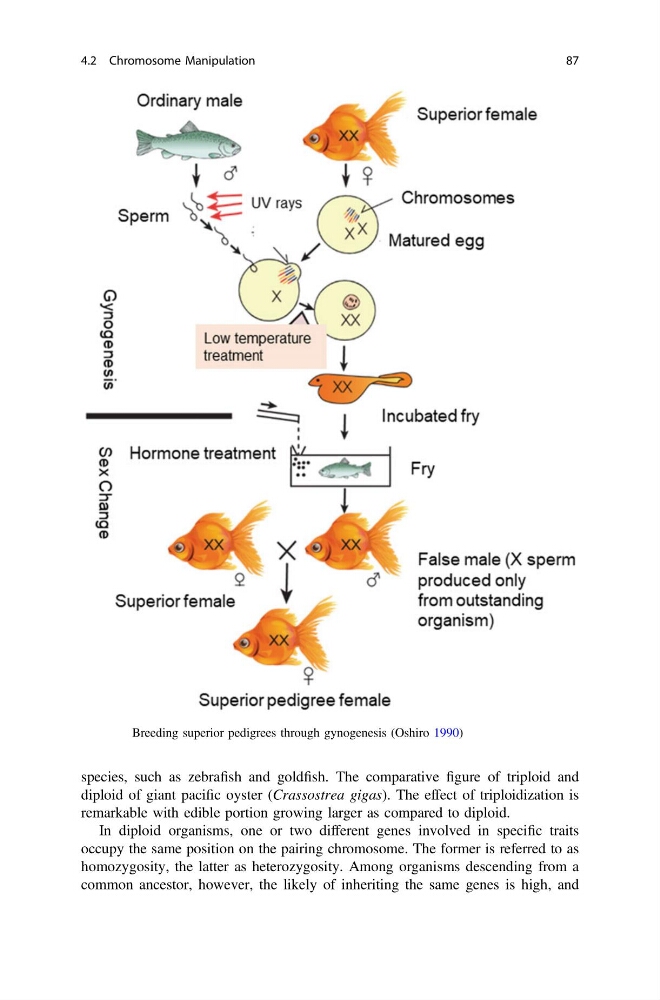
Fig. 4.3 Breeding superior pedigrees through gynogenesis (Oshiro 1990)
4.2 Chromosome Manipulation
87
diploid of giant pacific oyster (Crassostrea gigas). The effect of triploidization is
remarkable with edible portion growing larger as compared to diploid.
In diploid organisms, one or two different genes involved in specific traits
occupy the same position on the pairing chromosome. The former is referred to as
homozygosity, the latter as heterozygosity. Among organisms descending from a
common ancestor, however, the likely of inheriting the same genes is high, and
Fig. 4.3 Breeding superior pedigrees through gynogenesis (Oshiro 1990)
4.2 Chromosome Manipulation
87