

7 – Primary Production, Nutrient Recycling and Energy Flow through Coral Reef Ecosystems
71
upper layers of the Earth’s crust. As pointed out elsewhere, the limestone structures generated by corals
and other organisms generate the habitat for over a
million species of plant, animal, fungi and bacteria
worldwide.
Studies of the food webs on coral reefs have identified
a major role for the mucus generated by reef-building
corals. Mucus is considered to be relatively cheap to
produce due to the abundant energy available for corals in shallow habitats (hence the concept of ‘junk carbon’). It is primarily produced to prevent the surfaces
of corals from being colonised by fouling organisms
and may have a role in protecting corals from excessive
light (PAR and Ultra-Violet Radiation, UVR). It tends to
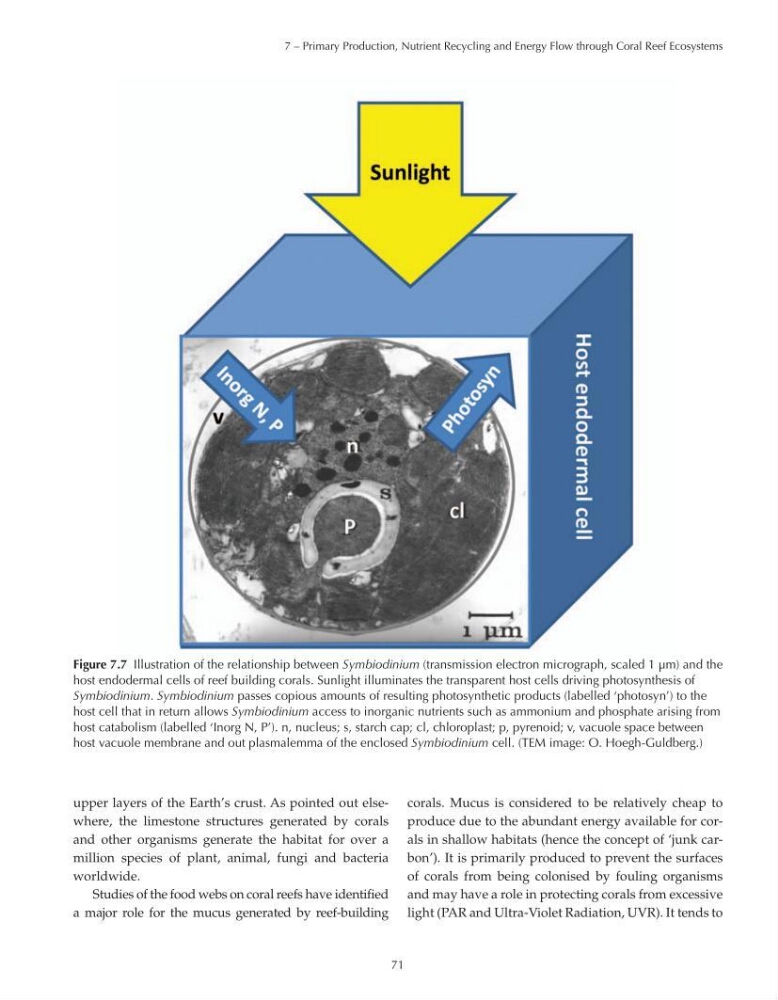
Figure 7.7 Illustration of the relationship between Symbiodinium (transmission electron micrograph, scaled 1 μm) and the
host endodermal cells of reef building corals. Sunlight illuminates the transparent host cells driving photosynthesis of
Symbiodinium. Symbiodinium passes copious amounts of resulting photosynthetic products (labelled ‘photosyn’) to the
host cell that in return allows Symbiodinium access to inorganic nutrients such as ammonium and phosphate arising from
host catabolism (labelled ‘Inorg N, P’). n, nucleus; s, starch cap; cl, chloroplast; p, pyrenoid; v, vacuole space between
host vacuole membrane and out plasmalemma of the enclosed Symbiodinium cell. (TEM image: O. Hoegh-Guldberg.)
71
upper layers of the Earth’s crust. As pointed out elsewhere, the limestone structures generated by corals
and other organisms generate the habitat for over a
million species of plant, animal, fungi and bacteria
worldwide.
Studies of the food webs on coral reefs have identified
a major role for the mucus generated by reef-building
corals. Mucus is considered to be relatively cheap to
produce due to the abundant energy available for corals in shallow habitats (hence the concept of ‘junk carbon’). It is primarily produced to prevent the surfaces
of corals from being colonised by fouling organisms
and may have a role in protecting corals from excessive
light (PAR and Ultra-Violet Radiation, UVR). It tends to
Figure 7.7 Illustration of the relationship between Symbiodinium (transmission electron micrograph, scaled 1 μm) and the
host endodermal cells of reef building corals. Sunlight illuminates the transparent host cells driving photosynthesis of
Symbiodinium. Symbiodinium passes copious amounts of resulting photosynthetic products (labelled ‘photosyn’) to the
host cell that in return allows Symbiodinium access to inorganic nutrients such as ammonium and phosphate arising from
host catabolism (labelled ‘Inorg N, P’). n, nucleus; s, starch cap; cl, chloroplast; p, pyrenoid; v, vacuole space between
host vacuole membrane and out plasmalemma of the enclosed Symbiodinium cell. (TEM image: O. Hoegh-Guldberg.)