

The Great Barrier Reef
242
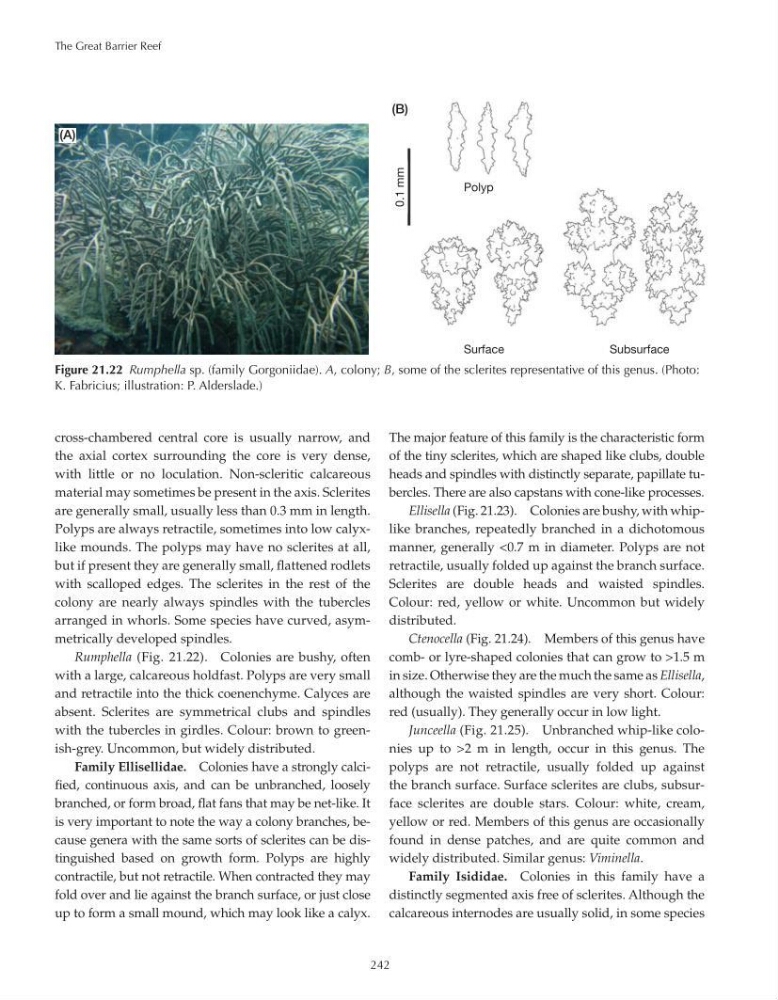
Figure 21.22 Rumphella sp. (family Gorgoniidae). A, colony; B, some of the sclerites representative of this genus. (Photo:
K. Fabricius; illustration: P. Alderslade.)
(A)
(B)
0.1 mm
Polyp
Surface
Subsurface
cross-chambered central core is usually narrow, and
the axial cortex surrounding the core is very dense,
with little or no loculation. Non-scleritic calcareous
material may sometimes be present in the axis. Sclerites
are generally small, usually less than 0.3 mm in length.
Polyps are always retractile, sometimes into low calyxlike mounds. The polyps may have no sclerites at all,
but if present they are generally small, flattened rodlets
with scalloped edges. The sclerites in the rest of the
colony are nearly always spindles with the tubercles
arranged in whorls. Some species have curved, asymmetrically developed spindles.
Rumphella (Fig. 21.22). Colonies are bushy, often
with a large, calcareous holdfast. Polyps are very small
and retractile into the thick coenenchyme. Calyces are
absent. Sclerites are symmetrical clubs and spindles
with the tubercles in girdles. Colour: brown to greenish-grey. Uncommon, but widely distributed.
Family Ellisellidae. Colonies have a strongly calcified, continuous axis, and can be unbranched, loosely
branched, or form broad, flat fans that may be net-like. It
is very important to note the way a colony branches, because genera with the same sorts of sclerites can be distinguished based on growth form. Polyps are highly
contractile, but not retractile. When contracted they may
fold over and lie against the branch surface, or just close
up to form a small mound, which may look like a calyx.
The major feature of this family is the characteristic form
of the tiny sclerites, which are shaped like clubs, double
heads and spindles with distinctly separate, papillate tubercles. There are also capstans with cone-like processes.
Ellisella (Fig. 21.23). Colonies are bushy, with whiplike branches, repeatedly branched in a dichotomous
manner, generally <0.7 m in diameter. Polyps are not
retractile, usually folded up against the branch surface.
Sclerites are double heads and waisted spindles.
Colour: red, yellow or white. Uncommon but widely
distributed.
Ctenocella (Fig. 21.24). Members of this genus have
comb- or lyre-shaped colonies that can grow to >1.5 m
in size. Otherwise they are the much the same as Ellisella,
although the waisted spindles are very short. Colour:
red (usually). They generally occur in low light.
Junceella (Fig. 21.25). Unbranched whip-like colonies up to >2 m in length, occur in this genus. The
polyps are not retractile, usually folded up against
the branch surface. Surface sclerites are clubs, subsurface sclerites are double stars. Colour: white, cream,
yellow or red. Members of this genus are occasionally
found in dense patches, and are quite common and
widely distributed. Similar genus: Viminella.
Family Isididae. Colonies in this family have a
distinctly segmented axis free of sclerites. Although the
calcareous internodes are usually solid, in some species
242
Figure 21.22 Rumphella sp. (family Gorgoniidae). A, colony; B, some of the sclerites representative of this genus. (Photo:
K. Fabricius; illustration: P. Alderslade.)
(A)
(B)
0.1 mm
Polyp
Surface
Subsurface
cross-chambered central core is usually narrow, and
the axial cortex surrounding the core is very dense,
with little or no loculation. Non-scleritic calcareous
material may sometimes be present in the axis. Sclerites
are generally small, usually less than 0.3 mm in length.
Polyps are always retractile, sometimes into low calyxlike mounds. The polyps may have no sclerites at all,
but if present they are generally small, flattened rodlets
with scalloped edges. The sclerites in the rest of the
colony are nearly always spindles with the tubercles
arranged in whorls. Some species have curved, asymmetrically developed spindles.
Rumphella (Fig. 21.22). Colonies are bushy, often
with a large, calcareous holdfast. Polyps are very small
and retractile into the thick coenenchyme. Calyces are
absent. Sclerites are symmetrical clubs and spindles
with the tubercles in girdles. Colour: brown to greenish-grey. Uncommon, but widely distributed.
Family Ellisellidae. Colonies have a strongly calcified, continuous axis, and can be unbranched, loosely
branched, or form broad, flat fans that may be net-like. It
is very important to note the way a colony branches, because genera with the same sorts of sclerites can be distinguished based on growth form. Polyps are highly
contractile, but not retractile. When contracted they may
fold over and lie against the branch surface, or just close
up to form a small mound, which may look like a calyx.
The major feature of this family is the characteristic form
of the tiny sclerites, which are shaped like clubs, double
heads and spindles with distinctly separate, papillate tubercles. There are also capstans with cone-like processes.
Ellisella (Fig. 21.23). Colonies are bushy, with whiplike branches, repeatedly branched in a dichotomous
manner, generally <0.7 m in diameter. Polyps are not
retractile, usually folded up against the branch surface.
Sclerites are double heads and waisted spindles.
Colour: red, yellow or white. Uncommon but widely
distributed.
Ctenocella (Fig. 21.24). Members of this genus have
comb- or lyre-shaped colonies that can grow to >1.5 m
in size. Otherwise they are the much the same as Ellisella,
although the waisted spindles are very short. Colour:
red (usually). They generally occur in low light.
Junceella (Fig. 21.25). Unbranched whip-like colonies up to >2 m in length, occur in this genus. The
polyps are not retractile, usually folded up against
the branch surface. Surface sclerites are clubs, subsurface sclerites are double stars. Colour: white, cream,
yellow or red. Members of this genus are occasionally
found in dense patches, and are quite common and
widely distributed. Similar genus: Viminella.
Family Isididae. Colonies in this family have a
distinctly segmented axis free of sclerites. Although the
calcareous internodes are usually solid, in some species