

The Great Barrier Reef
214
BOX 20.1 THE CORAL MASS SPAWNING PHENOMENON
Corals from the majority of species on the GBR develop eggs and sperm once a year and
release these for external fertilisation in multispecies spawning events. These occur at
night during the week following the full moon in October to February, with November
being the major spawning month. The discovery of this extraordinary phenomenon in
Australia in the 1980s was one of the major advances in coral reef science of the 20th
century. Mass spawning, as it has been dubbed, presents a paradox: on the one hand it
ensures ample reproductive material for the cross-fertilisation required to ensure development of the next generation of each species, at the same time, saturating the food supply of predators for a very short period; on the other, it also provides opportunities for
mis-matches, in which sperm could fertilise eggs of the wrong species to form hybrids
or non-viable embryos. The discovery of mass spawning led to revision of ecological and
evolutionary models and predictions and provided unprecedented opportunities for research, management planning and experimentation using gametes. Its impact has been
worldwide and the phenomenon has now been reported from most countries bearing
coral reefs.
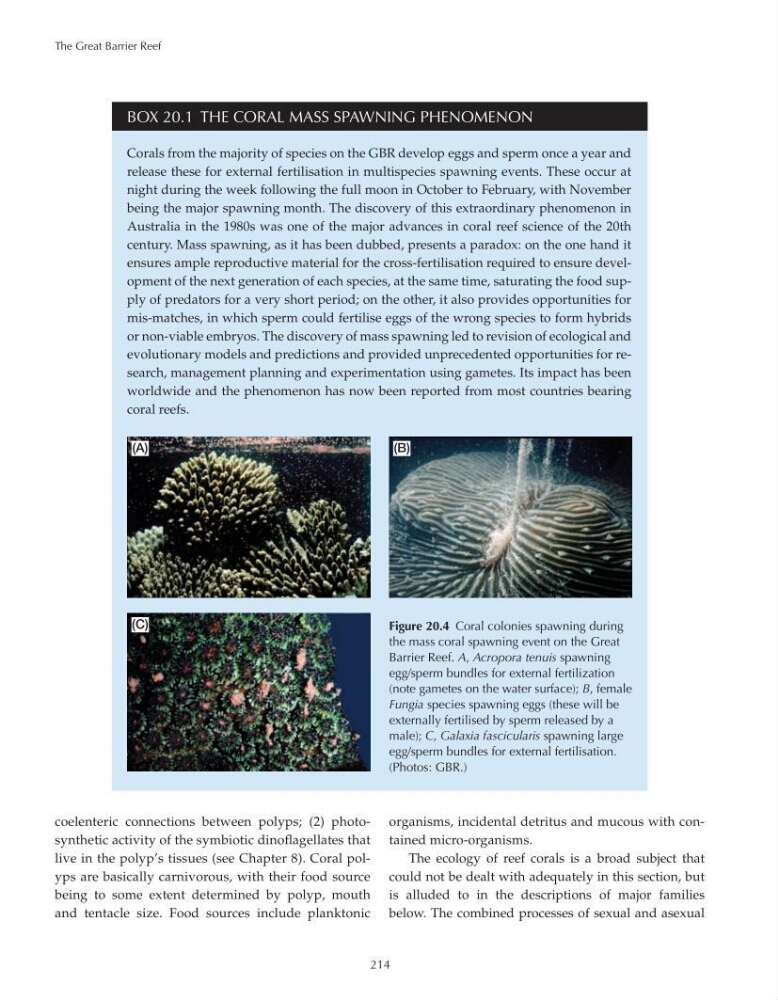
Figure 20.4 Coral colonies spawning during
the mass coral spawning event on the Great
Barrier Reef. A, Acropora tenuis spawning
egg/sperm bundles for external fertilization
(note gametes on the water surface); B, female
Fungia species spawning eggs (these will be
externally fertilised by sperm released by a
male); C, Galaxia fascicularis spawning large
egg/sperm bundles for external fertilisation.
(Photos: GBR.)
coelenteric connections between polyps; (2) photosynthetic activity of the symbiotic dinoflagellates that
live in the polyp’s tissues (see Chapter 8). Coral polyps are basically carnivorous, with their food source
being to some extent determined by polyp, mouth
and tentacle size. Food sources include planktonic
organisms, incidental detritus and mucous with contained micro-organisms.
The ecology of reef corals is a broad subject that
could not be dealt with adequately in this section, but
is alluded to in the descriptions of major families
below. The combined processes of sexual and asexual
(A)
(B)
(C)
214
BOX 20.1 THE CORAL MASS SPAWNING PHENOMENON
Corals from the majority of species on the GBR develop eggs and sperm once a year and
release these for external fertilisation in multispecies spawning events. These occur at
night during the week following the full moon in October to February, with November
being the major spawning month. The discovery of this extraordinary phenomenon in
Australia in the 1980s was one of the major advances in coral reef science of the 20th
century. Mass spawning, as it has been dubbed, presents a paradox: on the one hand it
ensures ample reproductive material for the cross-fertilisation required to ensure development of the next generation of each species, at the same time, saturating the food supply of predators for a very short period; on the other, it also provides opportunities for
mis-matches, in which sperm could fertilise eggs of the wrong species to form hybrids
or non-viable embryos. The discovery of mass spawning led to revision of ecological and
evolutionary models and predictions and provided unprecedented opportunities for research, management planning and experimentation using gametes. Its impact has been
worldwide and the phenomenon has now been reported from most countries bearing
coral reefs.
Figure 20.4 Coral colonies spawning during
the mass coral spawning event on the Great
Barrier Reef. A, Acropora tenuis spawning
egg/sperm bundles for external fertilization
(note gametes on the water surface); B, female
Fungia species spawning eggs (these will be
externally fertilised by sperm released by a
male); C, Galaxia fascicularis spawning large
egg/sperm bundles for external fertilisation.
(Photos: GBR.)
coelenteric connections between polyps; (2) photosynthetic activity of the symbiotic dinoflagellates that
live in the polyp’s tissues (see Chapter 8). Coral polyps are basically carnivorous, with their food source
being to some extent determined by polyp, mouth
and tentacle size. Food sources include planktonic
organisms, incidental detritus and mucous with contained micro-organisms.
The ecology of reef corals is a broad subject that
could not be dealt with adequately in this section, but
is alluded to in the descriptions of major families
below. The combined processes of sexual and asexual
(A)
(B)
(C)