

The Great Barrier Reef
204
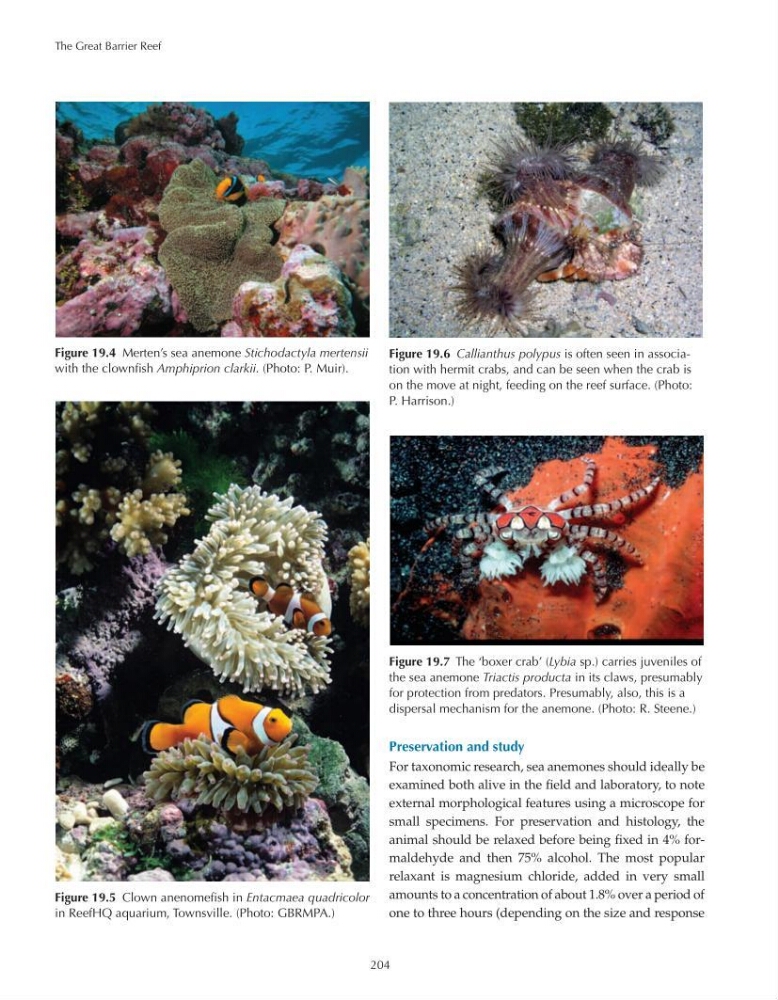
Figure 19.4 Merten’s sea anemone Stichodactyla mertensii
with the clownfish Amphiprion clarkii. (Photo: P. Muir).
Figure 19.5 Clown anenomefish in Entacmaea quadricolor
in ReefHQ aquarium, Townsville. (Photo: GBRMPA.)
Figure 19.6 Callianthus polypus is often seen in association with hermit crabs, and can be seen when the crab is
on the move at night, feeding on the reef surface. (Photo:
P. Harrison.)
Figure 19.7 The ‘boxer crab’ (Lybia sp.) carries juveniles of
the sea anemone Triactis producta in its claws, presumably
for protection from predators. Presumably, also, this is a
dispersal mechanism for the anemone. (Photo: R. Steene.)
Preservation and study
For taxonomic research, sea anemones should ideally be
examined both alive in the field and laboratory, to note
external morphological features using a microscope for
small specimens. For preservation and histology, the
animal should be relaxed before being fixed in 4% formaldehyde and then 75% alcohol. The most popular
relaxant is magnesium chloride, added in very small
amounts to a concentration of about 1.8% over a period of
one to three hours (depending on the size and response
204
Figure 19.4 Merten’s sea anemone Stichodactyla mertensii
with the clownfish Amphiprion clarkii. (Photo: P. Muir).
Figure 19.5 Clown anenomefish in Entacmaea quadricolor
in ReefHQ aquarium, Townsville. (Photo: GBRMPA.)
Figure 19.6 Callianthus polypus is often seen in association with hermit crabs, and can be seen when the crab is
on the move at night, feeding on the reef surface. (Photo:
P. Harrison.)
Figure 19.7 The ‘boxer crab’ (Lybia sp.) carries juveniles of
the sea anemone Triactis producta in its claws, presumably
for protection from predators. Presumably, also, this is a
dispersal mechanism for the anemone. (Photo: R. Steene.)
Preservation and study
For taxonomic research, sea anemones should ideally be
examined both alive in the field and laboratory, to note
external morphological features using a microscope for
small specimens. For preservation and histology, the
animal should be relaxed before being fixed in 4% formaldehyde and then 75% alcohol. The most popular
relaxant is magnesium chloride, added in very small
amounts to a concentration of about 1.8% over a period of
one to three hours (depending on the size and response