

18 – Pelagic Cnidaria and Ctenophora
193
column, though fertilisation is sometimes internal. The
fertilised embryo grows into a ‘planula larva’ stage, a
tiny ciliated teardrop-shaped creature, which seeks a
suitable place to settle and transform into a polyp. The
polyp produces many clones, through asexual reproduction, and sometimes environmentally resistant
cysts (podocysts). When the conditions are right, the
benthic forms undergo a metamorphosis to produce
many tiny juvenile jellyfish. The baby jellyfish are voracious feeders on a diversity of plankton and generally
grow very fast. For most of the GBR species, life cycles
are largely assumed through knowledge of closely related species from other regions (Figs 18.10, 18.11).
The life cycle of most ctenophores remains unknown, but most are thought to be simultaneous hermaphrodites, bearing both sperm and eggs at the same
time. Ctenophores lack a polyp stage, and instead develop directly from the fertilised egg into a larva. Ctenophores often occur in dense aggregations, which may
facilitate external fertilisation. Most ctenophores are
carnivorous, and like their cnidarian cousins, may decimate available food sources.
Because jellyfishes are pelagic, they occur throughout the GBR region, though some have restricted
(B)
(D)
(C)
(A)
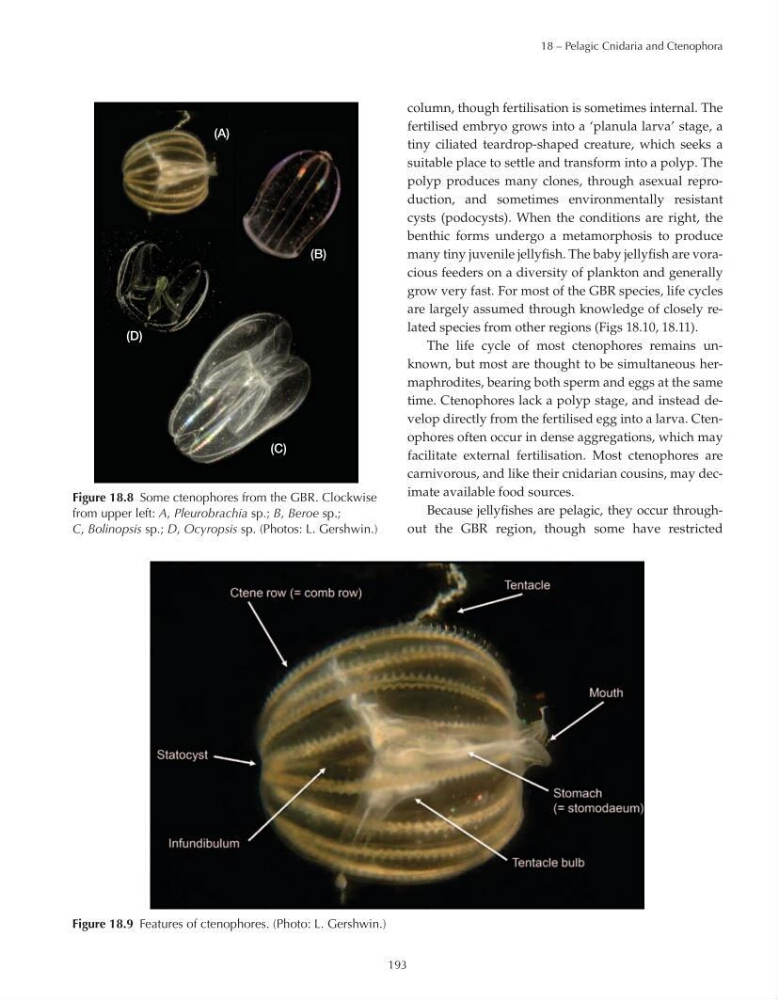
Figure 18.8 Some ctenophores from the GBR. Clockwise
from upper left: A, Pleurobrachia sp.; B, Beroe sp.;
C, Bolinopsis sp.; D, Ocyropsis sp. (Photos: L. Gershwin.)
Figure 18.9 Features of ctenophores. (Photo: L. Gershwin.)
193
column, though fertilisation is sometimes internal. The
fertilised embryo grows into a ‘planula larva’ stage, a
tiny ciliated teardrop-shaped creature, which seeks a
suitable place to settle and transform into a polyp. The
polyp produces many clones, through asexual reproduction, and sometimes environmentally resistant
cysts (podocysts). When the conditions are right, the
benthic forms undergo a metamorphosis to produce
many tiny juvenile jellyfish. The baby jellyfish are voracious feeders on a diversity of plankton and generally
grow very fast. For most of the GBR species, life cycles
are largely assumed through knowledge of closely related species from other regions (Figs 18.10, 18.11).
The life cycle of most ctenophores remains unknown, but most are thought to be simultaneous hermaphrodites, bearing both sperm and eggs at the same
time. Ctenophores lack a polyp stage, and instead develop directly from the fertilised egg into a larva. Ctenophores often occur in dense aggregations, which may
facilitate external fertilisation. Most ctenophores are
carnivorous, and like their cnidarian cousins, may decimate available food sources.
Because jellyfishes are pelagic, they occur throughout the GBR region, though some have restricted
(B)
(D)
(C)
(A)
Figure 18.8 Some ctenophores from the GBR. Clockwise
from upper left: A, Pleurobrachia sp.; B, Beroe sp.;
C, Bolinopsis sp.; D, Ocyropsis sp. (Photos: L. Gershwin.)
Figure 18.9 Features of ctenophores. (Photo: L. Gershwin.)